

Nestled in the Axarquía region of Málaga province, only five kilometres up the mountain from Nerja and about an hour east of Málaga, lies a village that seems lifted straight from a postcard. Frigiliana, with its cascade of whitewashed homes, polished cobbled alleys and balconies overflowing with geraniums, is often dubbed Andalusia’s prettiest pueblo blanco.
I first visited during a road trip from Granada to Gibraltar, exploring the Costa del Sol highway it is wedged itself in my memory bank. So much so, I have been back a few times since.
Like many other villages passed on this route, it looked like a tumble of white cubes clinging to the Sierra de Almijara hillside, rising above the shimmering Mediterranean, but this one is a bit different. A bit special.
Note – Please know, some of the external links on this page are affiliate links, this means that if you purchase after following one, I make a small commission from the sale at no additional cost to yourself.
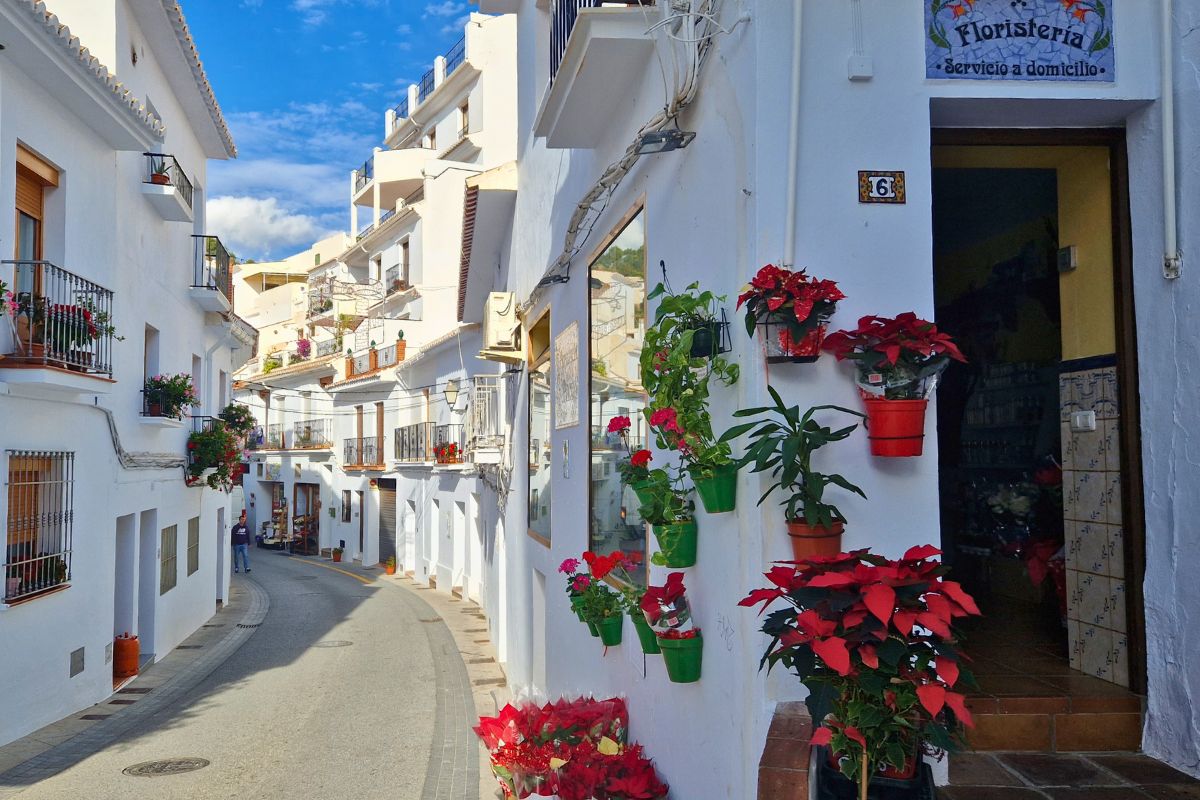
This comprehensive Frigiliana guide combines my personal experiences wandering its labyrinthine streets with in-depth research, local tips and historical nuggets.
Whether you’re planning a day trip from Málaga, a longer stay in the hills or simply dreaming of Southern Spain, this article covers everything from how to get there and where to stay to the very best things to see, do and eat.
Tip: If you don’t have long in the town, I would recommend pre-booking a guided tour. You can find great value group tours, or book a private tour for something a bit more special.
About Frigiliana: A Moorish Legacy and National Treasure
Frigiliana sits in the comarca of La Axarquía, a mountainous region in the eastern corner of Málaga province known for its mango groves, sweet wines and whitewashed hill towns.
Around 3,300 people live here, many of them families whose roots go back centuries. The village rises 300 m above sea level, catching cool breezes from the Sierra de Almijara and looking out to the Mediterranean.
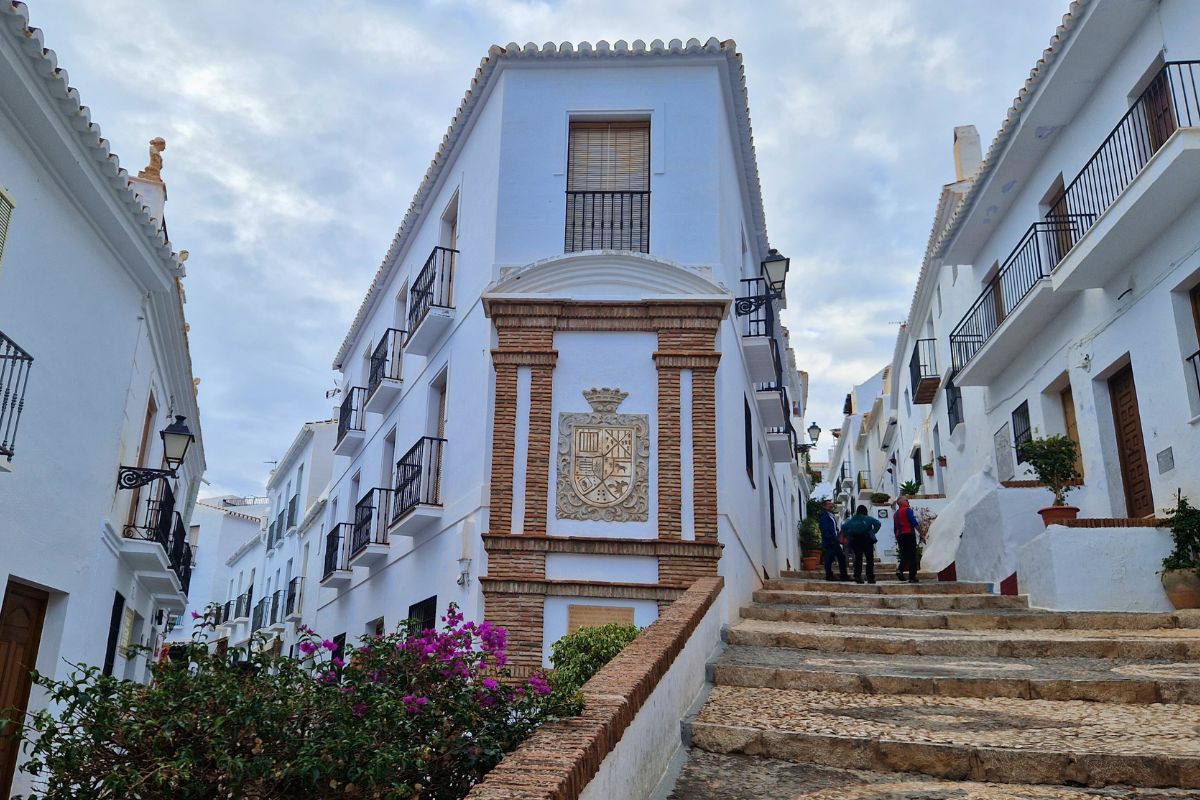
Its maze of stepped lanes and stacked white houses reveals a strong Moorish-Mudéjar influence — a blend of Islamic and Andalusian design that survived the Reconquista.
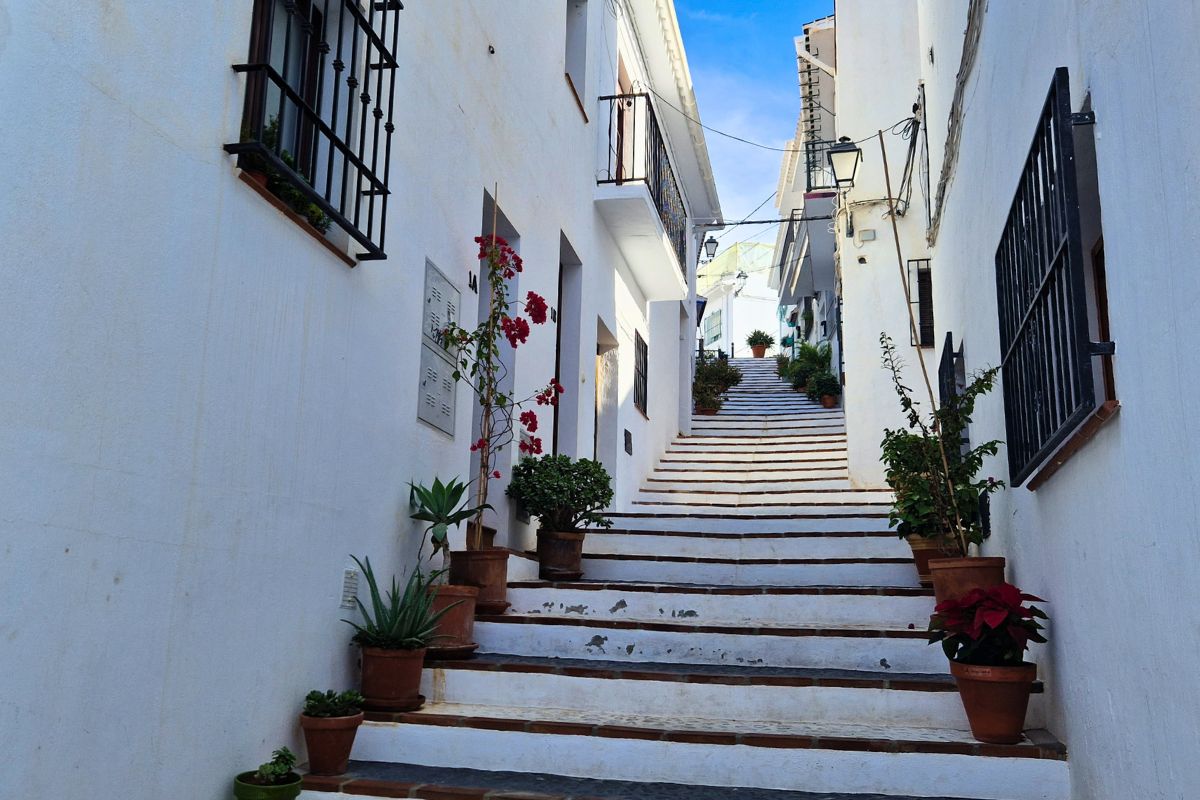
In 1982 Frigiliana won Spain’s First National Embellishment Award for preserving this heritage and, in 2015, joined Los Pueblos Más Bonitos de España (Most Beautiful Villages in Spain), the official network of Spain’s most beautiful villages. Locals take that title seriously: façades are limewashed every spring, bougainvillaea is trimmed just so, and strict municipal rules protect the harmony of colour and form.
Geography and Climate
Frigiliana sits in the heart of the Tejeda, Almijara and Alhama Natural Park. This protected area offers a subtropical microclimate, with mild winters and warm summers moderated by altitude.
Being just 7 km from the Costa del Sol, beach days are easy to combine with mountain walks. The proximity to both sea and mountains makes Frigiliana an ideal base for travellers who want to balance lazy beach afternoons with cooler evenings surrounded by pines.
A Brief History of Frigiliana
Human settlement here predates the Romans — archaeologists have found Phoenician pottery and Roman coins on nearby hills. But Frigiliana’s visible character comes from the Nasrid period, when Moorish farmers terraced these slopes for olives, vines and sugar cane.
In 1569, during the Battle of Peñón de Frigiliana, the final Morisco resistance was crushed in the cliffs above town. Many locals trace their mixed ancestry back to that time, and the story still echoes through the Festival de las Tres Culturas, which celebrates the coexistence of Christian, Muslim and Jewish heritage.
The sugar trade that followed built Frigiliana’s fortune. The Palacio de los Condes de Frigiliana, now known as El Ingenio, became the hub of Spain’s only surviving sugar-cane honey mill — still operating today.
Festivals and Traditions
Although the village is peaceful most of the year, locals love a fiesta. Key events include:
- San Sebastián (January) – the patron saint’s feast day brings processions and brass bands.
- Carnival (February) – a colourful pre-Lenten parade with costumes and street parties.
- Holy Week (Semana Santa, March/April) – solemn processions reflect the village’s deep Catholic traditions.
- Día de la Miel de Caña (Sugar Cane Honey Day, late April) – visitors can tour the Ingenio sugar factory (Europe’s only working cane honey mill) and sample dishes sweetened with miel de caña.
- May Crosses (Cruces de Mayo, early May) – neighbours decorate crosses with flowers, cured meats and sweets while local bands visit each cross.
- San Antonio Fair (June) – fireworks, carnival rides and late-night dancing.
- Festival of the Three Cultures (late August) – four days celebrating Christian, Jewish and Muslim heritage. Streets fill with theatre, live music, belly dancing and open-air lectures. The highlight is the Ruta de la Tapa, a tapas trail linking dozens of bars where you collect stamps — and tastes — from each stop. Evenings end with fireworks and music on Plaza de las Tres Culturas.
Spring and autumn are the best times to visit — blue skies, blooming balconies and fewer crowds. Summer can be crowded and hot; winter is quiet but charming.
How to Get to Frigiliana
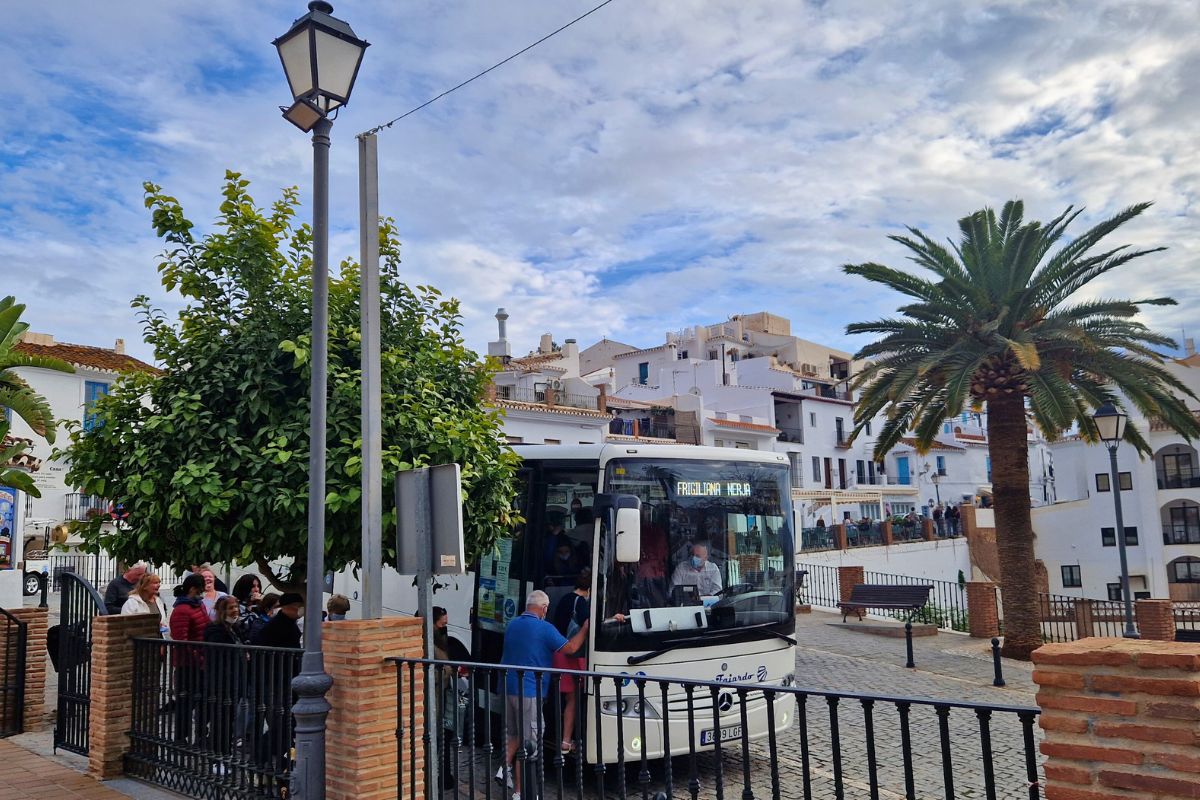
Getting to this mountaintop gem is easier than its setting suggests.
By Car
Driving offers the most flexibility. From Málaga, take the A-7 east toward Motril and exit at 292 for Nerja/Frigiliana; then follow signs inland along a winding road. The 57 km journey takes around 50 minutes. From Nerja, it’s a 15–20 minute drive up the MA-5105.
Parking in Frigiliana is available in the Ingenio car park near Plaza de las Tres Culturas, open 24 hours and costing about €1 per hour. In summer, arrive early.
By Bus
There’s no direct bus from Málaga, so you’ll need to change at Nerja. Take an ALSA coach from Málaga’s central station to Nerja (about €5 each way, 90 minutes). From there, the local Autocares Nerja – Line VJA-019-MA microbus climbs to Frigiliana roughly every hour.
Tickets cost €1.20 and are paid in cash to the driver. The 15-minute ride winds through avocado groves with sea views — sit on the right-hand side if you can.
Guided Tours and Transfers
If you’d rather not drive the mountain road, companies offer day trips combining Frigiliana and Nerja, often including transport, a guide and free time to explore. Private taxis or transfers from Málaga airport take about 50 minutes but cost more.
Recommended Tours
When booking tours for myself, I tend to book through Get Your Guide or Civitis (especially in Spain). However, Viator is also a great choice for the sheer number of options. I have tried all three companies and say with confidence you can trust them. Be sure to check the trip specific and reviews before booking.
Figiliana trips and tours from:
Top Things to See and Do in Frigiliana
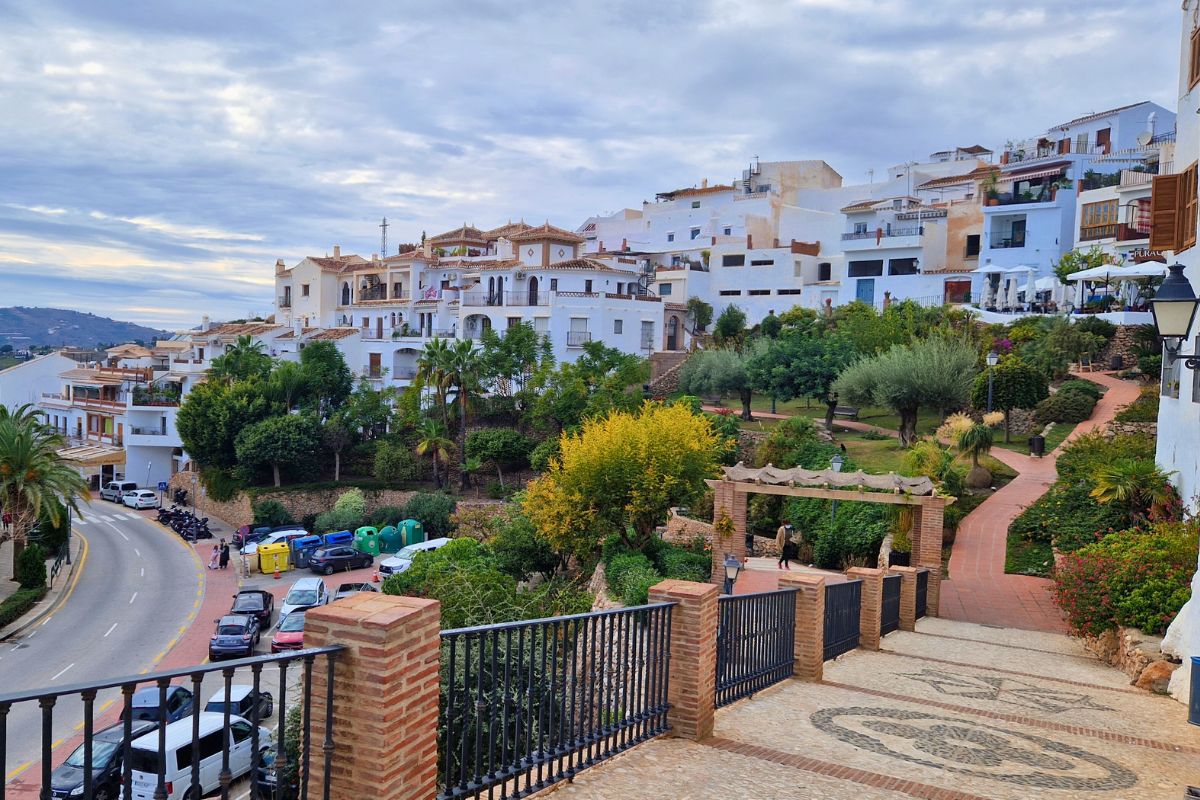
Frigiliana may be compact, but its steep streets reveal layer upon layer of history, culture and scenery.
Lose Yourself in the Old Town
The heart of Frigiliana is the Barribarto (old town), a maze of whitewashed alleys laid out in Moorish fashion.
I spent hours wandering without a map, turning corners to find potted geraniums, wrought-iron balconies and glimpses of the sea. Start at Calle Real, the main street, and climb up through Calle San Antonio and Calle Santo Cristo for quieter lanes lined with flower pots. Wear sturdy shoes — the cobblestones are polished smooth by centuries of footsteps.
Locals often remind visitors to “look back” – the best views appear when you pause mid-ascent and turn around. The steepness can be tiring, so stop for lemonade, café con leche, or something stronger to refresh yourself in one of the small plazas.
Hunt for the Miradores (Viewpoints)
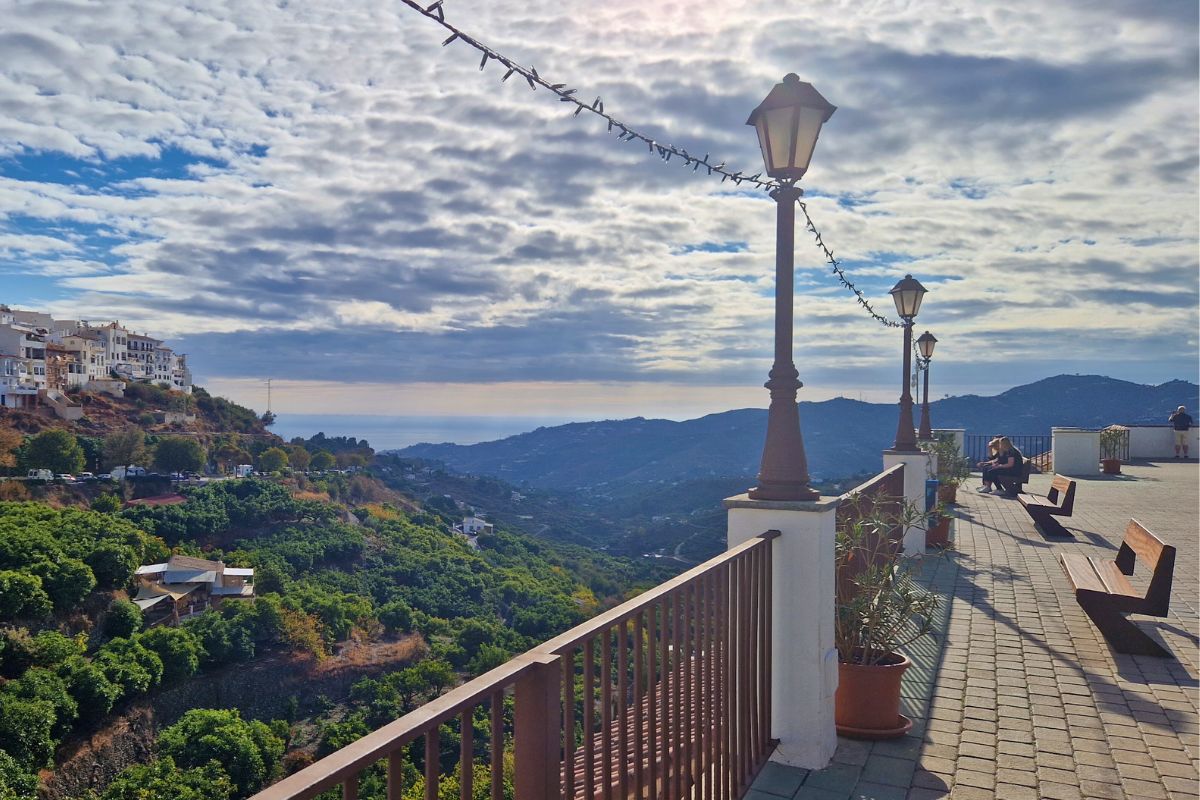
Frigiliana rewards effort with panoramic views. The best miradores include:
- Mirador del Castillo – reached by climbing past the ruins of Castillo de Lízar, a Moorish fortress. Only fragments remain but the views across the white roofs, the Río Higuerón valley and the Mediterranean are spectacular.
- Mirador de la Casa del Apero – near the tourist office, offering a wide view of the old quarter.
- Mirador Plaza de las Tres Culturas – right by the bus stop, perfect for an introduction or farewell photo.
Visit Historic Buildings and Museums
- Archaeological Museum & Casa del Apero – Displays artefacts from the Neolithic to the modern era and a small art gallery. Free entry.
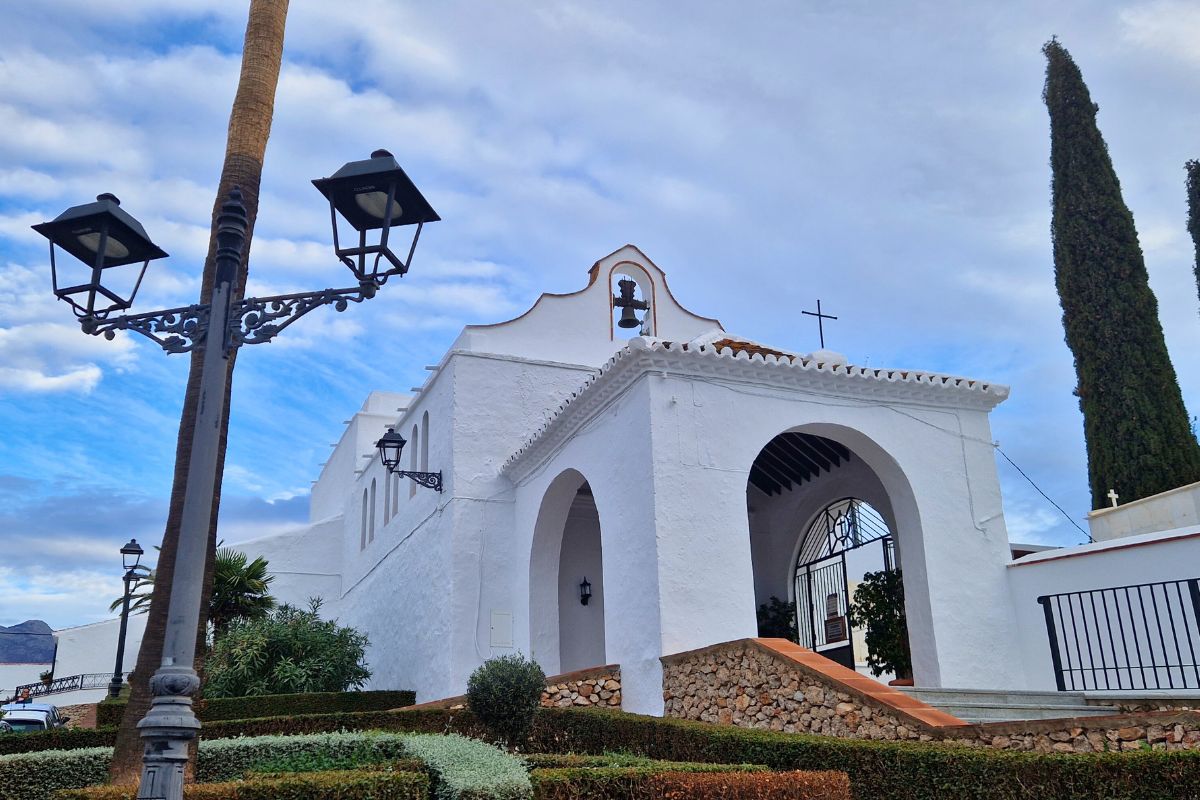
- Church of San Antonio de Padua – A 17th-century church with Baroque altarpieces and Moorish wooden ceilings.
- Palacio de los Condes de Frigiliana / El Ingenio – Once a sugar factory run by the Counts of Frigiliana, it still houses Europe’s only operational sugar cane honey mill. The exterior alone is worth a look.
Other small monuments worth a wander include the Fuente Vieja, a 17th-century fountain still fed by the mountain spring; the Reales Pósitos, once used for grain storage; and the Ermita del Ecce Homo, a tiny chapel perched above the modern quarter.
None takes long to see, but together they round out the village’s story beyond the postcard views.
Shop Local
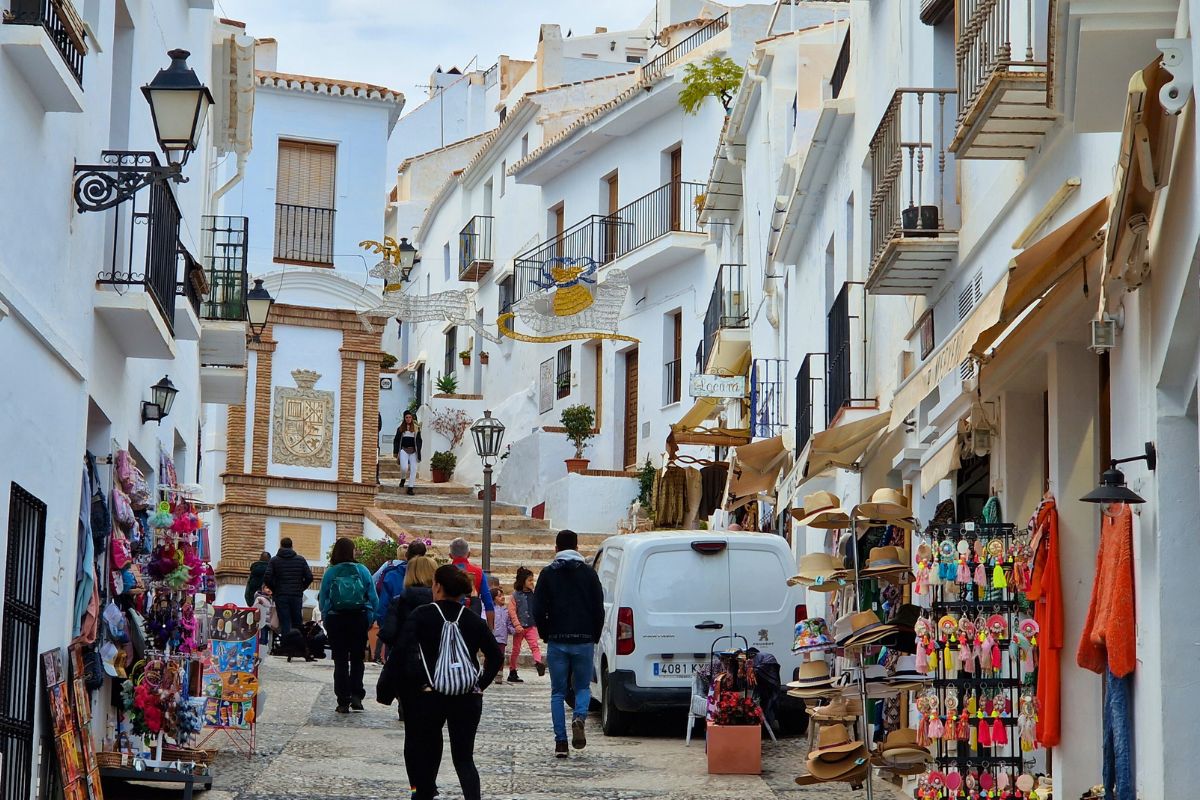
Frigiliana’s lanes are lined with independent shops and tiny ateliers, so it’s worth slowing down to browse instead of rushing through. The best finds are locally made — small-batch and often crafted by the same people who run the tills.
You’ll see ceramics everywhere, from hand-painted bowls and tile mosaics to delicate wall plaques showing scenes of village life. Many pieces come from nearby Vélez-Málaga or are made right here in Frigiliana.
Look out for olive-wood utensils, woven baskets and esparto-grass bags — traditional Andalusian crafts that are both decorative and useful.
A must-buy is a jar of miel de caña, the village’s famous sugar-cane honey, made exclusively at the El Ingenio factory. Pair it with local olive oil, goat’s cheese from the Axarquía hills, or a bottle of sweet Moscatel wine for easy gifts to take home.
You’ll also find small art studios selling paintings and prints of Frigiliana’s streets, as well as artisan soaps, candles, and natural perfumes made with local herbs like rosemary and lavender.
Fashion lovers can check out Frida on Calle Real for handmade accessories and clothing by Spanish designers, while Almagra stocks tasteful homewares and ceramics with a modern edge.
Shops typically open from 10 am to 2 pm, then again after siesta from around 5 pm until late evening. If you’re visiting in summer, the cooler night hours make a relaxed time to wander, shop, and chat with the owners — most are happy to tell you the story behind what they make.
Taste the Local Flavours
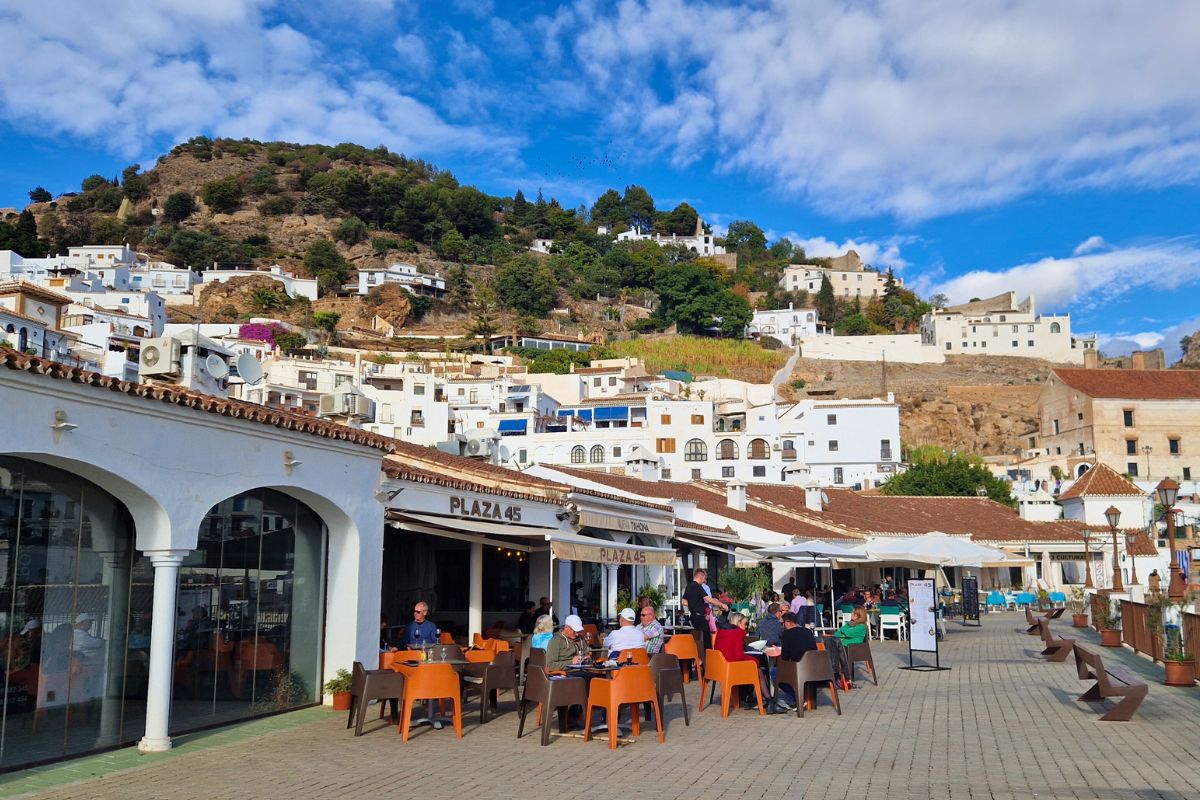
Frigiliana’s food reflects its mountain-and-sea setting. Local menus lean on vegetables, olive oil and the sweet notes of its signature miel de caña made at the Palacio de los Condes de Frigiliana / El Ingenio.
- Miel de Caña (cane honey) – dark, treacle-like syrup unique to Frigiliana, produced continuously since the 1600s.
- Berenjenas con miel de caña – crisp fried aubergine drizzled with that same honey.
- Vino Moscatel – the region’s fragrant sweet wine, best sipped chilled with dessert.
- La Axarca craft beer – a pale ale brewed locally since 2013, proving this small town’s palate isn’t stuck in the past.
- Pescaito frito and goat stews – reminders that both the coast and the sierras are close at hand.
Favourite restaurants include El Jardín (views and modern Andalusian dishes), La Taberna del Sacristán (classic tapas beside the church), La Bodeguilla (budget-friendly local plates) and Pura Cepa (wine and upscale dining).
Frigiliana at Night
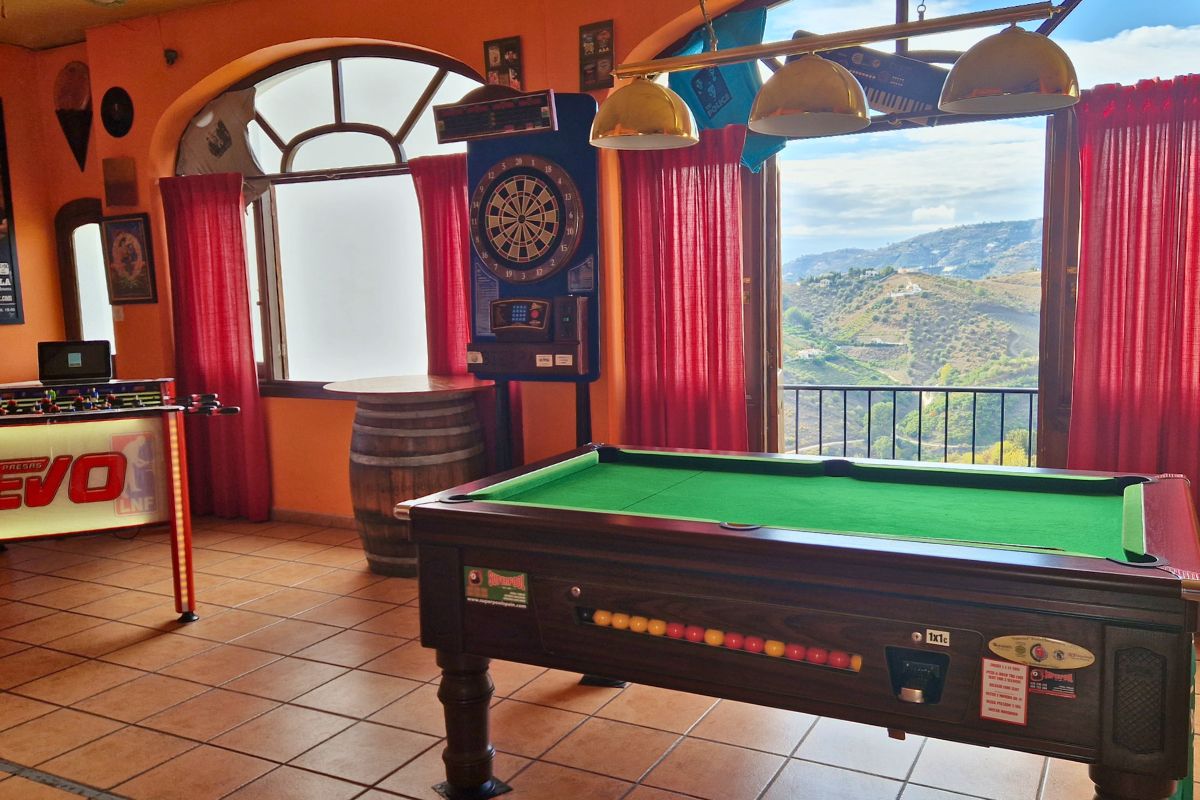
After sunset, the streets glow amber under lamplight. Locals sit outside chatting; the scent of jasmine drifts down the alleys. Grab a table at Bar Virtudes for a glass of muscatel wine and watch the world wind down. On festival nights, the air hums with flamenco and laughter; on others, you’ll hear only church bells and the soft clink of glasses.
Where to Stay in Frigiliana
Staying overnight lets you experience the calm after day-trippers leave.
- Hotel Villa Frigiliana – Central with pool and balconies.
- Posada Morisca Hotel – Boutique retreat outside town with panoramic views.
- Casa Jazmín – Family-friendly apartments in the centre.
- El Torreón 109 B&B – Restored townhouse with rooftop hot tub.
Nerja’s coast is only 15 minutes away if you prefer a beach base.
Check out more hotels on Booking or Expedia.
Practical Tips for Visiting
- Wear comfortable shoes – polished cobbles get slippery.
- Travel outside peak season – spring and autumn are ideal.
- Bring cash – some cafés and the bus driver only accept coins.
- Stay hydrated – the mountain air is dry.
- Learn a few Spanish phrases – it’s appreciated.
- Respect residents – keep quiet in residential alleys.
Frigiliana enforces strict architectural preservation rules — no garish signage, visible solar panels or mismatched paintwork — which is why the village looks so timeless. Visitors are asked to respect that aesthetic: avoid drones, and keep photos discreet around residential doors and windows.
Personal Reflections
Frigiliana’s beauty runs deeper than its white walls. From chatting with a woman who still makes cane honey by hand to watching swallows sweep over tiled rooftops, the village feels alive with tradition. Spend a night or two, slow down, and you’ll see why it captures so many hearts.
Frequently Asked Questions about Frigiliana
What is Frigiliana famous for?
Frigiliana is best known as one of Spain’s most beautiful white villages, part of the Los Pueblos Más Bonitos de España network. It’s famous for its Moorish-style old town, panoramic views, and its unique sugar cane honey (miel de caña) produced at the historic Palacio de los Condes de Frigiliana.
How do you get to Frigiliana from Málaga?
The easiest way is to drive the A-7 motorway east toward Nerja and follow signs up the hill — about 50 minutes. If you don’t have a car, take an ALSA bus from Málaga to Nerja, then connect with the Autocares Nerja (Line VJA-019-MA) microbus that runs up to Frigiliana every hour.
Is Frigiliana worth visiting?
Absolutely. It’s one of the best-preserved villages in Andalusia — walkable, photogenic, and rich in history. Even a half-day visit offers Moorish architecture, hillside views and authentic tapas far from the busier coastal resorts.
How long do you need in Frigiliana?
Two to three hours covers the main sights, but staying overnight is better. When the day-trippers leave, you’ll experience the quiet evenings, local restaurants and sunset views that make Frigiliana truly special.
When is the best time to visit Frigiliana?
Spring (March–May) and autumn (September–October) offer mild weather and fewer crowds. If you like festivals, visit in late August for the Festival de las Tres Culturas, the village’s biggest annual celebration.
Can you stay in Frigiliana?
Yes. There are charming boutique hotels, B&Bs, and rental apartments within the old town and surrounding hills. Favourites include El Torreón 109 B&B, Hotel Villa Frigiliana, and Posada Morisca just outside the village.
What food should I try in Frigiliana?
Start with berenjenas con miel de caña (fried aubergine with cane honey) — the local signature dish. Pair it with a glass of Moscatel wine or the local La Axarca craft beer, both made in the Axarquía region.
Is Frigiliana family-friendly?
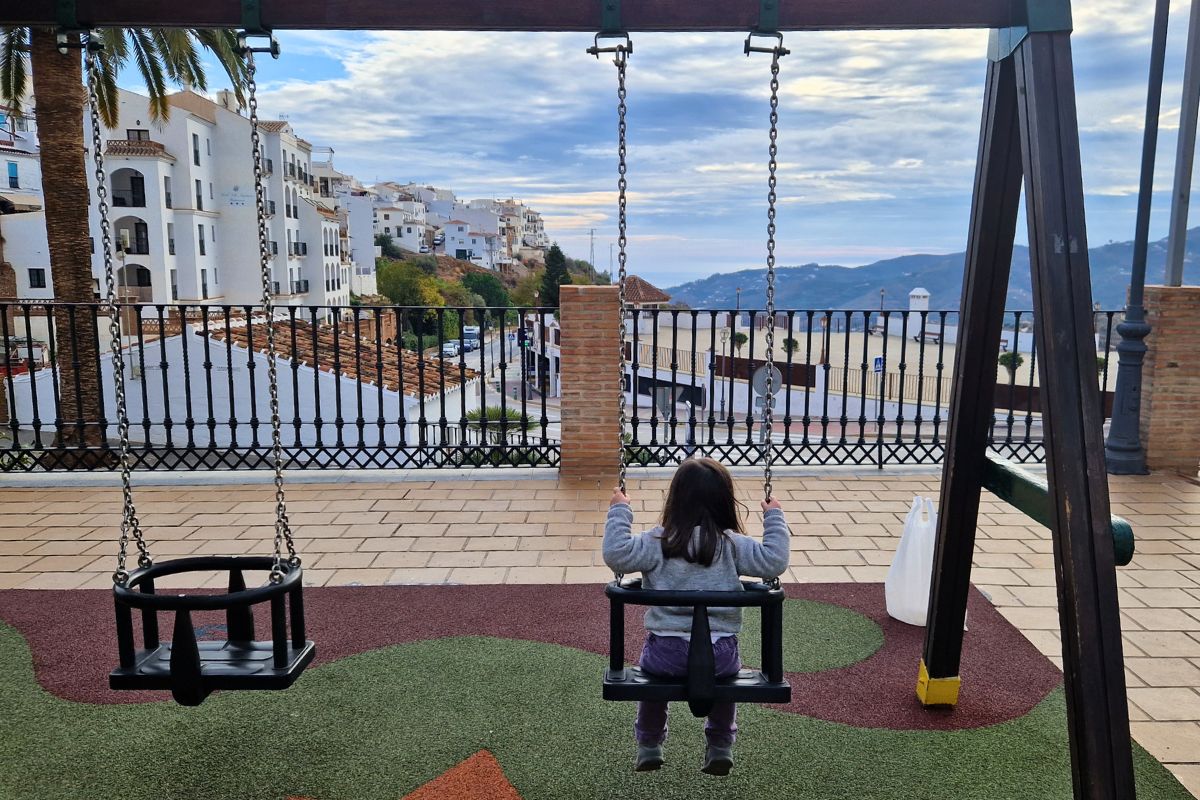
Yes. The village is safe, walkable and full of friendly locals. It also has a very nice little playground by the bus drop off. Just note that many streets are steep and cobbled, so bring good shoes and a sturdy pushchair if you’re travelling with young kids.
Final Thoughts: Is Frigiliana Worth Visiting?
Frigiliana is more than a pretty stop on the Costa del Sol. It may be small, but within La Axarquía it stands as the model white village — proof of why Los Pueblos Más Bonitos de España exists.
It’s a living museum of Moorish architecture, a culinary destination for cane-honey lovers and a gateway to some of Andalusia’s best hiking. Whether you’re tasting berenjenas con miel, wandering the Río Higuerón or simply sitting on a stone step watching the sun drop into the sea, you’ll leave with memories as warm as the village itself.
Before you visit – check out my top helpful travel resources
Here are a few of my recommendations for travel assistance and sites I use when traveling myself. For more on these and why I choose to recommend them, check out my full disclosure page.
- Book your travel insurance with Insured Nomads if you are from the US or Worldwide Insure for European visitors.
- Find the best flights with Skyscanner.
- Get great prices on Rental Cars from Discover Cars.
- Travel throughout Spain and Europe via train. Book your tickets with the Trainline.
- Find affordable accommodations on Booking.com
- Search tours from GetYourGuide or Civitis
- Check your visa requirement on iVisa

About the author
Matthew is a seasoned traveller and founder of The Travel Blogs, where he shares his passion for exploring the world with more than 20 years of globetrotting experience behind him and more to come! Currently living in Madrid, Spain, he loves to discover new places with his young family across Spain and Portugal while still including regular trips to far-flung destinations. Don’t forget to follow The Travel Blogs on Facebook and YouTube for even more inspiration and tips!