
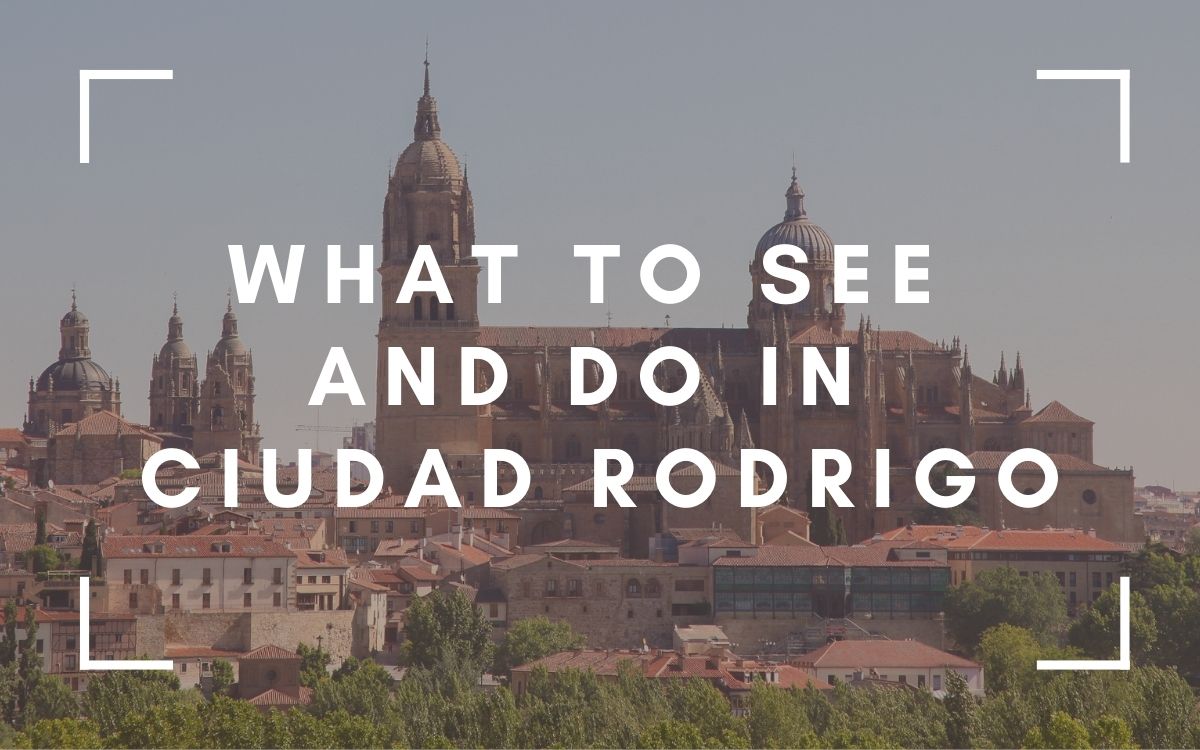
Let’s be honest—Ciudad Rodrigo isn’t the kind of place that shouts for attention. In fact, unless you happened to be a French general back in 1810, a collector of chamber pots (yep, we’ll get there), or the type who blocks out February for Spain’s wildest bull-running party, you’ve probably never heard of it. That’s part of its charm.
I’m lucky. Most summers, I escape to a sleepy mountain village called Monsagro—where the fossils outnumber people and the loudest thing is someone slicing jamón at lunch. But when you need a taste of real Spanish city life—think shops, sun-drenched plazas, and more than one flavour of ice cream—everyone heads to Ciudad Rodrigo. Around here, it’s the city. And honestly, it’s lovely.
So, why make the drive? For starters, those 12th-century stone walls. Ciudad Rodrigo is a proper fortress town, perched on a rocky hill high above the Águeda River in western Spain’s province of Salamanca.
The ramparts, which once held off Napoleon’s troops during the Peninsular War, now offer the best walking route and views you’ll find this side of the border. Yes, you can literally see Portugal from the ramparts on a clear day.
Ciudad Rodrigo is also officially listed among “Los Pueblos Más Bonitos de España”—Spain’s most beautiful villages—by the prestigious lospueblosmasbonitosdeespana.org association.
Inside the walls, sun-baked squares spill into streets lined with Renaissance palaces, ancient cathedrals, and enough quirky surprises to keep you exploring all afternoon (did I mention the Museo del Orinal?).
Locals sip thick hot chocolate in the Plaza Mayor, and just a few steps away, you can trace history from Celtic tribes and Romans to medieval knights and wartime sieges—all in a town that somehow feels both lived-in and timeless.
The best bit? You don’t need a map. Follow the curve of the city walls, take a left when you smell farinato sizzling (Ciudad Rodrigo’s own legendary sausage), and let the town reveal itself one cobbled lane at a time.
If you’re up for hilltop castles, wild bull-running festivals, centuries-old stories, and a side of weird, welcome to Ciudad Rodrigo. Here’s what not to miss—and a few honest tips from someone who’s spent too many sunny afternoons here.
Where is Ciudad Rodrigo?
Ciudad Rodrigo sits on a rocky hill above the winding Águeda River (A tributary to the Duero), just 25 kilometers from the Portuguese border and 86 kilometers west of Salamanca. It’s the western gateway to Castile and León, a historic frontier town where Spain and Portugal have rubbed shoulders (and sometimes swords) for centuries.
You’ll find the city on the main Madrid-to-Portugal route—perfect for a stopover if you’re road-tripping between Madrid and Porto. Off the main tourist radar but loaded with history, Ciudad Rodrigo is a strategic crossroads that’s been shaped by Celts, Romans, kings, and invading armies. These days, it’s a relaxed detour that offers a rare mix of medieval walls, sunlit plazas, and river views.
Need the nitty-gritty on getting here? Scroll down for tips on car, bus, or train— but for now, let’s focus on why you’ll want to linger, not just pass through.
1. Visit the Ciudad Rodrigo Cathedral (Santa María)
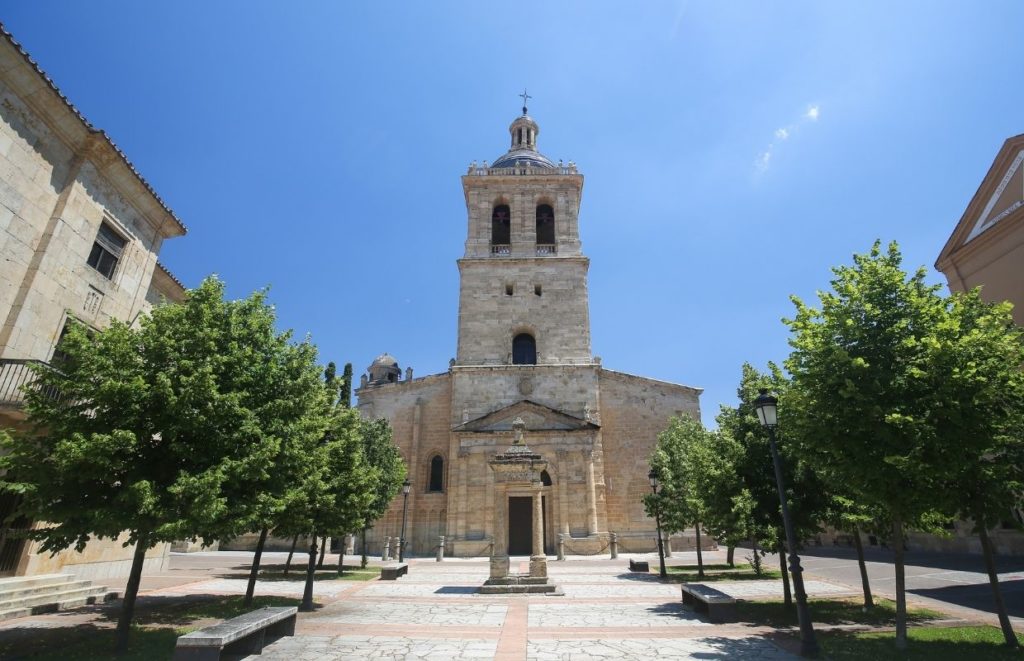
You know you’re close to Ciudad Rodrigo when the Cathedral’s bell tower cuts the skyline—a stone finger pointing above the ramparts to say, “Welcome, you’ve made it.”
The Cathedral of Santa María isn’t just the town’s spiritual heart, it’s a living time capsule that’s watched over Ciudad Rodrigo for more than 850 years. Even if you’re not big on architecture, this place will make you look twice.
Dating back to around 1165, the cathedral began its long construction under King Ferdinand II of León (yep, the same king who made Ciudad Rodrigo a diocesan seat).
What you see today is the result of nearly four centuries of craftsmanship—think late Romanesque foundations, soaring Gothic vaults, and a stunning Pórtico del Perdón (“Portico of Forgiveness”) filled with over 400 intricate carved figures.
If you’re into the details, look out for the choir stalls inside—carved by Rodrigo Alemán, they’re full of scenes from everyday life, cheeky animals, and mythical beasts.
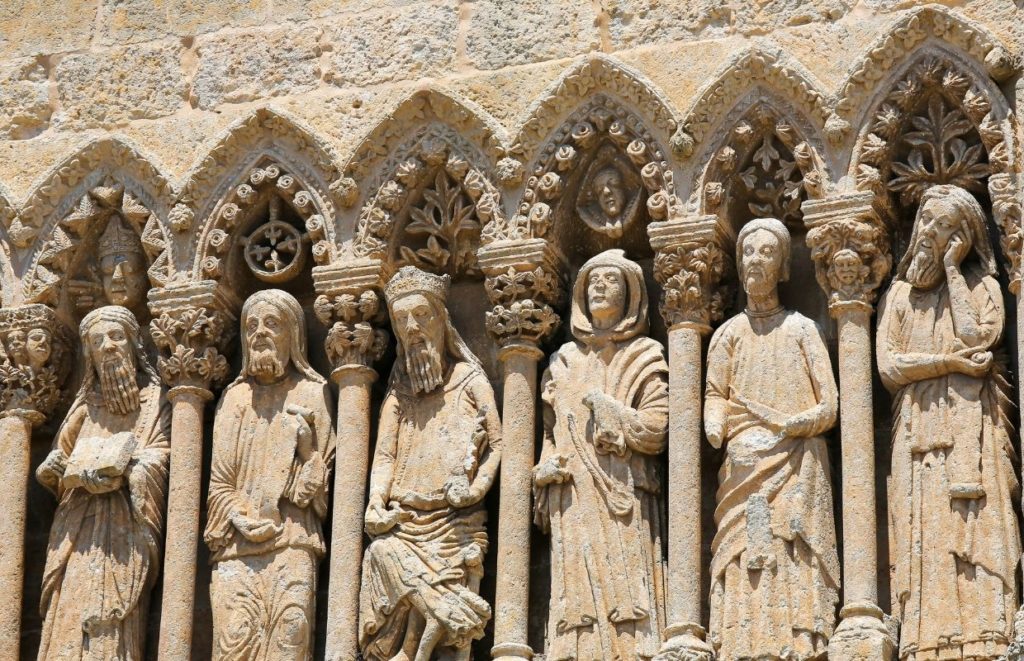
But these walls have seen more than Sunday prayers. During the Peninsular War, Napoleon’s troops used the cathedral as a fortress—and if you peer closely at the stonework on the main portal, you’ll spot cannonball marks left from the siege of 1810. Those scars are a reminder: this building has survived not just the passage of time, but the chaos of war.
Architecturally, you’ll find a Latin cross floor plan with three naves, an ornate cloister along the north side (perfect for a quiet moment in the shade), and façades that show off a mix of styles—from chunky Romanesque columns to delicate Gothic tracery. The cloister even houses a small museum and some ancient funerary steles discovered locally.
Visitor tips:
- The cathedral is open most days (usually 10am–1pm and 4pm–7pm, but check the official site—hours can change for siestas and events).
- Entry is a few euros, and it’s worth every cent for a close-up of the vaulting, the sculpture, and the cool, echoing silence inside.
- If you’re an “admire from outside” type, do a slow lap of the exterior—there’s plenty of detail to discover, but watch out for the uneven cobbles!
2. Museo del Orinal: Yes, It’s Really a Chamber Pot Museum
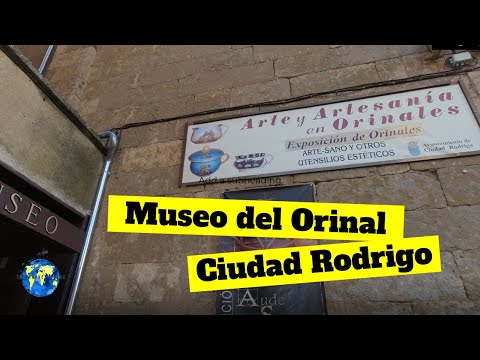
No, I’m not taking the piss—Ciudad Rodrigo genuinely has a museum dedicated entirely to chamber pots. The Museo del Orinal sits right next to the Cathedral of Santa María, so you can go from medieval stone carvings to… centuries of creative “plumbing solutions” in the space of a minute.
I’ll be honest: it’s not the biggest museum you’ll ever visit, but for a few euros, it’s worth every cent—if only for the story value. Where else can you say you’ve seen a collection of over 1,320 chamber pots, commodes, and travel urinals from 27 different countries?
Some of them are surprisingly ornate: royal porcelain, hand-painted pieces from Asia, a portable commode that belonged to a 19th-century Spanish noble. The collection spans the 13th century to the modern era and covers everything from daily life to quirky inventions.
The man behind the madness is José María del Arco Ortiz—nicknamed “Pesetos”—who spent 25 years collecting these little bits of everyday history. What started as a travelling exhibition is now a permanent, air-conditioned home inside an 18th-century stone building (the former Diocesan Seminary of San Cayetano) right across from the cathedral. And yes, he’s sometimes on hand at the entrance, happy to answer questions and share the odd anecdote.
If you’re expecting every exhibit to come with a long backstory, you might be left wanting—most are simply labelled with their country and date.
But as you wander past Roman relics, English porcelain, and art-deco curiosities, you realise: this is the secret history of humanity. Royals, farmers, travellers, emperors—everyone, everywhere, had to go.
There’s a weird sense of connection in that.
Is it the highlight of Ciudad Rodrigo? Maybe not. But it’s definitely the most unexpected museum I’ve ever visited, and the perfect way to cool off for half an hour—especially if you’re hunting for that unique travel story no one back home will believe.
Practical info:
- The Museo del Orinal is usually open year-round, with hours posted on the official website. Entry is just a few euros.
- It’s directly opposite the cathedral—easy to find and impossible to forget.
- Check the website or pop in for the latest info; like most small museums, hours can vary.
- And yes, it counts as a bathroom break.
Go on, add it to your “weird things I’ve done in Spain” list. You know you want to.
3. Wander along the city walls
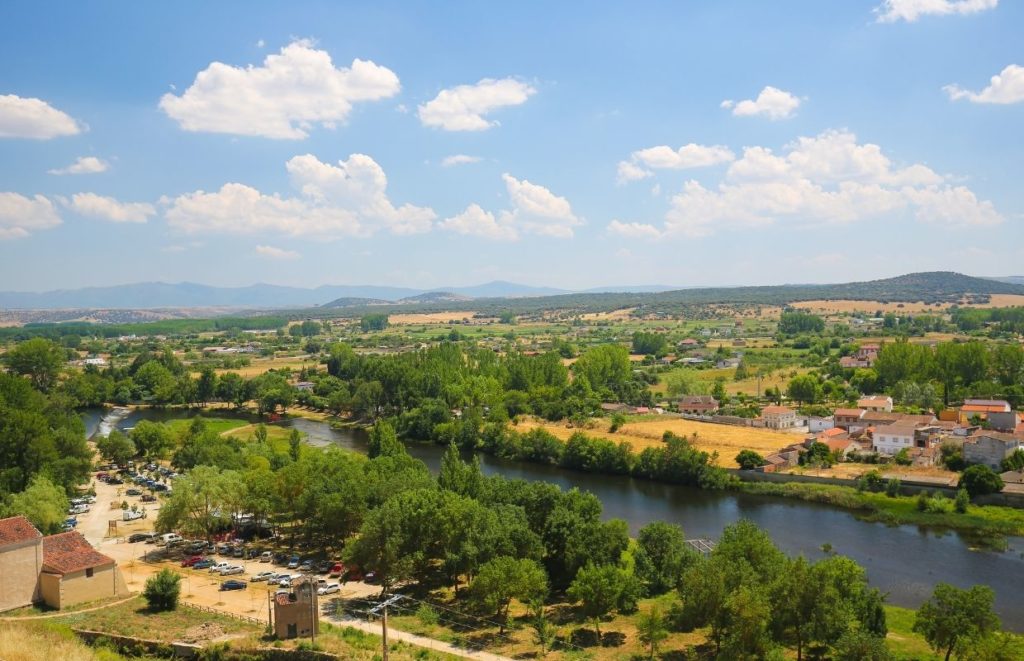
As I mentioned earlier, one of Ciudad Rodrigo’s best features is its circuit of medieval city walls—a 2-kilometer stone embrace that still wraps the old town almost entirely intact. You can actually walk the whole length, which is hands-down the best way to get your bearings and soak up some pretty epic scenery along the way.
The original walls were built back in the 12th century, when “urban planning” meant making your town as un-invadeable as possible. Seven sturdy gates—like the Puerta del Sol and Puerta de Santiago—controlled who came and went. Fast-forward to the 1600s, and the city decided to bulk up: they added angled bastions, artillery platforms, and star-shaped ravelins, all to keep Ciudad Rodrigo safe during the endless tug-of-war between Spain and Portugal.
One of the wildest chapters in the wall’s history came during the Peninsular War. In 1810, French troops laid siege for weeks, blasting huge breaches in the defenses and eventually overrunning the town. Two years later, Wellington’s Anglo-Portuguese army stormed the city in a daring night attack, blasting new holes and earning him the title Duque de Ciudad Rodrigo. These stones have seen their fair share of drama—so don’t be surprised if you find a memorial plaque or two as you go.
What I love most about walking the ramparts is how the scenery keeps changing. One moment, you’re gazing out over the Águeda River; next, you’re eye-level with distant mountains and rolling plains, or peeking down at secret courtyards tucked behind red-tiled roofs. On a clear day, you can even spot the Portuguese hills off in the distance—startlingly close, and a reminder of how much history has marched through this patch of borderland.
If you take it easy, the full lap will take about an hour (double that if, like me, you stop every five minutes for photos or to play “which way would Napoleon have attacked?”). Trust me, the panoramas are worth every step—and you’ll have a good excuse to treat yourself to a churro or two from the Plaza Mayor cafés afterward.
Top tip:
Start your walk early or catch it just before sunset. The golden hour makes the ancient stones glow, and you’ll likely have the walls to yourself. Just keep an eye on your footing—the old stones have a habit of tripping up anyone too busy gawking at the views.
4. Tapas with the toros
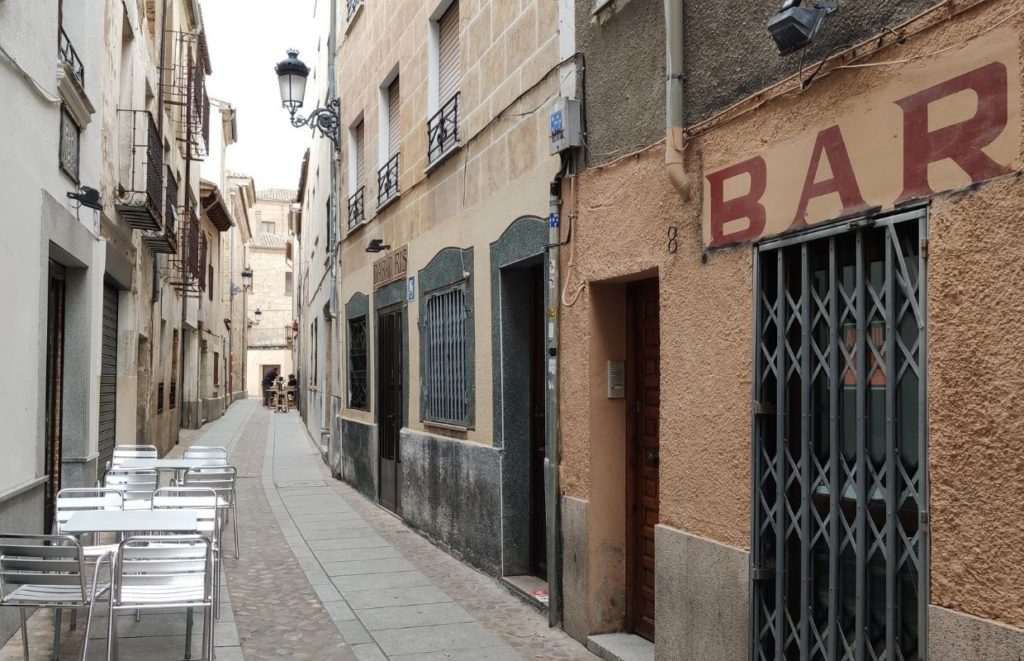
Don’t worry, you won’t run into any actual bulls on this stroll along Calle Toro—unless you’re here for the Carnaval del Toro, in which case, all bets are off. Most of the year, though, Calle Toro is one of Ciudad Rodrigo’s classic streets for tapas and local color.
Back around the turn of the 20th century, this narrow, high-walled lane was the place to spend a night out. Imagine the sound of laughter and clinking glasses echoing through stone archways, with both locals and travelers crowding in for a cold beer and heaping plates of farinato—Ciudad Rodrigo’s famously quirky sausage made with pork fat, breadcrumbs, and a whiff of aniseed. Some say the recipe dates back to the city’s days as a frontier post, when nothing (and no flavor) could go to waste.
Like all legendary party districts, Calle Toro went through a quiet patch as nightlife drifted elsewhere. But lately, there’s a real revival. If you want a genuinely local, low-key tapas crawl—far from the tourist trail—this is the street to wander.
My new favorite stop? Café Bar La Tertulia. We ducked in as a family, not expecting much, and left completely won over by both the food and the warmth of the owners (honestly, hospitality here is next-level; remind me to tell you about the magic trick in the “Where to Eat” section). A couple of other bars are reopening along Calle Toro too, bringing back that friendly, old-school vibe: lots of locals, not much pretense, just cold drinks and seriously tasty plates.
Pro tip: You’ve got to try the farinato, even if it sounds a little out there. It’s a love-it-or-hate-it dish, but you can’t say you’ve really “done” Ciudad Rodrigo until you’ve tried it—preferably with a beer and some laughter echoing down the street.
Why it matters: Calle Toro is more than just a place to eat—it’s a taste of Ciudad Rodrigo’s social life, where traditional flavors, stories, and a few secrets are passed around over plates of tapas. It’s also a great way to soak up the town’s energy outside the main squares.
5. Eat ice cream and people-watch in the Plaza Mayor
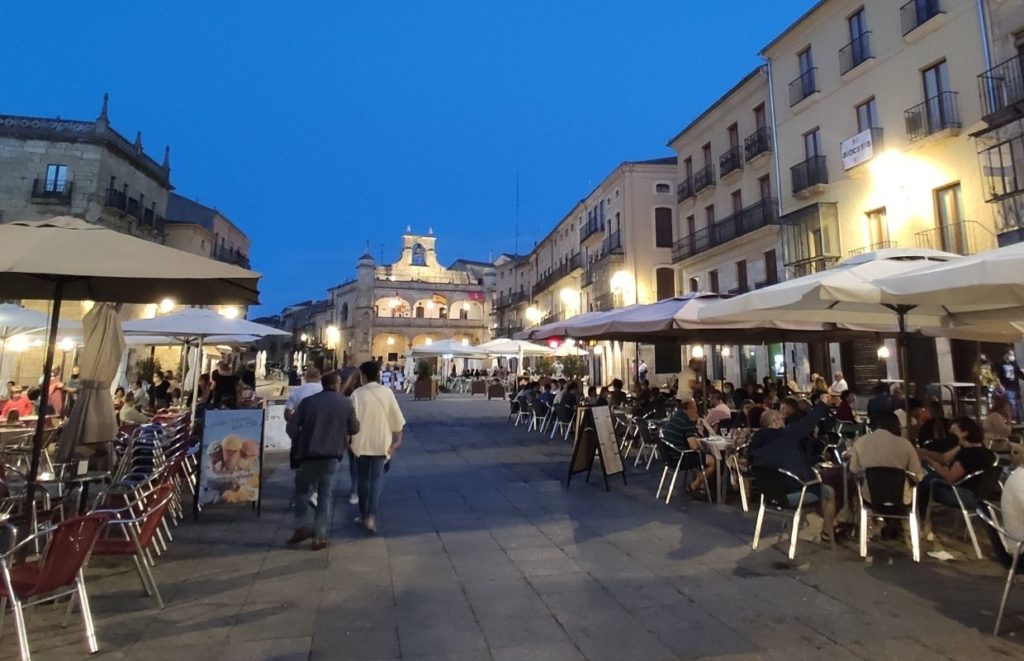
Like any good Spanish town, Ciudad Rodrigo has its own Plaza Mayor—a sun-soaked main square at the heart of city life for centuries. It might not have the size or flash of Salamanca’s famous plaza, but what it lacks in grandeur, it more than makes up for with old-school charm and easygoing energy.
The Plaza Mayor has been the city’s civic hub since medieval times, ringed by elegant arcades, a sprinkling of Renaissance mansions, and the proud Town Hall—a 16th-century building with a handsome façade, two towers, and enough coats of arms to make any historian happy. If you’re lucky, you’ll catch the square buzzing with a local event: the weekly market, the Martes Mayor summer fair, or maybe even the fences going up for the legendary Carnaval del Toro.
But really, the best thing to do here is simple: grab a chair at one of the pavement cafés or restaurants, order a coffee or an ice cream, and just watch the world drift by. The Plaza is always alive—kids darting between tables, old friends deep in debate about football, and the occasional dog on patrol, acting like it owns the place.
If you need a sweet pick-me-up, Heladería Mentha y Limón is my go-to ice cream stop. It’s a little artisan spot right on the square, making their own gelato in small batches. The flavors rotate, but if you see speculoos biscuit on the board, go for it: think cinnamon, nutmeg, ginger, cardamom, and a whiff of clove—all the best spice cupboard flavors, minus the crumbs.
So grab a scoop, park yourself at a sunny table, and let the afternoon roll past. No rush, no schedule—just a front-row seat to daily life in Ciudad Rodrigo. Sometimes, all you really need from a city is a good square, a cold treat, and a little people-watching to remind you you’re on holiday.
6. Ciudad Rodrigo City Hall (Ayuntamiento)
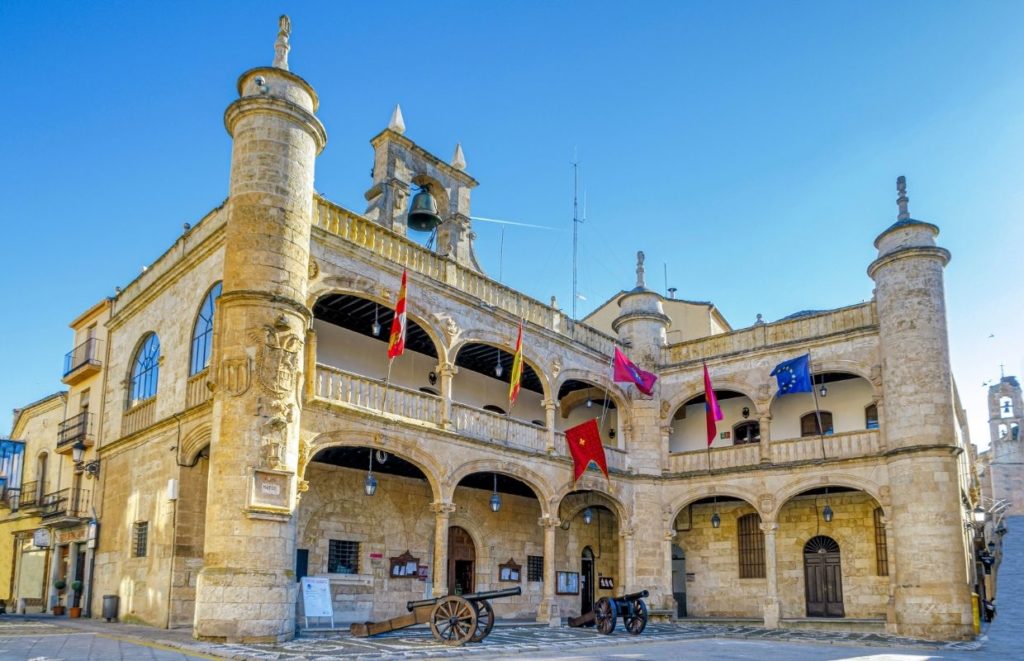
You can’t miss Ciudad Rodrigo’s City Hall (Ayuntamiento)—it anchors the top end of Plaza Mayor with the kind of Renaissance flair that just dares you not to snap a photo. Built in the early 1500s, the building’s got all the right details: two stout corner towers, a bell tower running along the longer side, and a symmetrical stone façade that catches the morning light perfectly and glows at night when it’s all lit up. For a classic “I was here” shot, this is your spot.
Right out front, you’ll find a pair of old cannons, relics of Ciudad Rodrigo’s long history as a fortress city. They’re a guaranteed hit with kids (mine included), who never get tired of pretending they’re defending the square against a Napoleonic invasion. Even the grown-ups can’t resist stopping for a closer look or a quick photo with the cannons and those elegant Renaissance arches in the background.
Look closely at the façade and you’ll spot three coats of arms—including those of the city and the ruling monarchs—carved above the arches. The building’s Renaissance lines are softened by Plateresque capitals and flanked by those iconic corner towers. Along the side, a 1923 wing completes the layout, and inside, the City Hall holds an archive with documents dating back to 1458.
Depending on the day, you might find the doors open. Step inside and you’re part time-capsule, part community hub: there’s often a small tourism office, occasional art exhibits, and maybe a few pieces of contemporary sculpture scattered about. (Pro tip: everything inside is in Spanish, so keep Google Translate handy if you want to really dig into the details.)
But honestly, even if you just admire it from the outside, with the cannons, arches, and lively square all around, you’ll walk away with one of the most iconic photos (and memories) of Ciudad Rodrigo.
7. Take in the history by tracking down some of the palaces and mansions of Ciudad Rodrigo
Spend a little time wandering around Ciudad Rodrigo and you’ll start spotting grand old buildings tucked among the shops and townhouses—reminders of the city’s prosperous days in the 15th and 16th centuries.
These palaces and mansions belonged to the area’s wealthiest families, and each one hides stories of noble feasts, political intrigue, and, at times, full-on military drama. Some are still in use today, as cultural centers or (in one surprising case) the local post office.
Here are a few icons to keep an eye out for on your strolls:
Palacio de los Castro
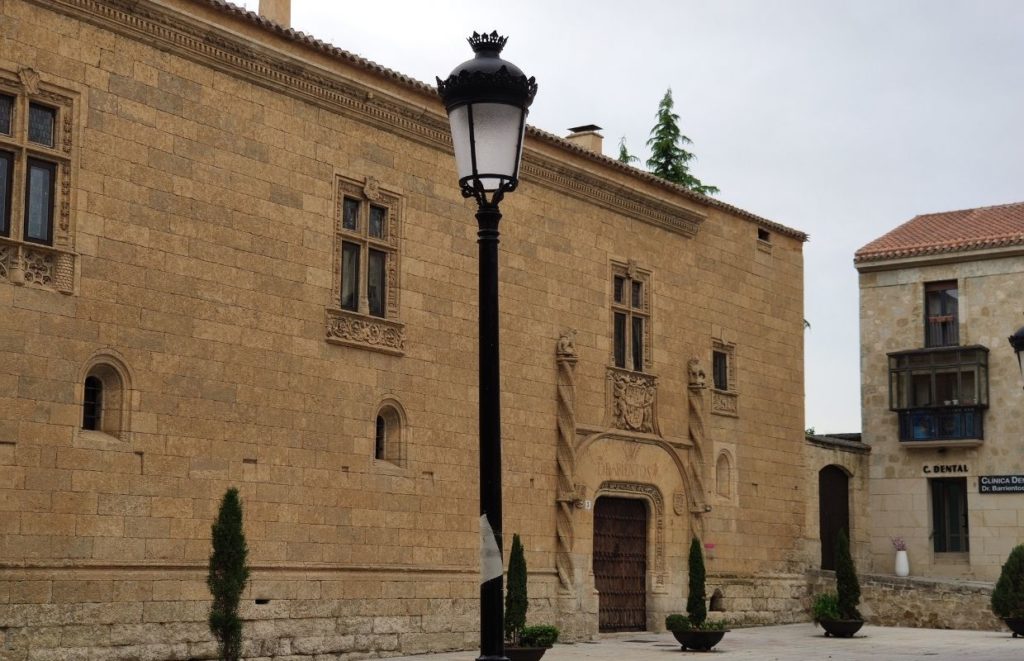
Don’t let the name fool you: the Palacio de los Castro is actually an 18th-century Baroque mansion, built over earlier foundations. Look up as you pass—you can’t miss the grand coat of arms over the doorway, a stone badge of family pride.
Inside (if you ever get the chance to peek), you’ll find a courtyard and, in the past, works by artists like Juan del Castillo and Francisco Bayeu. It’s usually closed to visitors, but I once stumbled into a pop-up art market here. Even if it’s shut, the façade alone is worth a photo.
Palacio Alba de Yeltes
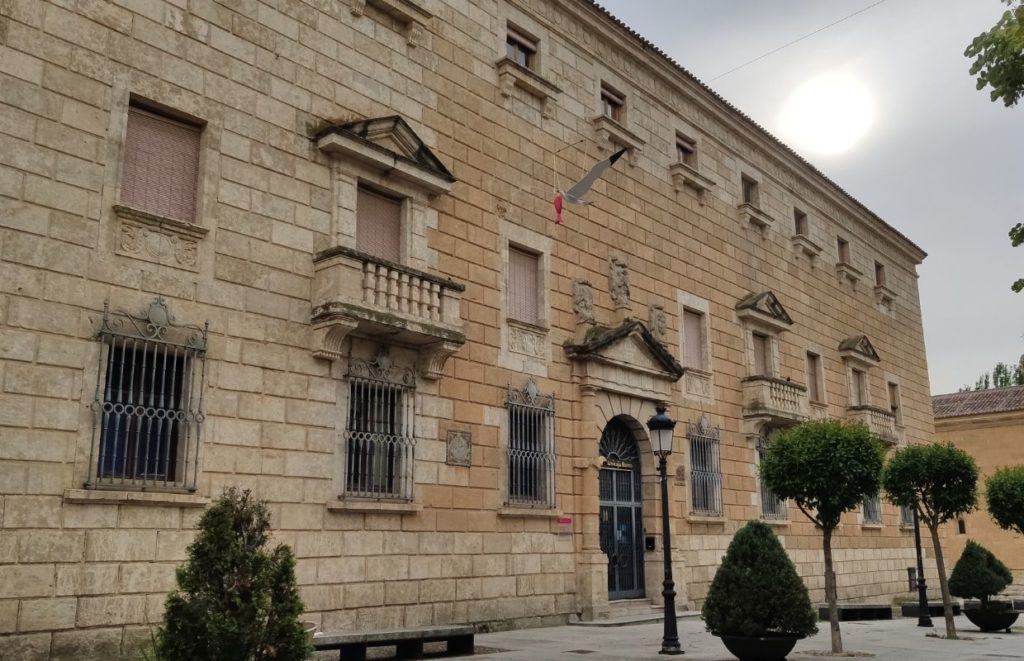
Just down the street sits the Palacio del Conde de Alba de Yeltes, originally built in the 1500s by the Nieto de Silva family.
Its biggest transformation came in the 18th century, when Baroque style was all the rage. The entrance is a showstopper: a semicircular arch flanked by chunky columns, crowned by a pediment bursting with family crests.
This place has seen it all—from glittering noble banquets to its stint as a barracks and military supply depot in more turbulent times.
Palacio de Moctezuma
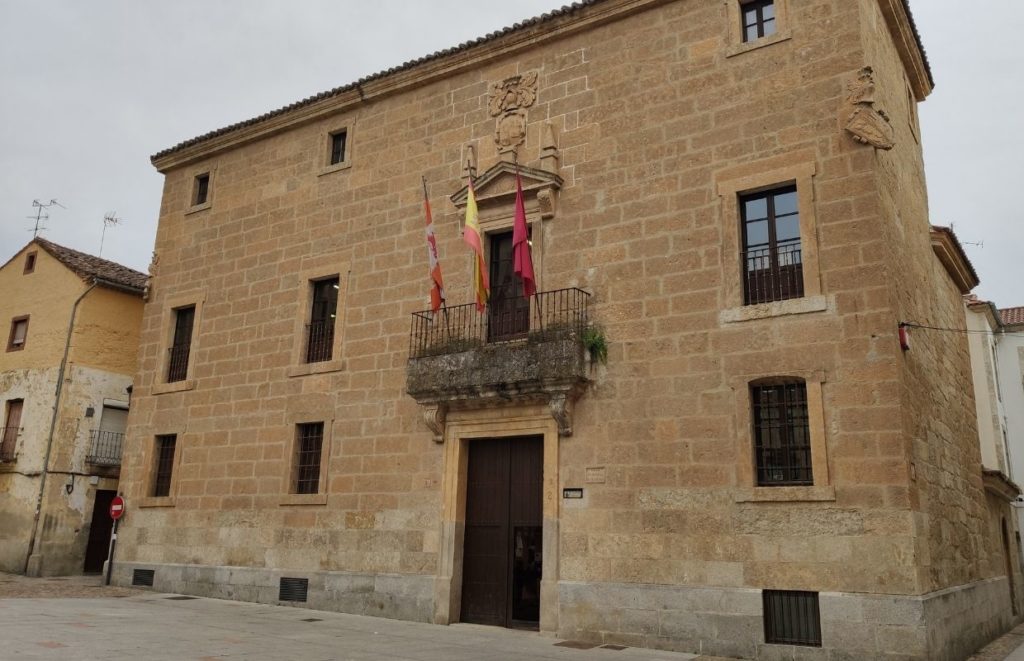
Yes, really: Moctezuma. This palace was commissioned in the 16th century by descendants of the famous Aztec emperor—one of those stories that makes you wish the walls could talk.
While the outside is elegant but understated, step inside to discover Ciudad Rodrigo’s Municipal House of Culture. My personal highlight? A bronze bust of King Juan Carlos I, sculpted by local artist José Martínez—an unexpected mix of local pride and global history.
Some more interesting architecture
Away from the main plazas are some other notable buildings worthy of investigation.
Palacio de los Águila
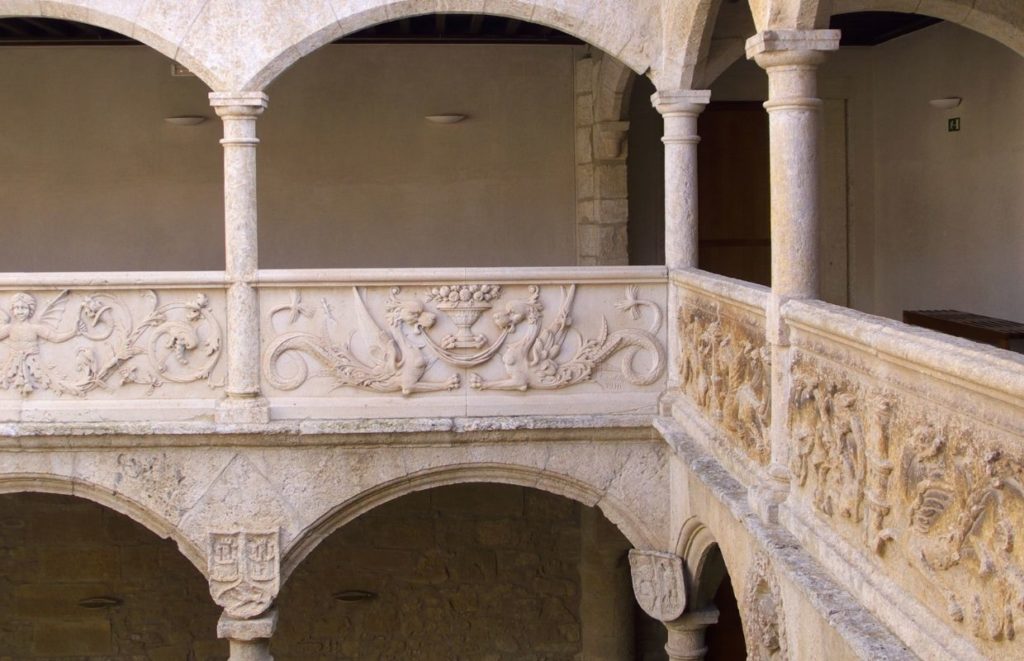
The grandest of them all, Palacio de los Águila (also known as Casa del Príncipe or Marqués de los Altares), dominates a whole block.
Built between the late 16th and early 17th centuries by Hernando de Güemes and his son, this mansion features elegant gardens, two courtyards with finely carved balustrades (look for the winged centaurs!), and even a private chapel.
Today it’s home to cultural exhibitions and local history events—definitely worth popping in if the doors are open. You’ll sometimes find a collection of Goya prints here, showing scenes from the Peninsular War.
Casa de Los Vázquez
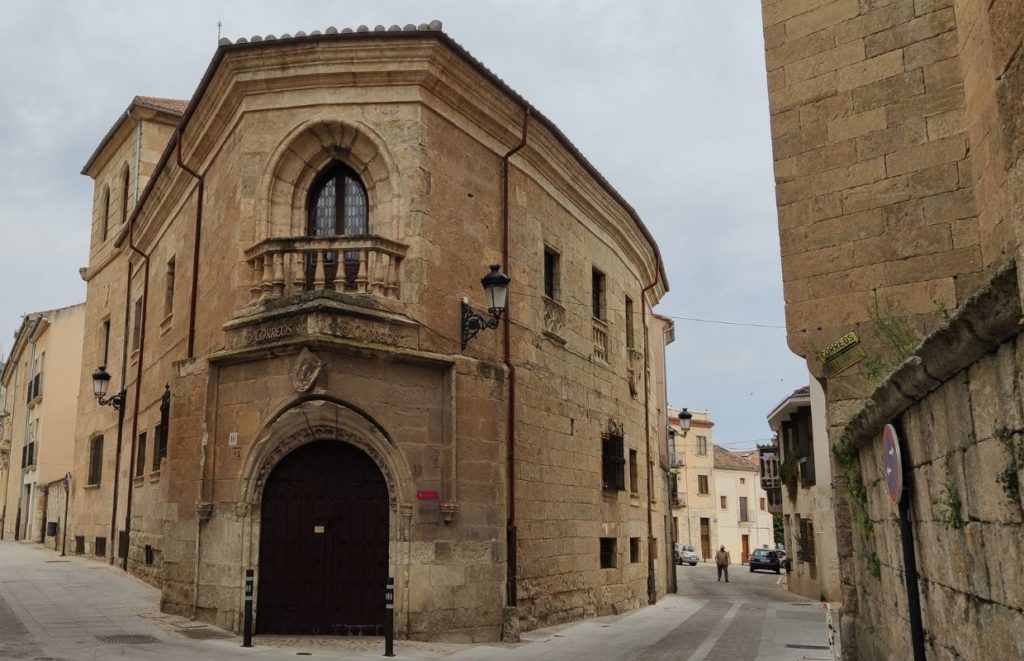
Easily spotted by its Gothic doorway and massive coat of arms, Casa de los Vázquez is often called the prettiest building in town. Built in the 16th century, it’s had a modern twist since 1944—as the town’s post office!
Step inside during business hours for a quick look at its neo-Mudejar and neo-Renaissance details, or just admire the blend of grand history and everyday life.
Tips for Palace Spotting
- Don’t be shy about peeking into open courtyards—some mansions host art or history exhibits, and there’s usually a sign posted with the latest info.
- Most interiors aren’t open to the public, but the façades are worth every photo. Zoom in on those family crests and ornate stonework.
- Want to know more or catch an event? Swing by the tourism office on Plaza Mayor, or ask a local. People here love to share a good story.
8. Visit the Castillo Alcazar de Enrique II
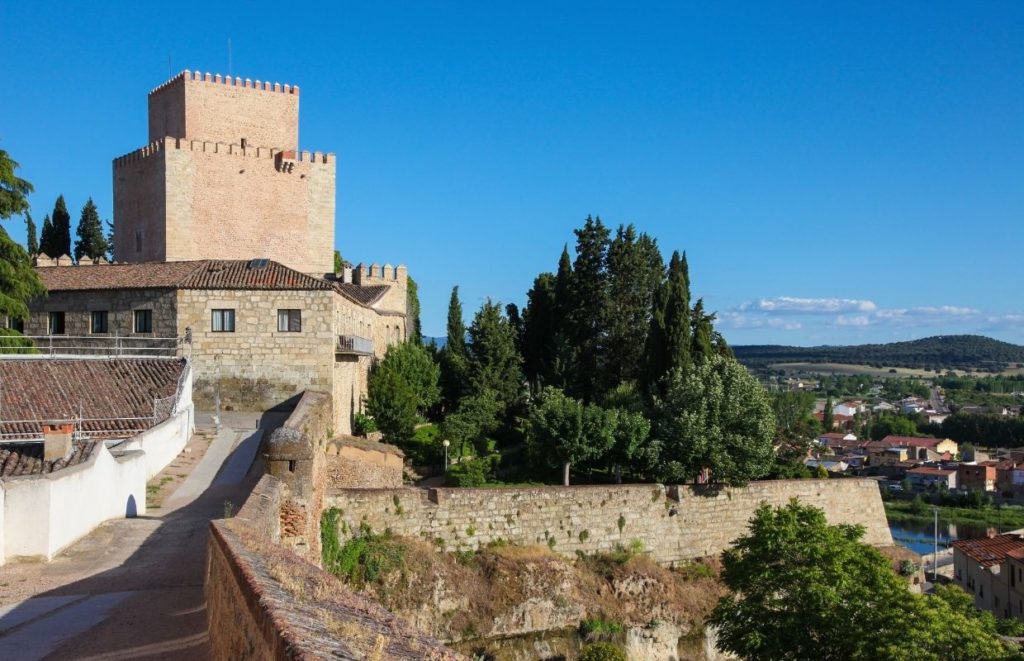
Just up the hill from the river sits Ciudad Rodrigo’s very own castle, the Castillo Alcázar de Enrique II—a classic slice of medieval fortress architecture that’s hard to miss on the skyline.
Built in 1372 by order of King Enrique II of Trastámara, the castle was designed to guard the city at its most strategic point: perched above the Águeda River with clear views toward the Portuguese border. The original architect, Lope Arias Jenízaro, gave it the works—massive stone walls, defensive towers, and a squat three-story keep with pointed-arch windows.
There’s even a commemorative plaque above the entrance marking the foundation date.
Throughout its long history, the castle has worn a lot of hats: royal residence, fortress, and even a regional museum. During turbulent times, it was reinforced by Diego del Águila (the fortress’s governor in 1506), and some say the site may have hosted an earlier fortress built by Ferdinand II of León.
These days, the castle lives a much more relaxed life as the Parador de Ciudad Rodrigo—one of Spain’s network of historic state-run hotels. If you’re feeling fancy, you can book a night and sleep inside these centuries-old walls (with the bonus of river and Portugal views at breakfast).
But even if you’re not staying over, you can still explore the grounds, admire the solid medieval stonework, and catch some of the best panoramas in town.
Pro tip: Pop up to the ramparts for sunset if you can—there’s nothing quite like seeing the golden light spill across the river valley from this ancient perch.
9. Saturday is a shopping day
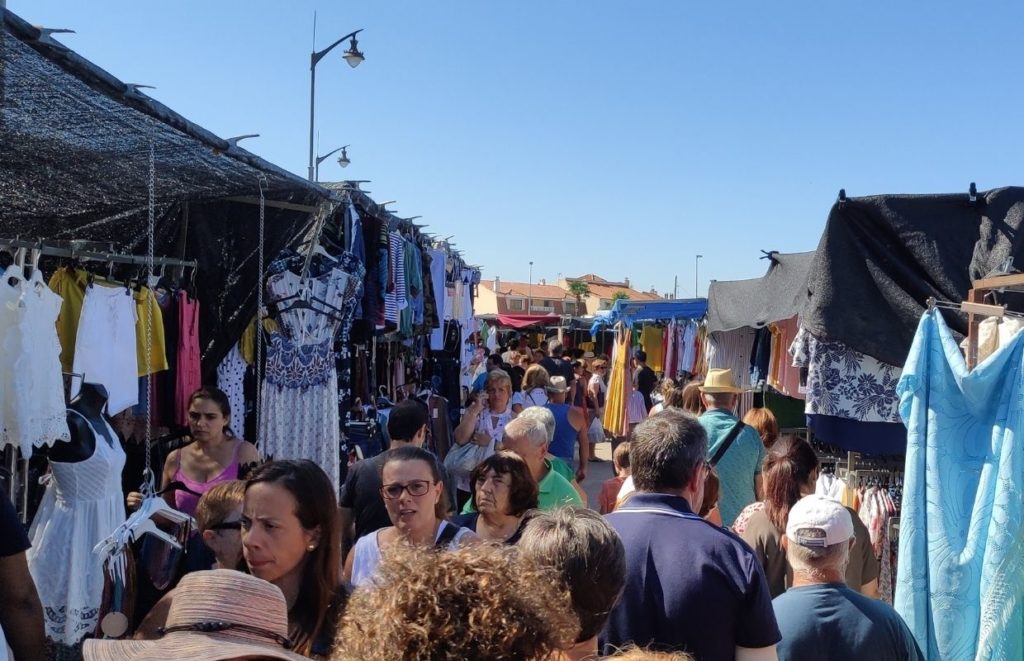
If you find yourself in Ciudad Rodrigo on a Saturday morning, make a beeline for the flea market (mercadillo) just outside the city’s eastern walls. This isn’t your average souvenir shop—it’s part local tradition, part social gathering, and part “What is that, and do I actually need one?”
You’ll find rows of stalls set up along the Avenida de Salamanca, right at the foot of the Puerta de San Pelayo. Vendors hawk everything from budget fashion and sturdy shoes to frying pans, socks, phone chargers, and the occasional mystery gadget (last week: an electric nose hair trimmer—who knew?). It’s a real treasure hunt, so bring your curiosity and maybe a tote bag for any bargains you find.
Top tip: Haggling is totally fair game. Most stallholders expect it, so don’t be shy about trying your luck—a little friendly back-and-forth can get you a sweeter deal, especially if you act like a market regular. Even if you walk away empty-handed, it’s worth a wander just for the energy: locals catching up over coffee, visitors sizing up bargains, and everyone in on the fun.
The market typically runs from early morning to lunchtime, and it’s one of the best ways to soak up Ciudad Rodrigo’s real-life, everyday vibe. Just remember: it’s outside the medieval city walls—so once you leave the old center and head toward the eastern gate, you’re on the right track.
10. Leave the city walls behind
All my recommendations so far have kept you snug within Ciudad Rodrigo’s medieval walls. But there’s plenty to discover just outside—especially if you’re curious about the city’s oldest symbols or in need of a riverside break.
Las Tres Columnas de Ciudad Rodrigo
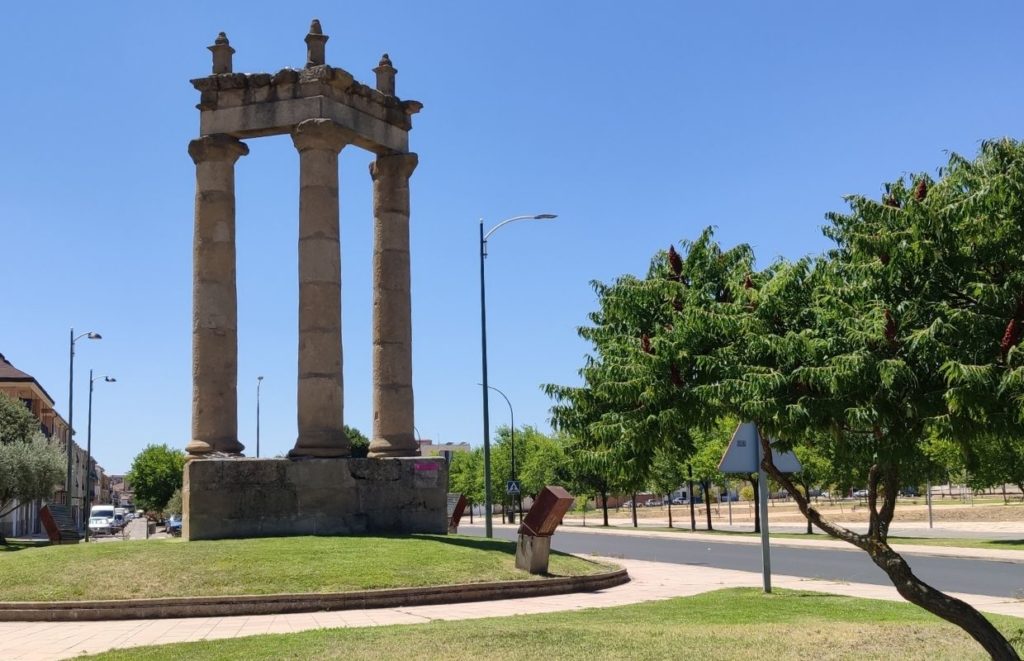
Pop into any souvenir shop and you’ll spot Ciudad Rodrigo’s unofficial mascot: Las Tres Columnas—the Three Columns. They’re everywhere: on mugs, magnets, postcards, and even on the city’s official coat of arms. So you’d think these ancient stones would be front and centre, right? Not quite.
The truth is, unless you’ve got wheels, you might never spot the real deal. These days, Las Tres Columnas are set out on a roundabout in the Campo de Toledo area, well outside the city centre. It took me several trips before I finally tracked them down—and I still wonder why something so symbolic for Ciudad Rodrigo sits so far out of sight.
Here’s the backstory: the columns are genuine Roman stonework, believed to be from a temple that once stood where Plaza Mayor is today. For nearly 350 years, they stood right in the city’s heart, quietly reminding everyone of Ciudad Rodrigo’s ancient roots.
But in 1903, city works forced their removal, and they ended up in storage until 1922, when the mayor moved them out to their current “gateway” spot. Now, they stand watch over the main entrance—iconic, but a bit isolated.
If you’ve got a car, it’s worth a quick drive-by, but otherwise, you’re more likely to see their image on a fridge magnet.
Grab a drink and relax by the river
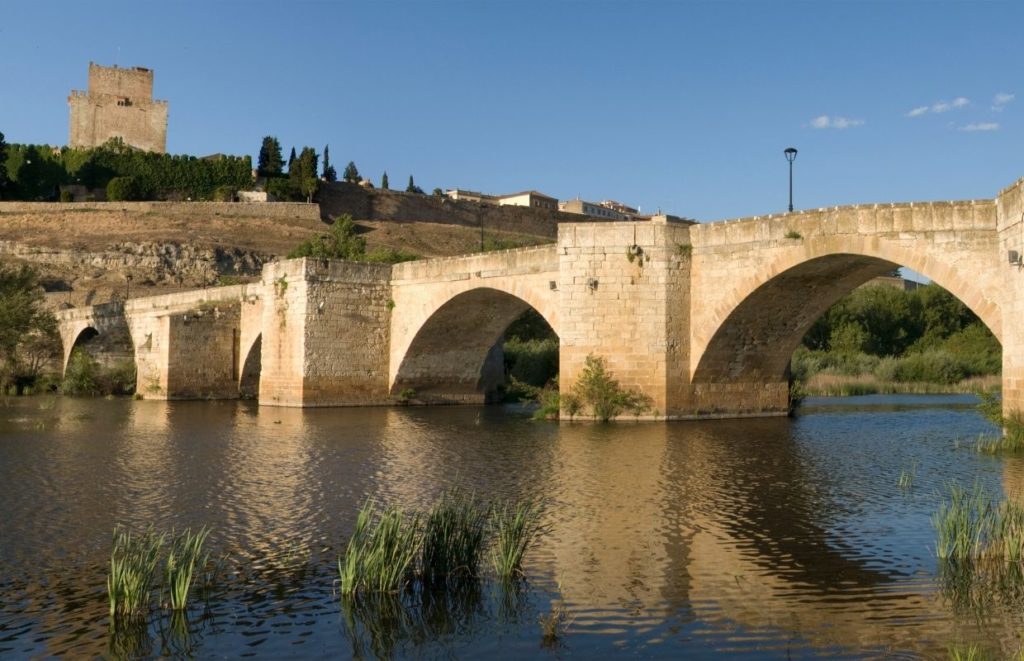
One of my favourite Spanish words I learnt recently is chiringuito. Not only is it satisfying to say “cheer-in-gee-toe”, it also means a small hut that sells refreshments (usually beer) by a river or beach.
Lucky for us, Ciudad Rodrigo has its own little chiringuito scene down by the Río Águeda. It’s about a 15-minute walk from the old town; follow the gentle slope down to the river and you’ll find grassy banks perfect for a picnic or a siesta with a view of the water and the old Roman Bridge.
There’s a small spot where you can dip your toes in the river, but honestly, it’s all about soaking up the sun, sipping something cold, and watching the world go by. I wouldn’t recommend crossing the bridge just to explore—when I did, I wandered into a part of town that didn’t feel so welcoming. Every city has its little pockets you might want to avoid, so stick to the riverside parks and you’ll be golden.
Explore a little further afield in the villages of the Sierra Francia
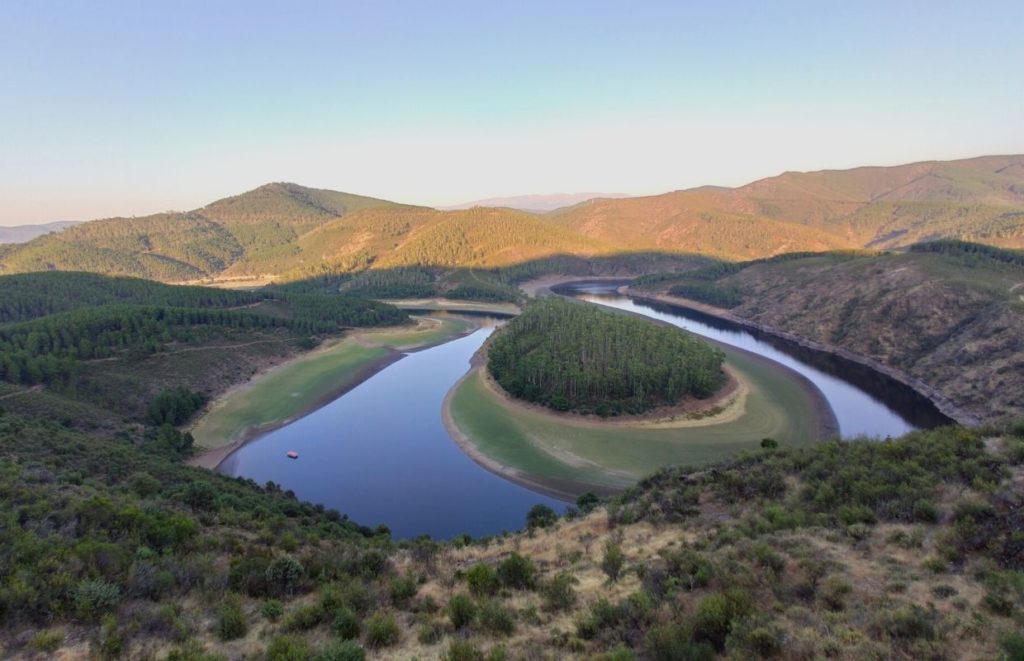
If you’ve got a little more time, the Sierra de Francia mountains and Las Batuecas Natural Park are not far away. The region is dotted with beautiful, historic villages like La Alberca and La Peña de Francia, each with its own charm, cobbled streets, and local traditions.
For serious nature lovers, the area around Meandro del Melero—the dramatic river bend, pictured above, near Riomalo de Abajo—is one for the bucket list (and the photo album).
Where to eat in Ciudad Rodrigo
Looking for a good meal in Ciudad Rodrigo? Whether you want tapas, a burger, or a castle dining experience, this little city’s food scene covers all the bases. Here are my top picks for places to eat, drink, and unwind:
La Tertulia
This is hands-down my favorite tapas bar in the historical center—a true family-run gem on Calle Toro. Joaquín and Lucía run the place with genuine warmth, and Joaquín’s mum holds court in the kitchen, serving up classic Spanish dishes with a local twist.
Step inside and you’ll find a cozy space lined with bookshelves and a fireplace at the back—perfect in winter. In summer, grab a table outside in the shaded street and watch the world go by. The menu features traditional tostadas and raciones (small plates to share), all made with local produce.
My must-order?
- The huevos rotos con farinato—crispy fried potatoes, eggs, and Ciudad Rodrigo’s signature spicy sausage, farinato.
- The goat cheese and caramelised onion toast is another winner.
But honestly, everything is good. The best part? The service. Joaquín and Lucía go above and beyond, even offering to keep an eye on our little one so we could actually enjoy a meal—plus, Joaquín is a magician, so if you’re lucky, you’ll get a table-side magic show with your tapas.
As I mentioned earlier in this post, they don;t have a website, but you can find their Facebook page and Google listing.
Pub Yoanna
This one’s a bit outside the city walls, but if you’re craving a taste of home—or just an excellent burger—head to Pub Yoanna. The owner sources beef from a local farmer, and the homemade burgers are next-level juicy.
Sometimes you just need comfort food, and this place always delivers. If you’re missing Guinness or want to swap travel stories with the odd expat, you’ll feel right at home here.
Parador de Ciudad Rodrigo
For a splurge or a special occasion, the Parador de Ciudad Rodrigo is a real treat. Set in the historic 14th-century castle above the river, it’s part of Spain’s network of state-run heritage hotels.
The views alone—across the Águeda River and the rolling Campo Charro—are worth booking a table for, even if you’re just stopping for a drink.
I haven’t eaten here yet (it’s on my anniversary list), but it’s known for regional Castilian cuisine and a beautiful setting.
Where to stay – hotels in Ciudad Rodrigo
Whether you’re in town for a night or a week, Ciudad Rodrigo offers accommodation for every budget. I usually recommend staying inside the city walls for atmosphere and convenience, but you can sometimes score great deals just outside the historic center.
Luxury choice – Parador de Ciudad Rodrigo
A castle hotel with dramatic views over the Águeda valley and countryside. Expect atmospheric stone interiors, sunny courtyards, period antiques, and plenty of quiet corners for relaxing after a day’s exploring.
Mid-range – Hotel Arcos Catedral
Located right in the heart of town, Hotel Arcos Catedral puts you steps from the Cathedral and Plaza Mayor. Clean, comfortable rooms with WiFi, heating, and all the basics—perfect for sightseeing on foot.
Budget pick – Hotel La Bodega
A no-fuss, great-value option with en-suite rooms, TVs, and internet. It’s a good place to rest after a long day of exploring, and the staff are always helpful.
When to Visit Ciudad Rodrigo
Timing your trip to Ciudad Rodrigo can make all the difference—this little city wears a different face in every season. Here’s what you need to know to get the vibe you’re after:
February: Carnaval del Toro
If you want Ciudad Rodrigo at its most lively (and, honestly, its wildest), book for Carnaval del Toro in February. This legendary festival blends classic Spanish carnival with full-on bull runs through the old town streets—Plaza Mayor transforms into a makeshift arena, packed with cheering crowds and local tradition. There’s a real buzz, with street parades, music, and a funfair (just outside the walls) loaded with rides and games for kids. Be ready for packed hotels and a party atmosphere you won’t forget.
August: Martes Mayor
August is another highlight: Martes Mayor turns the city into a giant medieval market for a day. Stalls fill the historic center, selling local crafts, foods, and everything from hand-carved souvenirs to artisan cheeses. Expect street performers, music, and plenty of regional flair. All summer, the city is at its most social—terraces are full, the river’s buzzing, and swimming spots like La Pesquera are in their prime.
Spring & Autumn: Laid-Back Exploring
For a quieter visit, spring and early autumn are hard to beat. The weather is mild, wildflowers brighten the walls and riverbanks, and you can wander the ramparts or explore the Sierra de Francia villages without the summer crowds. It’s perfect for photography, walking, or just relaxing at a café in Plaza Mayor with a thick hot chocolate.
Winter: For the Solitude Seekers
Winter brings cold mornings and peaceful, empty streets—Ciudad Rodrigo slows down and shows off a more introspective side. It’s a great time for introverts, history fans, or anyone who wants the city almost to themselves (just bring a good coat).
Bottom line:
- Go in February for epic festivals, bull runs, and party energy.
- Pick August for the medieval market and summer buzz.
- Choose spring or autumn for gentle weather, fewer tourists, and the best walking and village-hopping.
- Visit in winter for quiet streets and a true “local” feel.
Whenever you come, you’ll find something special—just pack for the season, check local event dates, and enjoy the changing rhythms of Ciudad Rodrigo.
How to Get to Ciudad Rodrigo: Your Options (and Honest Advice)
Let’s be real — part of Ciudad Rodrigo’s charm is that it isn’t swamped with crowds, and that’s mostly because it’s a little out of the way. But that doesn’t mean it’s hard to reach!
Here’s how to get here, whether you’re road-tripping, relying on trains, or just plotting the best escape from Madrid.
By Car (Recommended)
Honestly, driving is the easiest—and most flexible—way to get to Ciudad Rodrigo. All the big car rental agencies operate across Spain, so you can pick up your wheels in Madrid, Salamanca, or wherever your trip starts.
From Madrid:
Expect a straightforward three-hour drive. You’ll follow the A-6 out of Madrid, hop onto the AP-51 and AP-6 towards Ávila (heads-up: this stretch is a toll road—about €10, but it shaves off time and stress). From Ávila, it’s a scenic run to Salamanca, and then a straight shot to Ciudad Rodrigo.
Once you’re out of Madrid’s orbit, the traffic all but disappears and the roads are blissfully open.
Planning a road trip to Portugal?
Ciudad Rodrigo is perfectly placed as a stopover if you’re heading from Madrid to Porto or anywhere in Portugal. It’s just 31 km from the border—close enough for a cheeky cross-border detour.
Driving in Spain
If you’re not used to Spanish road rules (speed limits, roundabout etiquette, random police checks), check out my post on Spanish Driving Laws before you go. It’ll save you from any “I didn’t know that was a rule!” moments.
By Train & Bus
If you don’t have access to a car, the following best way is to take a train to Salamanca and then a bus to Ciudad Rodrigo, which should take around an hour.
Step 1: Madrid to Salamanca by Train
There’s a direct high-speed train (AVE or Alvia) from Madrid’s Chamartín station to Salamanca, and the journey takes about 1.5–2 hours, depending on the service.
Step 2: Salamanca to Ciudad Rodrigo by Bus
From Salamanca, hop on a bus to Ciudad Rodrigo—buses run regularly and the trip is about an hour. Look up schedules in advance, especially if you’re traveling on a Sunday or public holiday.
By Bus from Madrid
You can take a direct bus from Madrid to Ciudad Rodrigo. Expect the trip to take around 4 to 4.5 hours, and tickets cost about €25. Not the fastest option, but it’s affordable and there’s no need to change vehicles along the way.
Can I fly to Ciudad Rodrigo?
There are no convenient airports for Ciudad Rodrigo. The closest is Salamanca. Salamanca’s airport is tiny, with limited flights (mainly domestic).
Around 185kms away is the slightly larger Valladolid Airport.
Madrid Barajas is the nearest major airport, about 250 km from Ciudad Rodrigo—making car rental the logical choice from there.
If you’re coming from outside Spain, your best bet is to fly into Madrid, grab a car, and enjoy the drive out west.
Top tips
- If you’re travelling with luggage or kids, driving is definitely the least stressful.
- In high season, book your buses and trains ahead—seats fill up, especially on weekends.
- Give yourself time for detours—Ávila and Salamanca are both worth a stop if you can squeeze them in.
What is Ciudad Rodrigo best known for?
Ciudad Rodrigo is famous for its remarkably preserved medieval walls (dating to the 12th century), its role in the Peninsular War (especially the Siege of 1810), the Romanesque-Gothic Cathedral of Santa María, and the iconic Carnaval del Toro—a unique carnival that mixes bull runs and traditional festivities.
Can you walk on the Ciudad Rodrigo city walls?
Yes! The full circuit of the walls (about 2 km) is walkable, with seven gates and plenty of spots for views over the river and countryside. It takes about an hour to walk the loop at a relaxed pace.
Are any of the palaces open to the public?
Most palaces (like Palacio de los Águila) are only open for temporary exhibitions or special events, but you can admire the exteriors as you explore the town. Palacio de los Águila often hosts cultural events and has a tourist office inside—worth checking opening hours if you’re interested.
When is the Carnaval del Toro in Ciudad Rodrigo and what’s it like?
Carnaval del Toro is held every February, combining classic carnival celebrations with daily bull runs and amateur bullfights (capeas) right in the streets and Plaza Mayor. The city gets lively, hotels book out, and the party goes on for days—book accommodation well ahead if you want to be there.
What food should I try in Ciudad Rodrigo?
Start with farinato (a local sausage made with pork fat, breadcrumbs, and spices), chanfaina (a hearty rice and lamb offal stew), Morucha beef, and almond sweets like repalaos. For a treat, try ice cream at Heladería Mentha y Limón or tapas along Calle Toro.
Is Ciudad Rodrigo family friendly and walkable?
Yes—the city center is compact and mostly pedestrian, with parks, open squares, and lots for kids to explore (especially the cannons and walls). Some surfaces are cobbled and can be uneven, so strollers or wheelchairs may need a bit of care.
Final thoughts
If you’ve made it this far, you’ve probably figured out that I’m fond of Ciudad Rodrigo. It’s one of those places that doesn’t shout for attention or get plastered all over Instagram, but that’s exactly why I love it.
Tucked away in the west of Spain, just shy of the Portuguese border, it’s still very much under the radar—especially for foreign visitors.
But if you’re after authentic Spain—real plazas, real history, and a rhythm of life that hasn’t been polished up for tourists—Ciudad Rodrigo is a gem. And if you’ve got time, the neighbouring villages and countryside are packed with even more surprises (and some of the friendliest people you’ll ever meet).
So, whether you’re road-tripping through Spain, hunting for new festivals, or just looking for somewhere different to unwind for a couple of days, give Ciudad Rodrigo a spot on your itinerary. You might just find yourself planning a return visit before you’ve even left.
About the author
Matthew is a seasoned traveller and founder of The Travel Blogs, where he shares his passion for exploring the world with more than 20 years of globetrotting experience behind him and more to come! Currently living in Madrid, Spain, he loves to discover new places with his young family across Spain and Portugal while still including regular trips to far-flung destinations. Don’t forget to follow The Travel Blogs on Facebook and YouTube for even more inspiration and tips!