

Post updated 16th Feb 2025 after my most recent visit, including …
- New recommendation where to eat a traditional Segovian Menu.
- I finally went to the top of the cathedral – loved it!
- My first visit in the rain – new FAQ added.
- Updated prices reconfirmed taxi hack.
Easily accessible by high-speed train, A day trip to Segovia from Madrid Segovia is one of my favourite days out, and easy to do yourself.
With one of the finest Roman aqueducts in Spain, an imposing Cathedral, an impenetrable castle and wonderful food and drink culture, there are so many things to do on a Segovia day trip; it is my favourite place to visit on a day trip from Madrid.
So with that said, here is my guide packed with information about how to get to Segovia, a suggested Segovia itinerary and memories of a day trip from Madrid to Segovia with some friends who were visiting from the UK.
Best Ways to get to Segovia from Madrid
| Method | Rough Cost | Pros | Cons |
|---|---|---|---|
| Self Drive | €20-€50 | Flexibility, Privacy | Fuel costs, Parking |
| Train | €15-€30 | Speed, Frequent departures | Limited luggage space |
| Bus | €10-€20 | Cost-effective, Multiple stops | Longer travel time |
| Organised Day Tour | €50-€100 | Guided experience, All-inclusive | Expensive, Fixed schedule |
Let’s take a closer look at how to go to Segovia from Madrid, or, if you would rather skip to what to do in Segovia, just click here.
The easy option: an organised day tour to Segovia
Segovia is a little under 100 kilometres from Madrid, so easily reachable in a day trip. While there are a few options for getting there, the easiest of all is taking an organised Segovia day trip.
There are many options to choose from, some of which also include other cities, such as Avila, but I’d recommend spending a whole day in the city, as there is plenty to keep you busy.
Segovia Picks
You can also find some other great tours via Civitas and Viator, be sure to shop around to find the best one for you.
However, if you would rather have a bit more freedom and make a Segovia day trip under your own steam as opposed to a tour, there are plenty of other options. My recommendation would be getting the Madrid to Segovia train, an in-depth look at that coming up in a moment, but first, let’s see at a couple of other options.
Drive to Segovia
One option would be to hire a car and drive yourself. While this would be a little more expensive than most, it does give you the freedom to not be restricted by bus or train timetables. Based on the below, I would recommend option two. Although the drive is 20-minutes longer, once you leave the motorway, the trip becomes a beautiful drive through the Segovia Mountains.
If you do decide to hire a car, I would highly recommend getting familiar with some of the driving laws in Spain to avoid any run-in with the police.
Madrid to Segovia bus
Another option is to get from Madrid to Segovia by bus. It certainly works out quite a bit cheaper, with a day return being around €10, however, the trip takes around 1 hour and 20 minutes, as opposed to a little under 30 minutes on the train.
Despite the extra time it would take, it is still a realistic option if you are on a tight budget. On weekdays there are around four buses a day the run from Moncloa bus station to Segovia. The first one leaves at 6:30am and the last return at 9:45pm.
On the weekends there are fewer buses available and start a little later, if you would like to check the timetable, you can do so on the Avanza website, who run the service.
One of the benefits to the bus is that it drops you off right in the city and a perfect place to start your day at the Segovia Aqueduct, as opposed the high-speed train to Segovia (there is also a slow one, don’t get that), which drops you in the middle of nowhere (more on that in a moment).
But to be honest, it takes a lot longer and isn’t all that much cheaper than the train, which is why I would highly recommend . . .

Madrid to Segovia day trip by train
Tickets on the RENFE high-speed Madrid to Segovia train, which takes 28 minutes, cost a little over €20 for a day return. This makes it great value and by far the quickest way to get to Segovia.
The train to Segovia leaves regularly from Madrid Chamartín Station, which can be easily accessed from most of Madrid via the Metro Line 1. The first departure on weekdays is 6:40am, 8am on the weekends, and the last train back being a little before 11pm during the week and at 9:30pm on the weekends.
It’s pretty easy to buy a ticket on the day of travel. Find the ticket office which is well signposted and in the middle of the station, grab a number from the machine and wait to be called to purchase your ticket. The vendors will speak enough English to know what you need, but you should try ordering in Spanish first, out of politeness.
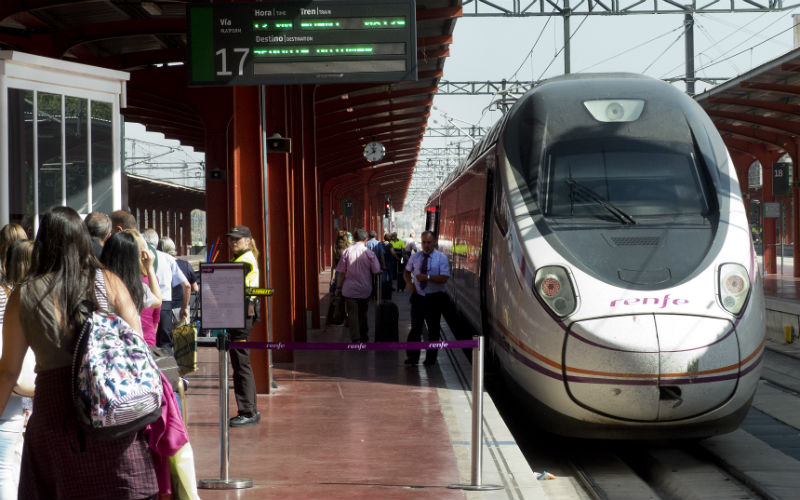
Something to bear-in-mind is that there are often queues at the ticket desk and the Spanish rail system is very efficient. if you are buying tickets on the day. be there early, at least 30-minutes before departure to allow time for lining up and passing through the bag security checks that AVE trains have in place. The train doors officially lock two minutes before departure, which is pretty much always on time.
Tip – Although Madrid’s Metro is simple to understand, some of the stations appear twice. If you look at the map, you’ll notice that there is Chamartín and Pinar de Chamartín, the train station is the first one. If you have people visiting and send them to the wrong one, well, that would just cause chaos, not that I would ever have done that (sorry Mum and Dad).
So, that said, it is probably a better idea to buy your tickets for the Madrid Segovia train online in advance. They can be purchased p to 60 days before departure and while you can buy them directly on the RENFE website, I find the site really crappy to use and hard to navigate so I would recommend a more simple option such as Trainline.
Both sites sell the tickets at face value, so it shouldn’t be any more expensive. I generally like the booking system of Trainline, and their app is helpful too, with live train information and updates, but just feel free to price check between them.
Segovia Guiomar train station to the aqueduct and city centre
The high-speed train stops at the Segovia-Guiomar station, which is about 8 kms away from the city centre. However, getting to the city is super easy, so have no fear.
There are two buses that will be waiting, numbers 11 and 12, which both cost €2 per person. Both will take you to the city centre, the only difference is that the 11 drops you right at the Segovia Aqueduct (but takes longer) whereas the 12 drops you about 5 minutes walk away.
Don’t worry about where you should get off either, just follow the herd.
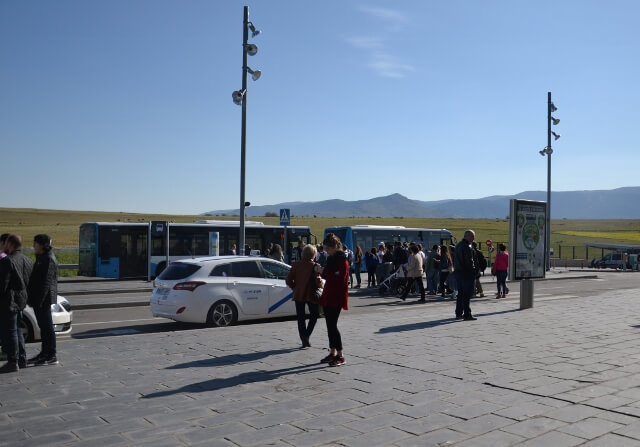
Or relax and get a taxi
If you don’t fancy a bus ride, there is also the option of getting a cab. There are normally a couple lined up, waiting for the train drop-offs and expect to pay in the region of €10-12 to get to the centre.
If there are 4 of you, or you find some people to share with, not only is this option cheaper, it is also a lot more comfortable and quicker.
Now I’m never one for encouraging fast disembarkment. I hate it when an aeroplane lands and so many people do weird yoga-style contortions to grab their luggage and then hang around crushed in the aisle while the crew fiddle with the door.
I really don’t understand it. Just sit and relax for a few more minutes in comfort – you won’t be trapped in your seat forever to be left to die and no-one is going to steal your luggage . . . Sorry, I got distracted.
So, I’m not a fan of rushing to get off a train, but here, I’d highly recommend putting an extra bit of juice into your steps. The bus fills up quickly and there only a limited number of taxis that will be ready and waiting, so to make sure you can get on (and hopefully not have your nose in someone’s sweaty armpit) try to get out of the station quickly.
We didn’t exactly drag our heels and only just made it onto the bus, it was a squeeze. I can only assume they don’t have such a thing as maximum capacity for safety limits.
Even with everyone packed in like a tin of Malagan sardines, there were about 40 people left behind to wait for the next bus with no more taxis available.
What to do in a Segovia day trip from Madrid
OK, so now you know how to get to Segovia, it’s time to work out why and what to do. Well luckily there is a lot, below are some of the highlights from my most recent visit. If you don’t fancy planning it out yourself, one of the easiest things to do is to simply book a guided tour. However, if you would rather have the freedom to explore, let’s see what’s there to be found.
The Aqueduct of Segovia
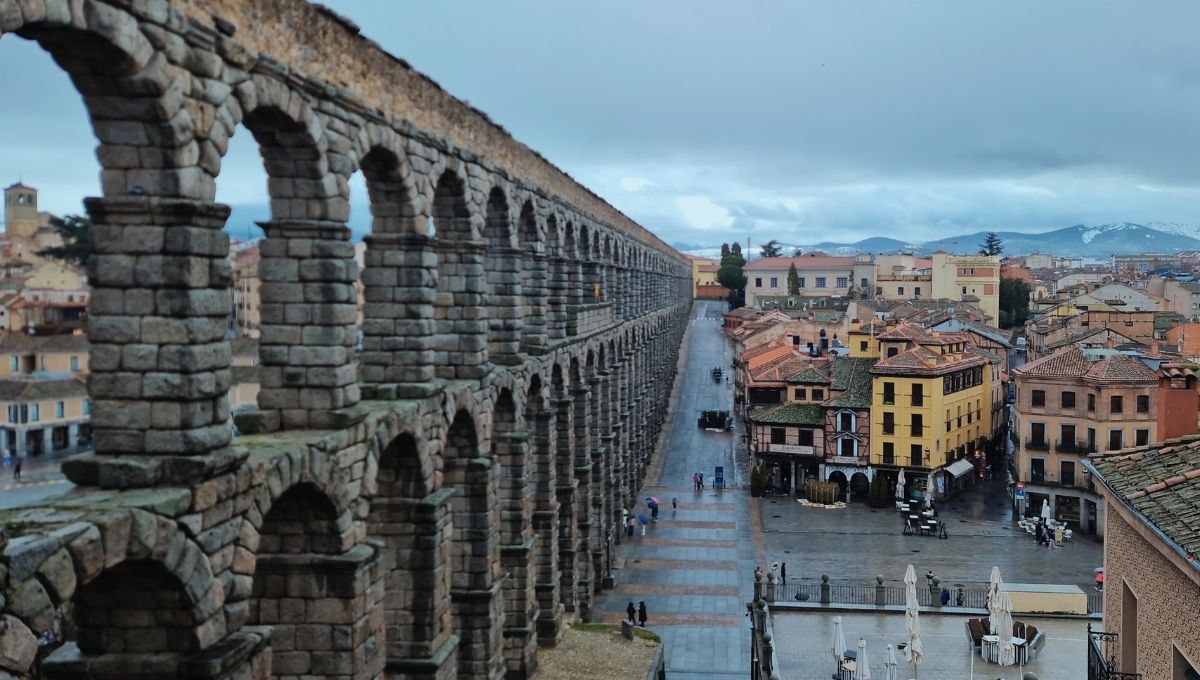
The aqueduct is one of Segovia’s main attractions, what first put the city on my radar and unmissable. It is why I love the city and what gives it that little extra to make it stand out among many other options for day trips out of Madrid.
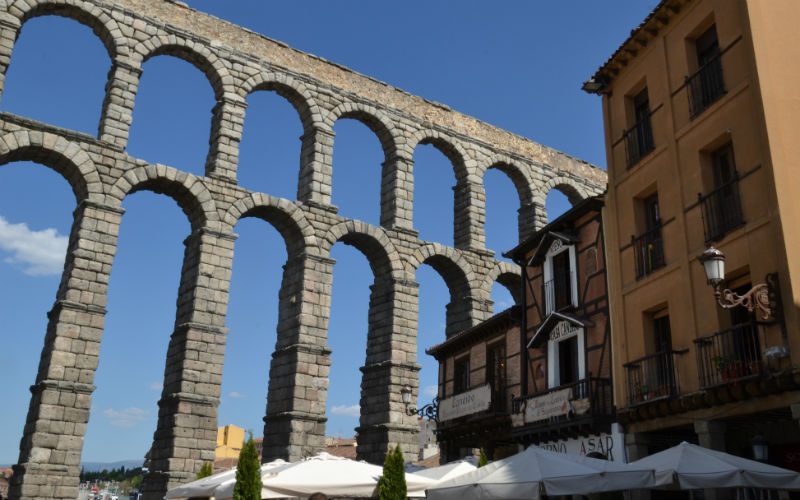
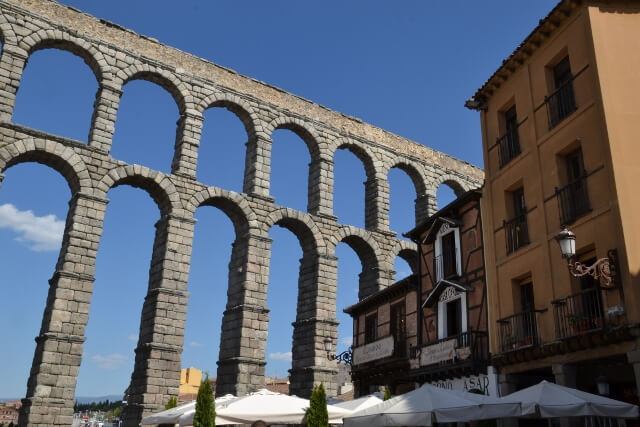
The Segovia Aqueduct isn’t just an ancient marvel; it’s the heartbeat of the city, deeply woven into the fabric of local pride and daily life. This monumental structure, with its 167 arches soaring up to 28.5 meters at Plaza del Azoguejo, has stood the test of time, symbolizing the resilience and heritage of Segovia. Its significance is so profound that it graces the city’s coat of arms, a testament to its enduring presence.
We could just about see the arches of the aqueduct, teasing us as they rose above the local houses and businesses as we walked up the helpfully named Avenue Aqueducto, leaving the sweaty armpit fest of the bus behind. The avenue led us directly to the Plaza Azoguejo, a large open space at the base of the aqueducts highest point in the city and also home to the local Tourist Information and numerous bars and restaurants.
The part you see is just a small part of a stunning construction built by the Romans around the 100AD mark. The original construction was some 17 km long, dropping at a consistent 1-degree decline from the Sierra de Guadarrama, carrying water from the River Acebeda into the heart of Segovia.
At its tallest, it is nearly 30 meters high. It consists of 167 arches all without a single drop of mortar or cement—just 20,400 carefully placed granite blocks, perfectly balanced through sheer engineering mastery.
Seriously, how did they do it so perfectly?
The best way to appreciate this masterpiece? Walk alongside it. Around one kilometre of the aqueduct remains intact within the city, following its path past Plaza de Díaz Sanz.
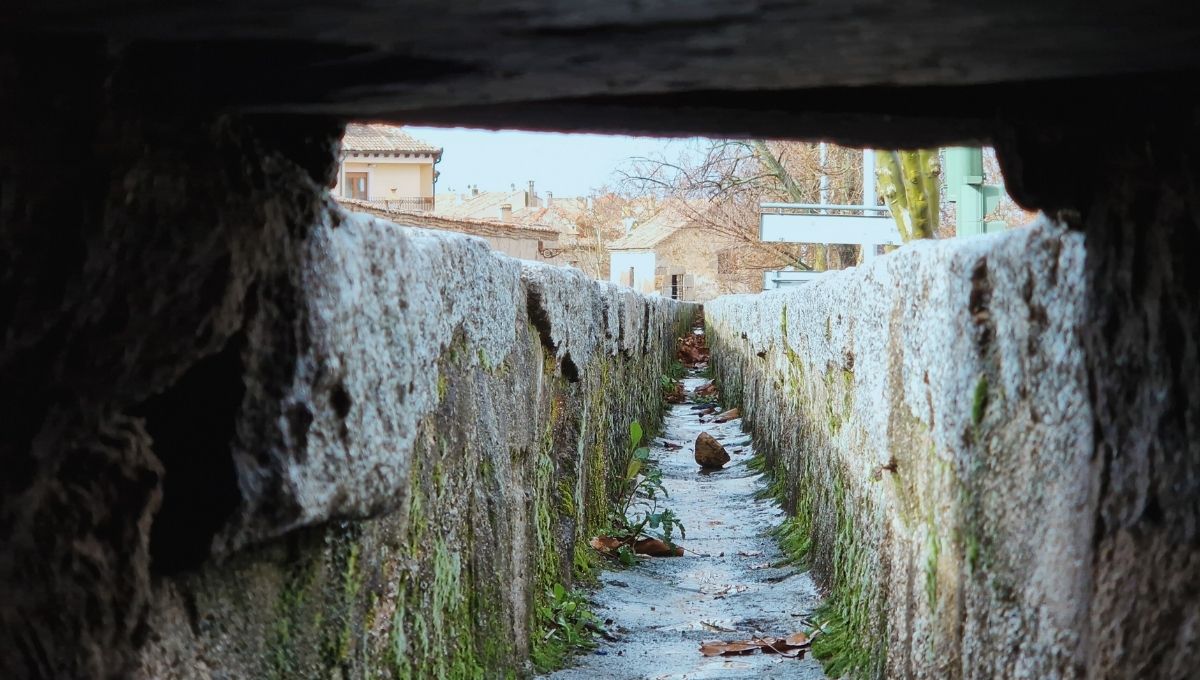
Did you know?
Legend says the Segovia Aqueduct was built by Lucifer himself! A young water carrier, weary from hauling jugs, struck a deal—the devil would complete the structure before dawn in exchange for her soul.
Lucifer worked at supernatural speed, but as he placed the final stone, the sun rose, foiling his plan. Locals claim you can still see his claw marks on the stones, though history insists it was the Romans, not the underworld, behind this marvel!
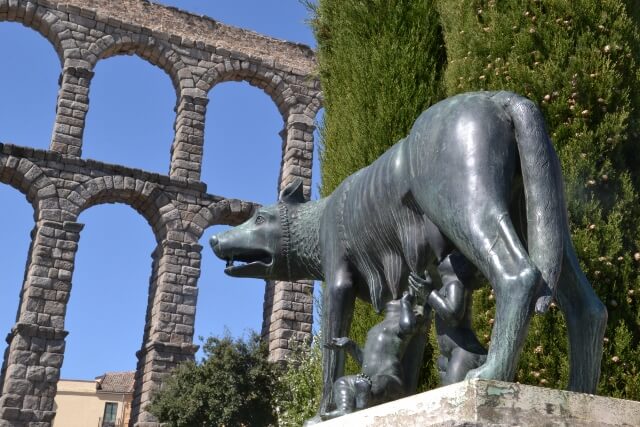
On the far side of the arches, we found the little statue of the she-wolf suckling Romulus and Remus, founders of Rome, that you see on many of the postcards while you wander the city.
It was placed here in 1974 and the inscription reads “Roma a Segovia en el bimilenario de su acueducto MCMLXXIV”. Or in English – “Rome to Segovia in the bimillenary of its aqueduct 1974”.
Eat Cochinillo in Segovia
Being awe-inspired is hungry work, so it was time for lunch.
Segovians are fiercely proud of their food and drink heritage (as are most places in Spain). They’ve got a cracking little craft beer scene, with bars pouring local brews, and wine lovers will find plenty of bottles from the Tempranillo grape, grown right in the region.
But the real star of Segovian cuisine? Cochinillo asado—roast suckling pig. This isn’t just any old pork dish. To officially be considered cochinillo, the piglet must meet strict guidelines, from its diet (only mother’s milk) to the traditional clay oven it’s roasted in. What you get is a crispy, golden skin that cracks like glass and meat so tender it falls apart under the weight of a plate—yes, they actually cut it with a plate instead of a knife!
Many restaurants serve this delicacy, with the most famous being Mesón De Cándido, sitting right at the base of the aqueduct in Plaza Azoguejo. It’s legendary, and I’ve no doubt the cochinillo is incredible. But… let’s just say it’s priced accordingly. So, we explored a bit further.
Lunch at El Bernardino
Instead, we landed at El Bernardino, a fantastic family-run spot that’s been serving up Segovian classics since 1939. Tucked along Calle Real, this place oozes history, and with its wood-beamed ceilings and cozy, old-school vibe, it’s exactly the kind of place you hope to find in a city like this.
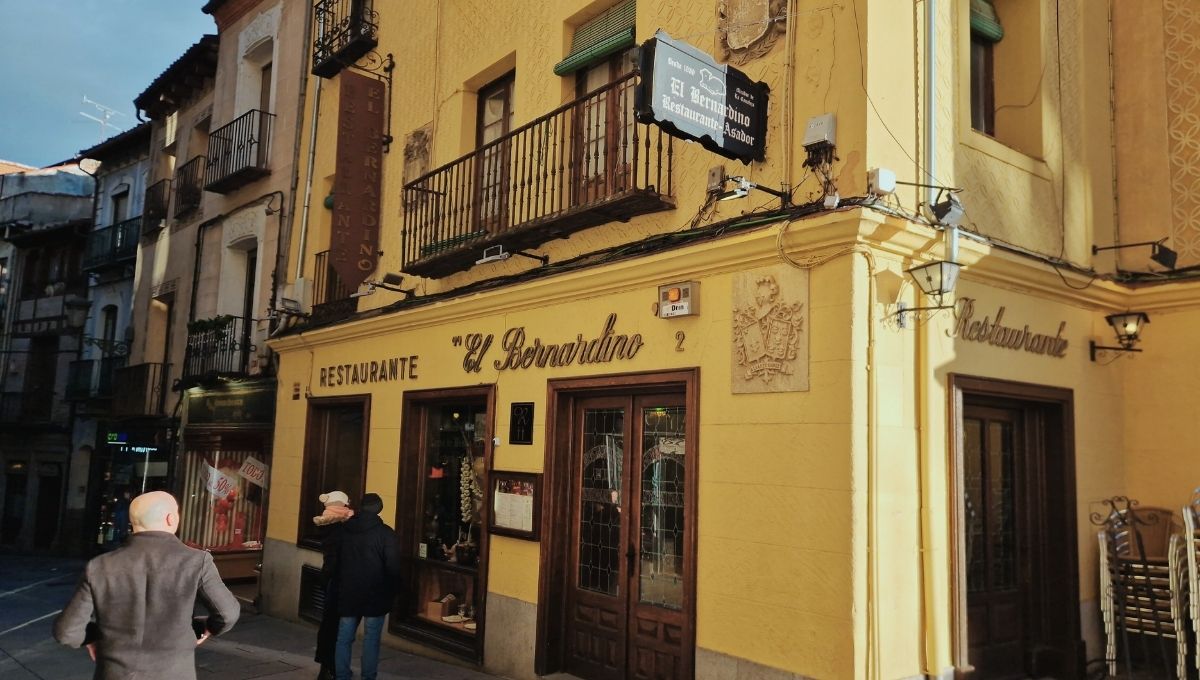
We went for their traditional Segovian menu (€28 per person), which I’d consider was good value, albeit not cheap, considering it included three courses and a bottle of wine. First up was sopa castellana, a rustic garlic and bread soup that hits the spot on a chilly day.
Then came the main event: cochinillo asado, cooked in the classic Segovian style and served with a fresh ensalada del tiempo.

For dessert, we tucked into tarta Ponche Segoviano, a delicious almond sponge cake with a crisp caramelized top, paired with a scoop of mantecado de vainilla. Oh, and did I mention the bottle of wine? Because that definitely helped wash it all down nicely.
With bellies full and wine still lingering on the taste buds, it was time to get moving again. And what better way to walk off a cochinillo feast than by taking in more of Segovia’s stunning sights?
Walking from the aqueduct to the Segovia Alcázar
My favourite route takes you up the steps behind the Segovia Tourist Office to the top of the aqueduct with some stunning views back along the way.
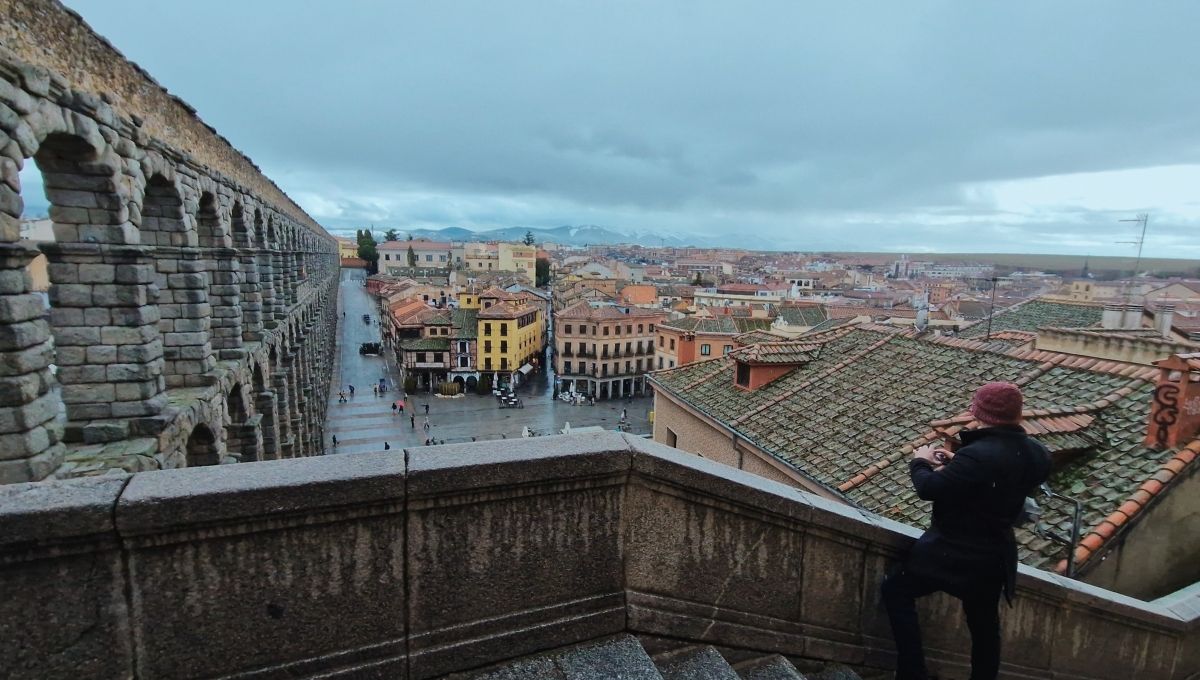
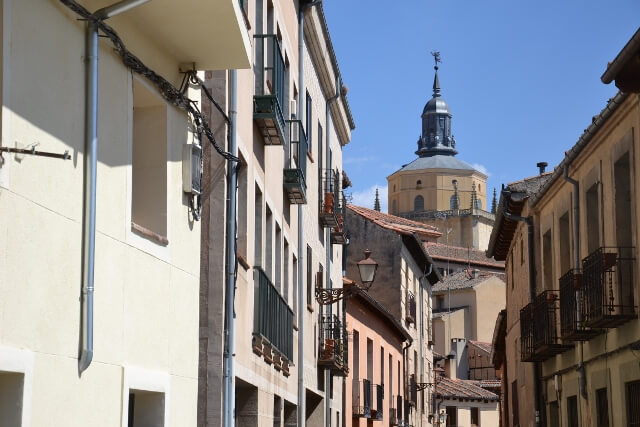
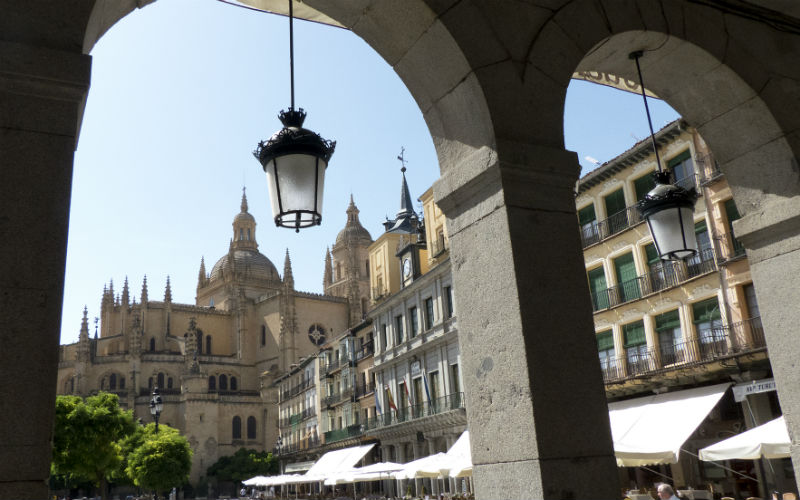
As we walked through the backstreets, gaps in the tall, sand-colored buildings either side of us hinted glimpses of what was to come. Before long, narrow streets gave way to the wide open Plaza Mayor, home to lots more restaurants serving cochinillo and Segovia’s impressive 14th-century cathedral.
Segovia Cathedral
Our route towards the Alcázar took us through Plaza Mayor and past the huge Segovia Cathedral which took over 50 years to build, starting in 1525, after the city’s original one was destroyed by fire in 1520.
General entrance to the Catedral de Segovia costs €3 and tickets can either be purchased on the door or in advance via their website. However, I would highly recommend joining one of the guided tower tours throughout the day.
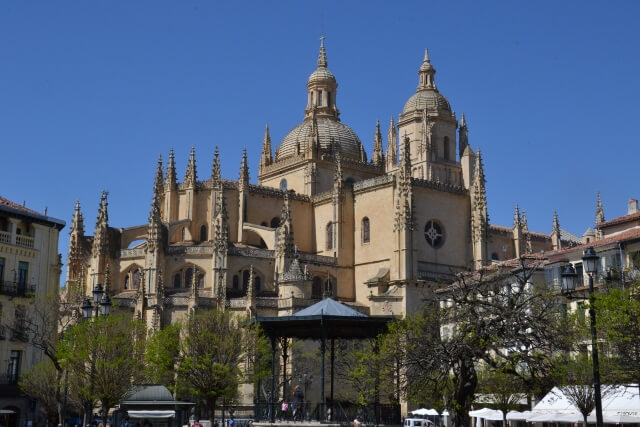
The tours run on a schedule, so if you decide to do this, check the times, and book in advance, but we got lucky and hopped straight into one. It cost €7 for the general admission and tower tour.
Segovia Cathedral is exactly what you’d expect from Spain’s last great Gothic cathedral—grand, imposing, and packed with chapels, stained glass, and religious art. Built between the 16th and 18th centuries, it dominates the city’s skyline with its soaring spires and intricate stonework. Inside, there’s an art museum featuring religious paintings, tapestries, and manuscripts, adding to the sense of history. It’s all very impressive, as cathedrals tend to be.
But what really elevates (pun fully intended) the experience is the tower tour. While the main cathedral feels like a classic historical site, climbing the Segovia Cathedral Tower adds a whole new level of immersion, quite literally.
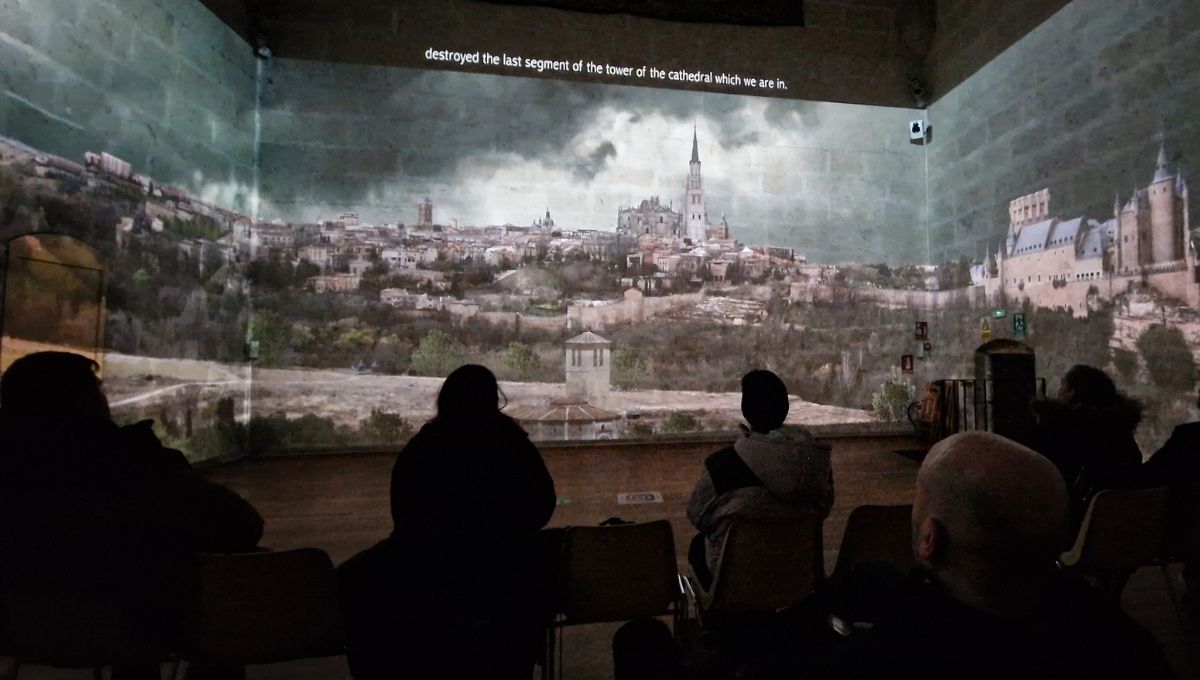
The climb is well thought out, it is a tight staircase but there are stops on the way. The first after 70 or so steps is an audiovisual room, adorned with Flemish tapestries depicting the story of Pompeius Magnus. The highlight was an immersive 8-minute video, projected across three walls, detailing the tower’s construction with stunning 3D animations and special effects. It’s in Spanish, but there are subtitles.
Continuing our ascent up another 40 or steps, we arrived at the bell ringer’s house. I was fascinated to learn that the bell ringer and their family once lived here, leading a secluded life high above the city. The things they must have seen!
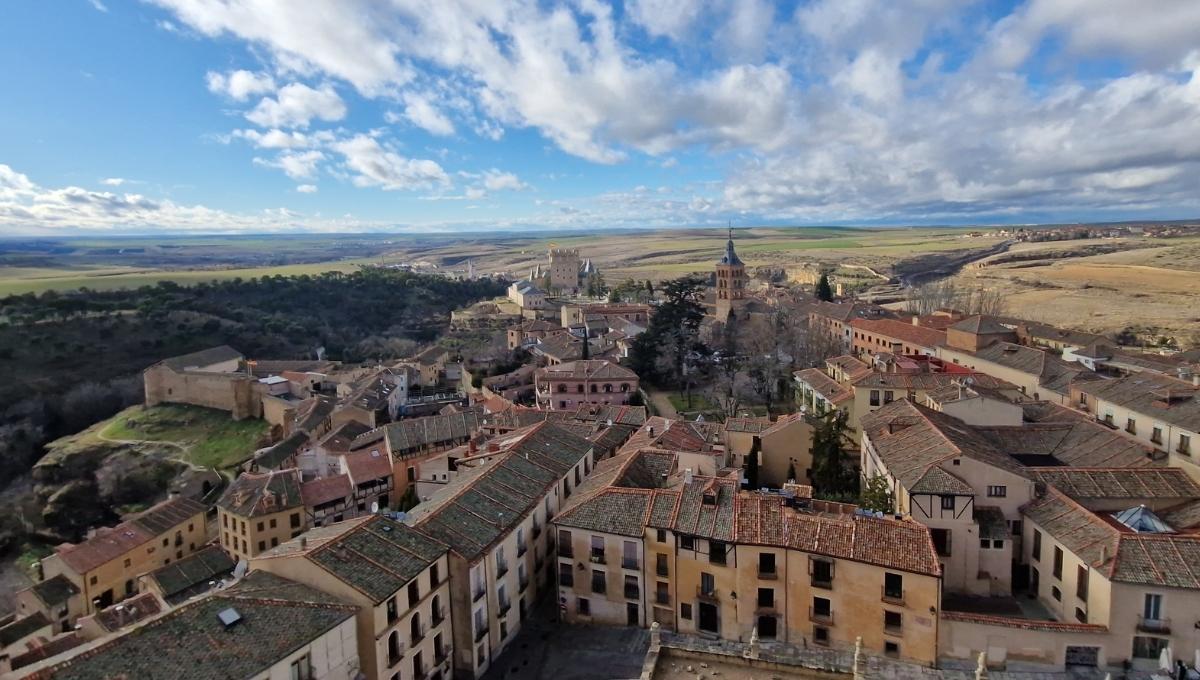
While there is no furniture, preserved living space offered a glimpse into their unique lifestyle, complete with a small staircase leading to the clock room, which houses the intricate clock mechanism.
Climbing the 190 steps to the top of the tower was well worth the effort. The panoramic views from the highest point in Segovia were breathtaking, offering a unique perspective of the city and its surroundings.
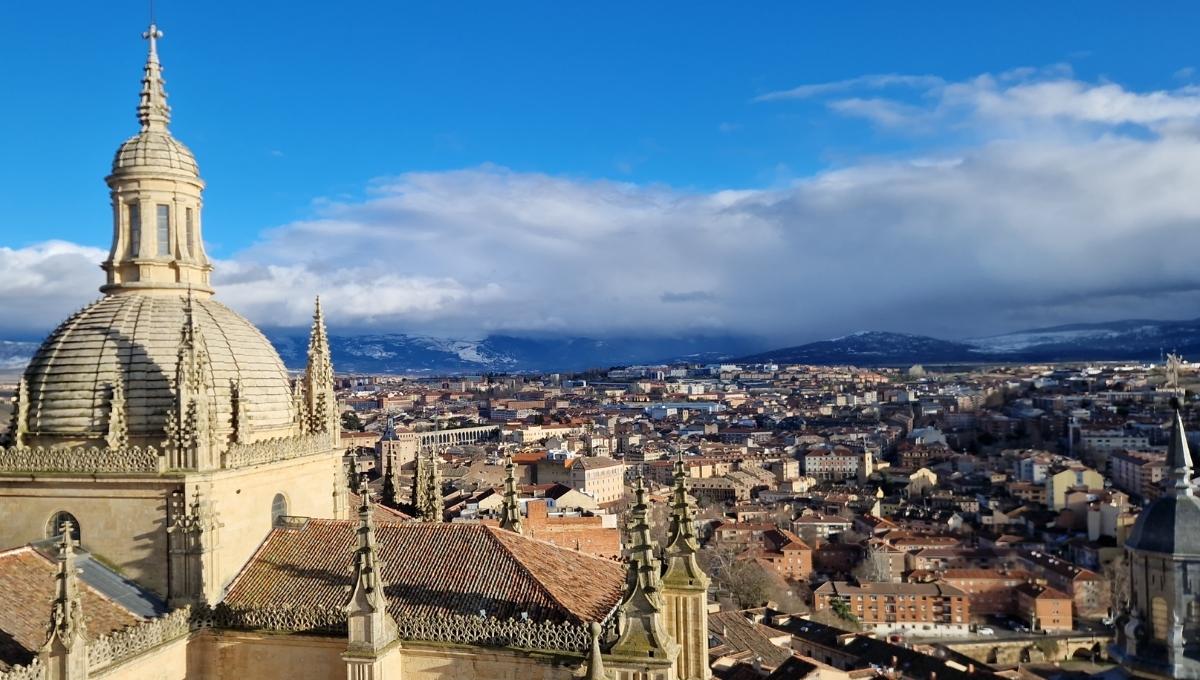
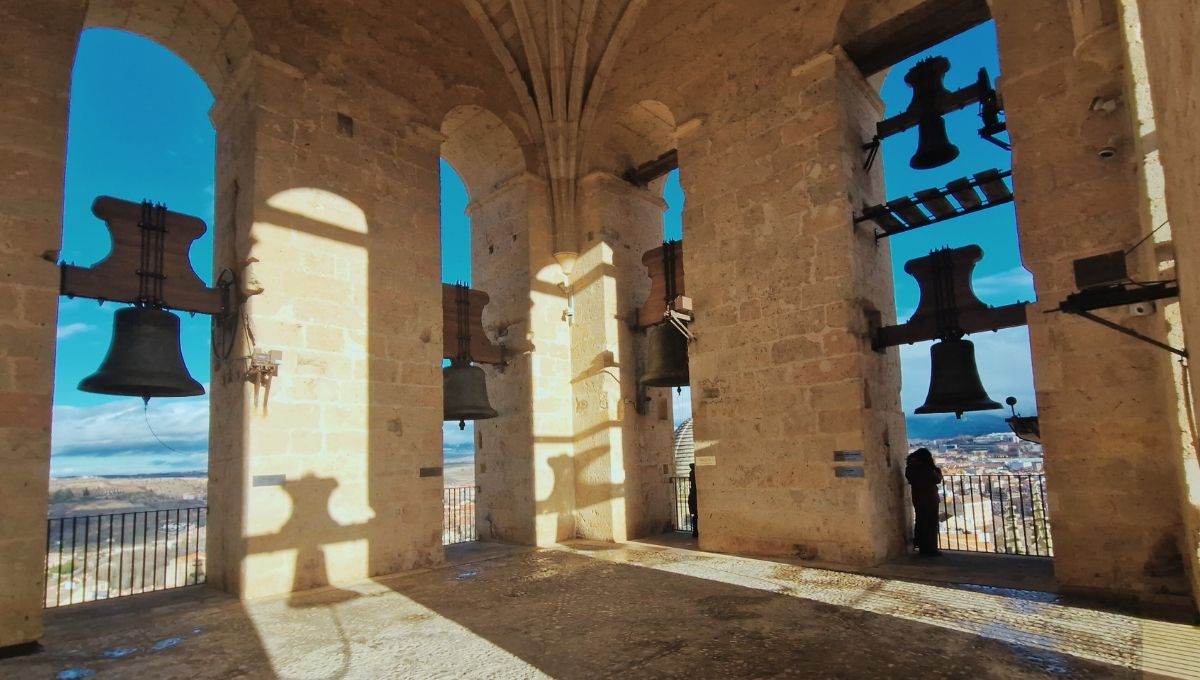
From the Segovia Cathedral, it was about an 8-10 minute downhill stroll to the entrance of the Segovia Alcázar along Calle Marqués del Arco which became Calle Daioz as we reached the end.
On the way, we stopped for a minute or two in Plaza La Merced, a small park which offers nice views looking back to the Cathedral.
The Segovia Alcázar tour
From whichever way you look at it, the Alcázar of Segovia is a pretty impressive sight. Perched atop a rocky crag at the confluence of the Eresma and Clamores rivers, this castle has served various roles throughout history, from a royal palace to a military academy. Notably, it’s one of the few castles in Spain that has never been taken by enemy forces.
Its strategic position, reinforced by formidable city walls and a deep moat, made it a formidable fortress. Beyond its defensive prowess, the Alcázar boasts a fairytale appearance, with some suggesting it inspired Walt Disney’s iconic castle design.
The Alcázar tour is definitely worth doing. Entry to the castle is €10, with an additional €3 for the audio guide—a worthwhile investment, as on-site explanations are limited. The guide offers engaging stories about the castle’s history and the surrounding area, concise enough to keep your attention.
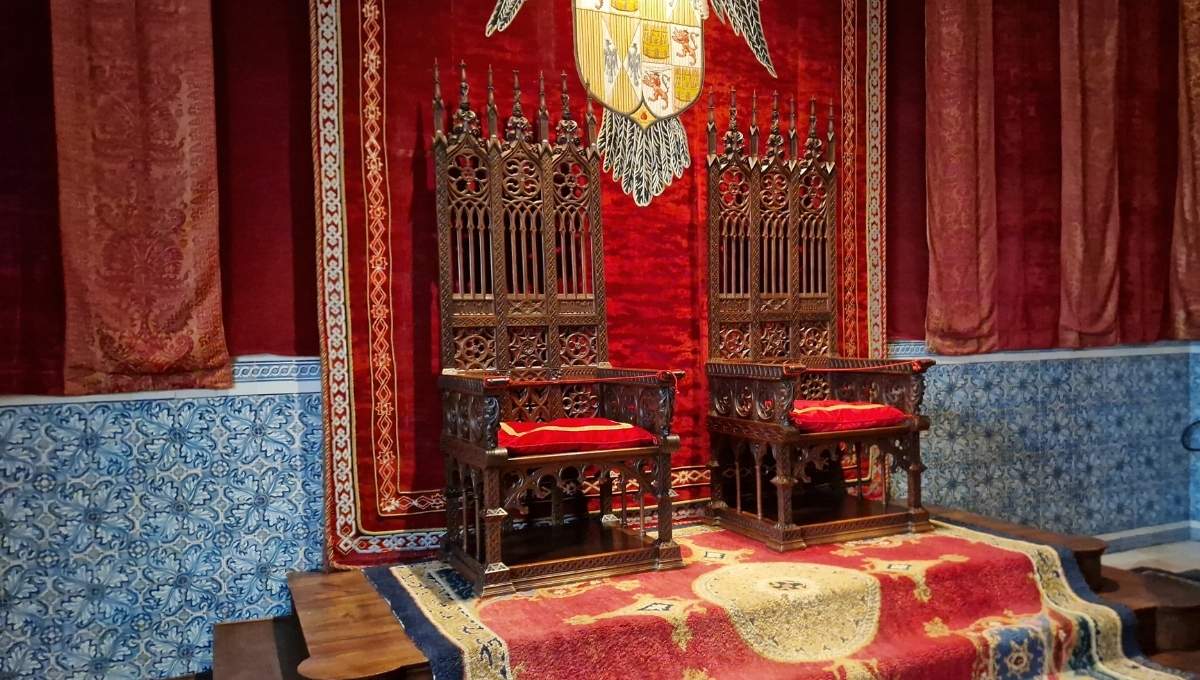
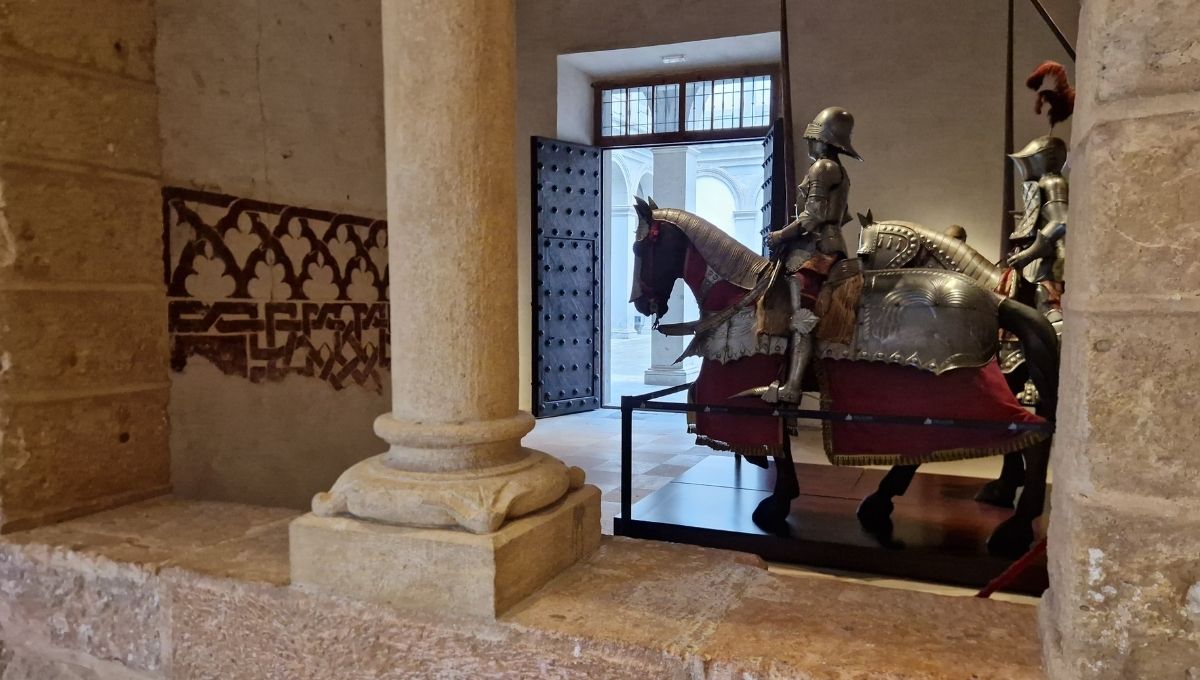
Inside the Alcazar, the Room of the Kings stands out as a highlight, featuring a frieze high above your head of 52 sculptures depicting monarchs who played pivotal roles in Spain’s history. Additionally, the castle houses the Artillery Museum, showcasing a collection of military artefacts and offering insights into the evolution of artillery in Spain.
Be sure not to miss climbing the 153 tower steps for spectacular views – the cathedral towering over the city with the snow-capped mountains on the horizon is well worth the fee alone. Just note that you will have a specified time to be at a meeting point in the central courtyard to not miss out. It’s usually an hour after your entrance, which is plenty of time.
It used to be my favourite view, but I think the cathedral tops it. However, it is still worth it.
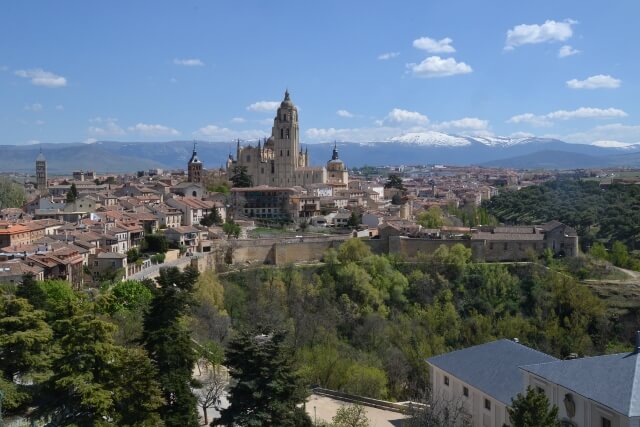
As I have done the whole tour twice before, I sent my friends into the castle, while I mooched around outside, before joining them to go up the tower. If you’d like more information about the Alcázar, check out the Segovia Alcázar website.
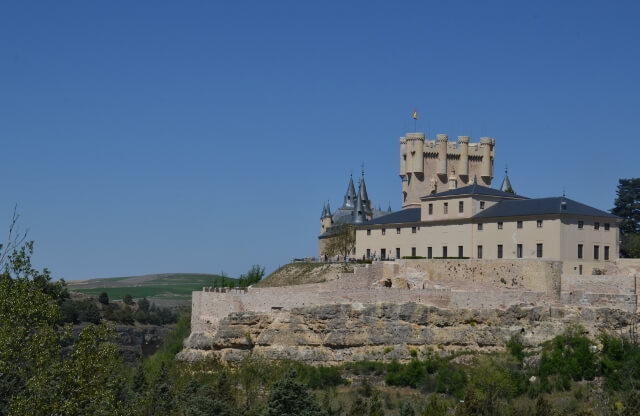
While mooching, I found a small path that led me down below and around the outside of the walls. I walked for a while and was rewarded with some lovely views looking back to the castle. The path continued down to the river below in a circular walk but, conscious of time and growing a thirst, I headed back to the castle café to enjoy a beer while I waited. The views from the café garden are pretty impressive too.
Wandering the back streets of Segovia
Once we were finished at the Alcázar, we headed back to the main plaza by walking around the walls and stopping off for various refreshment breaks. With so many bars and tapas places trying to tempt us in, it would have been rude not to. I also noticed many boutique food shops selling fantastic locally produced food, including hams and cheeses, as well as wine and beer.
Our final stop of the day was back at the aqueduct, this time we did use one of the plaza cafés. Sitting down, admiring the ancient feat of engineering while sharing a large jug of sangría was a fitting end to a busy, but enjoyable day.
Getting back to Madrid
Of course, as much as I’d have loved to have sat there all night enjoying sangría while watching the ever-evolving hues of the stone aqueduct change as the sun set, our Madrid to Segovia day trip had come to an end and we a train to catch.
Whether driven by laziness or not wanting my nose pushed in more sweaty armpits (even sweatier at the end of the day) we opted for a taxi back to Segovia-Guiomar train station. They can be found easily with the taxi rank being right next to the aqueduct, opposite the suckling wolf statue.
The taxi cost just €6.80 between us, so only 80 cents more than a bus would have been.
Our train departed at 6:22pm to get us back in Madrid before 7pm. We arrived a little early to the Segovia train station in the middle of nowhere, but just meant we had time to enjoy one last beer in the station bar.
Suggested 1-day Segovia Itinerary
One of the many things I love about Segovia is how dense the central core is. Having now visited multiple times, here is my recommended Segovia one day itinerary.
A Perfect One-Day Walking Tour of Segovia – Start & End Point: The Aqueduct
Morning: The Iconic Aqueduct & Historic Beginnings
📍 Start: A Walk Along the Aqueduct
Begin your day at Segovia’s stunning Roman Aqueduct, one of Spain’s most well-preserved ancient structures. Walk along its base to take in the sheer size and marvel at the Roman engineering that has stood here for nearly 2,000 years.
📍 The Suckling Wolf Statue of Romulus and Remus
As you stroll along, spot the statue of the suckling wolf with Romulus and Remus, a nod to Segovia’s Roman roots. It’s a great place for a quick photo!
📍 Aqueduct View from Above
For a spectacular view, climb the stairs near Plaza del Azoguejo to see the Aqueduct from a higher perspective. From here, you get a fantastic panoramic shot of the structure weaving through the city.
Mid-Morning: Plaza Mayor & Segovia’s Spiritual Heart
📍 Refresh in Plaza Mayor
Walk into Plaza Mayor, the lively heart of the city, lined with charming cafés. This is a perfect spot to grab a morning coffee or, if you prefer, a refreshing beer. When ordering, just say:
🗣️ “Una cerveza por favor.”
📍 Segovia Cathedral
At the end of the plaza, visit the Segovia Cathedral, an architectural masterpiece of late Gothic design. Take some time to explore its grand interior, filled with impressive stained glass, intricate carvings, and religious artifacts.
Midday: Exploring the Alcázar
📍 A Tour of the Segovia Alcázar
Walk toward the Alcázar of Segovia, the fairytale-like castle that inspired Disney’s Cinderella Castle. Explore its grand halls, medieval weaponry, and stunning tapestries that tell stories of Spain’s past.
📍 Climb the Alcázar Tower
For the best views of Segovia, climb the 152 steps of the Alcázar Tower. The breathtaking vista from the top showcases the rolling Castilian landscape and the city’s rooftops.
📍 Refreshment Break at the Alcázar Café
Before leaving, grab a refreshment at the Alcázar café next to the ticket office. It’s a relaxing spot with fantastic views of the valley—a perfect pause before continuing your journey.
Afternoon: City Walls, Jewish Quarter & Hidden Corners
📍 A Walk Along the Walls
From the Alcázar, follow the old city walls back toward the historic center. Along the way, admire breathtaking views of the Eresma Valley below.
📍 Casa del Sol – Museum of Segovia
If you’re interested in history, make a quick stop at the Casa del Sol Museum, which holds over 1,500 artifacts showcasing the city’s past, from Roman relics to fine art and ethnology exhibits.
📍 Puerta de San Andrés – Entrance to the Jewish Quarter
Step through Puerta de San Andrés, the entrance to Segovia’s historic Jewish Quarter. This area is full of charming alleys, rich history, and scenic viewpoints.
📍 Walk Through the Judería (Jewish Quarter)
Wander the Judería’s narrow, cobbled streets, discovering hidden courtyards and ancient synagogues. Enjoy the peaceful atmosphere before heading back to the heart of the city.
📍 Postiga Del Sol to Postiga Del Luna – A Small Scenic Park
A quiet place to relax before heading back toward the main square, this small park offers open green space and wonderful views.
Late Afternoon: Churches, Shopping & Local Culture
📍 Iglesia de San Martín
Before diving into shopping, stop at Iglesia de San Martín, a beautiful Romanesque church with intricate carvings and a quiet courtyard.
📍 A Wander Through the Shops
Now it’s time to explore Segovia’s charming boutiques and gourmet shops. If you have checked luggage, this is a great opportunity to pick up local wines, craft beers, or Segovian delicacies.
Evening: A Traditional Segovian Feast
📍 Conchinillo for Dinner
You can’t visit Segovia without trying cochinillo asado (roast suckling pig), a local specialty known for its crispy skin and tender meat. Head to a traditional asador (roast house), such as El Bernardino or Jose Maria, for the ultimate dining experience.
Final Stop: Back to the Aqueduct for One Last Drink
📍 Enjoy the Aqueduct at Night
End your day with one last drink near the Aqueduct, now beautifully lit under the night sky. It’s the perfect place to reflect on your adventure before grabbing a taxi back to the train station.
In total that will be about 2 and a half miles of walking, but that doesn’t include any extra miles racked up by wandering though Alcázars or Cathedrals. I think the above is easily achievable in an 8 – 10 hour visit, depending on how many refreshments breaks you have!
FAQs
How far is Segovia from Madrid
The distance between Madrid and Segovia is 69 km, with a road distance of 91.9 km if you’re driving. By train, the distance is around 42 miles and takes an average of 31 minutes. If you opt for the bus, the average travel time is 1 hour and 20 minutes, with some buses completing the journey in 1 hour and 16 minutes.
How do I get from Segovia train station to city centre?
To get from Segovia train station to the city centre, you have several options. The most convenient is to take a taxi. There will normally be some waiting, but you may need to be fast off the train to get one. The cheaper (but slower) option is the local bus, which takes about 15 minutes and drops you off near the main attractions.
Is there a bus from Segovia to Madrid?
Yes, there is a bus service between Segovia and Madrid. The average travel time by bus is approximately 1 hour and 20 minutes. Buses are a cost-effective way to travel between the two cities and offer multiple departures throughout the day.
What is the best time of year to visit Segovia?
I believe the best time to visit Segovia is during the spring and fall months when the weather is cooler, summer gets very hot, and the tourist crowds are smaller.
How much time should I allocate for a day trip to Segovia?
A day trip to Segovia typically requires around 6 to 8 hours, including travel time, to fully explore the main attractions.
Shoud I visit Segovia in the rain?
Yes! My last visit was a wet one. While it is better in the sun, don’t let the rain deter you. The views are still great, the food wonderful and a lot of the tourist stuff is inside anyway.
What is the average cost of a day trip from Madrid to Segovia?
The average cost of a day trip from Madrid to Segovia can range from €40 to €100 per person, depending on choice of transportation and activities.
In summary
Segovia is a wonderful town and I think you’ll be able to see enough of it to be satisfied in a day trip. If visiting for longer (and the place is worth it) there are plenty of cheap, or swanky, hotels in Segovia, whatever suits your budget. There are loads more churches to see, a couple of museums, easily enough to keep you occupied for a few days.
I’ve visited four times now on the train from Madrid to Segovia and whenever I have people visit me in Madrid, I will always recommend it to them just as I am recommending to you now and it has never disappointed me.
We’re headed for Madrid next month and accidentally read this wonderful blog really helpful! Decided to get a day trip here instead of Toledo. Thanks very much!
Hi Bel,
Thanks for the lovely feedback and enjoy my city, I hope you’ll have a great time.
Cheers, Matt
Hey Matt, when I buy I round trip ticket from Madrid to Segovia, do I have to book a specific return time? I’m thinking I’d take the 8:00am train on a Saturday. If I do have to book the return time, would I book the return for something like 5 or 6:00 to be able to see it all?? THANKS! Laurie
Hmmmmm, good question. I have always booked a time and I think you do have to, but i don’t know how stricty they are. The high speed trains all have allocated seats and tickets are checked before you board. Persoanlly, I wouldn’t risk it, but you may be OK, As for time, I think that is enough, I would recommend getting a taxi back to the station though, for peace of mind.
Thanks for this very informative post! Planning to do a day trip there when we visit Spain next month.
Ahhh great, really is a cool city. Feel free to reach out if you have any questions.
Thank you so much! My husband and I followed your itinerary exactly as you recommended. So helpful to have all your travel tips and suggestions. We would have been lost without it. Thanks again!!
Hi Miriam, that’s great to hear. Thanks for taking the time to give some feedback. Happy travels 🙂
Perfect! headed there in June. I appreciate the details, especially the how to get there options. We will most likely follow in the foot steps of Matt.
Awesome, thanks Chris. I’m sure you’ll love it. It’s still one of my favourite places in Spain. Just remember to try and get off that train quickly!
The last time I visited Madrid, I chose Toledo for a one-day trip. It was good, but Segovia seems to have more diversity to offer. The next time I’ll check it out for sure. Thanks for the itinerary.
Hey Fred, Toledo is a lovely place too and certainly has a lot of history. Either city makes a great day trip from Madrid. Hope you get to see Segovia soon.
This is amazing. So helpful for folks looking for things to do. Thank you!
Great! Happy you found it helpful and it is a great day trip from Madrid for sure 🙂
We will be in Madrid December 18-21. Do you think we would need to prebook train tickets very much in advance? I would prefer to wait at least until we’re in Madrid to see what the weather is going to be like. But I think this day trip would be great!
Hi Karen! I don’t think it would necessary but I would advise booking before you get to the train station if possible, just as it’s one less thing to worry about. Also, the trains all have specific seating so it will ensure you get seats next to each other. It is certainly one of my favorite day trips from Madrid.
Thanks for the detailed read! We are leaving for Spain tomorrow and I found this while searching for day trips from Madrid. I think w’ll give this a shot!
Awesome, hope you found it useful. It’s certainly one of my favorite day trips to do.
Thanks for this comprehensive list Matt! I plan to go literally next week and I feel really confident that we won’t get lost LOL – do you have suggestions on accessible vineyards from Segovia?
Hey La Toya, I’m not 100% sure of accessible vineyards near Segovia. Will you have a car? You may want to check out this post I did a while back for a different website: https://www.winerist.com/magazine/wine-regions/visiting-vineyards-in-madrid. If you do find something, be sure to swing by and let me know, I’ll happily add it to the post 🙂
An amazing blog – so detailed and all the information I was looking for. Thanks so much, going to follow this plan pretty precisely!
Hey Kirstin, thanks for the lovely feedback, I’m stoked that you found it useful. You’ll have a great time Segovia is one of my favorite cities.
great info. Confirmed what i thought about a day trip.
any advice on Toledo ??
Thanks Brent. I haven’t written about Toledo yet, but it is also a lovely place to visit, although personally, I prefer Segovia. The train for Toledo leaves from Atocha and takes a little over 30 mins. From what I remember it’s mainly churches. There is an Alcazr and be sure to get to the far side of the river to get a great view looking back at the city.
Amazing post
Wow! The Alcazar site sounds pretty cool, never being taken over by enemy forces.
That was a very interesting post for me, I have never been in Madrid but I hope to do that someday. It is helpful to see that I could escape one day from the big city to visit such a lovely place. I bookmarked your article, so I could come back and read again all these detailed instructions and descriptions.
Thanks Perla, glad you enjoyed it and if you make it to Madrid it really is a fun and easy day trip out of the city. You are kind of swapping one big city for a smaller city, so it’s still busy with people, but less traffic which is lovely. Happy travels.
I’ve visited Spain but spent time in Valencia for the flower festival. I must say that is one stunning photo of the aqueduct! If I make it to Madrid in the future I’ll certainly check out Segovia. Many thanks for the insightful tips.
Spain has so many beautiful places and I’m only just starting to scratch the surface. I do recommend Madrid as a visit and especially the day in Segovia, the cities are beautiful and the people friendly 🙂
What a beautiful day! I would love to visit someday, and see the aqueduct in person. That just always fascinates me, how advanced the Romans were for an ancient culture.
Thanks for sharing.
It is a really cool place and one of the biggest, still standing, aqueducts from that era. It is mind boggling to sit there, look at it and just try to imagine what it was like back then. I could spend a whole day just lost in my thoughts doing that. Thanks for reading, hope you make it sometime.
Great informative post, I’m planning to go for a weekend.
Lovely pictures…was hoping to see interior pictures of the cathedral……lol at sweaty armpit fest…..I don’t want to imagine…interesting read.
Hopefully, on my next visit, I’ll have time to go inside the cathedral and take some nice pics. Thanks for reading 🙂
?
Madrid is beautiful, it’s my next destination for visit. 🙂
i liked the pictures and the architectural stuff. Looks a great destination for tourists.
Thanks Ravi, it’s a great spot for sure.
“As we left the sweaty armpit fest of the bus” that made me laugh so badly!!! I use that expression too ! LOL
Wasn’t laughing at the time, promise you that!
Stunning pictures. Madrid is a beautiful place. Wish I could visit.
Beautiful pictures! Hope you have a great time over there and enjoy your trip! 🙂
https://byveera.blogspot.fi/2017/04/juice-it-up.html?m=1
It was a nice read! I loved the details, Thank You! 🙂