
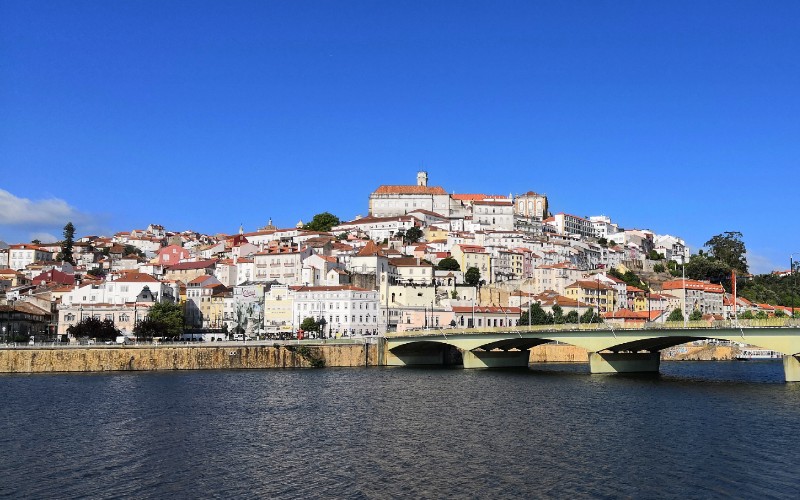
I wasn’t sure what to expect from my one day in Coimbra—I’ll admit, this ancient city had flown a bit under my radar. Like many travellers, my past trips to Portugal focused on the big names: Porto’s riverfront and Lisbon’s winding streets. But this time, I set out to discover what else Portugal had to offer—and I found Coimbra, a city with a soul as deep as its history.
What I discovered was a city perched dramatically above the banks of the Mondego River, with medieval alleyways, golden university towers, and a friendly, vibrant energy. Whether you admire Coimbra from the riverside or wander through its cobbled lanes, it’s as beautiful up close as it is from afar.
In this post, I’ll show you how to get to Coimbra and share my favourite finds—plus, I’ve put together a suggested one-day Coimbra itinerary so you can make the most of your visit.
Whether you’re a history buff, travelling with kids (like me!), or just curious about what makes Coimbra a worthwhile stop on your Portuguese road trip, this guide will help you experience the best of Coimbra in one day.
Please note: This post contains affiliate links. If you book a tour through these links, I may earn a small commission (at no extra cost to you). For more details, see my affiliate information page.
Coimbra in One Day – Key Facts & Highlights
- Best for: Anyone really, solo travellers, couples, families (even with toddlers like us!), history buffs, and anyone who loves beautiful old cities.
- Can you see it all in a day? Yes—Coimbra is perfect for a one-day visit. The main sights are within easy walking distance, and you can experience the city’s history, university, and riverside charm without rushing.
- Top highlight: The University of Coimbra (a UNESCO World Heritage Site), with its stunning Joanina Library, is the star attraction. But don’t miss the city views from the old town or a stroll along the Mondego River.
- Is Coimbra family-friendly? Absolutely! We visited with our toddler and found plenty to enjoy, from miniature parks to green spaces. Most main attractions are stroller-accessible, and the city has a relaxed, welcoming vibe.
One Day Coimbra Itinerary at a Glance
Here’s my one day in Coimbra laid out stop-by-stop. Scroll down for the full guide, complete with history, personal tips, and photos.
Morning – Start at the Top
- Coimbra University Tour (secure tickets early for the Biblioteca Joanina)
- Sé Nova de Coimbra (New Cathedral)
- Biblioteca Joanina (time-restricted entry)
- Coffee or lunch with a view at the Machado de Castro National Museum
Midday – Work Your Way Down
- Sé Velha (Old Cathedral)
- Lunch in the historic centre (we liked Fado Hilário)
- Monastery of Santa Cruz & royal tombs
Afternoon – Across the Mondego
- Portugal dos Pequenitos (miniature park – family favourite) or riverside walk via Ponte Pedonal Pedro e Inês
- Quinta das Lágrimas (romantic garden & legendary love story)
Getting There: Quick Guide
Coimbra is easy to reach from both Lisbon and Porto, whether you want speed, scenery, or someone else to handle the planning.
In a hurry? Here’s the short version—you’ll find the full breakdown of each option (plus tips on parking, stations, and tolls) further down this post.
- Train from Lisbon: 1.5–2 hrs, from ~€20. Departs from Santa Apolónia or Oriente stations.
- Train from Porto: 1–1.25 hrs, from ~€18–22. Departs from Campanhã station.
- Bus from Lisbon: ~2.5 hrs, from ~€15. Departs from Sete Rios or Oriente.
- Bus from Porto: ~1.5 hrs, from ~€12. Departs from Campo 24 de Agosto.
- Drive: 2 hrs from Lisbon, 1.25 hrs from Porto. Easy motorway access (A1), but watch for tolls.
- Organised Tours: Full-day trips from €XX–XX, often with extra stops at places like Batalha or Aveiro.
Things to Do in Coimbra in One Day
Visit the University of Coimbra (UNESCO World Heritage Site)
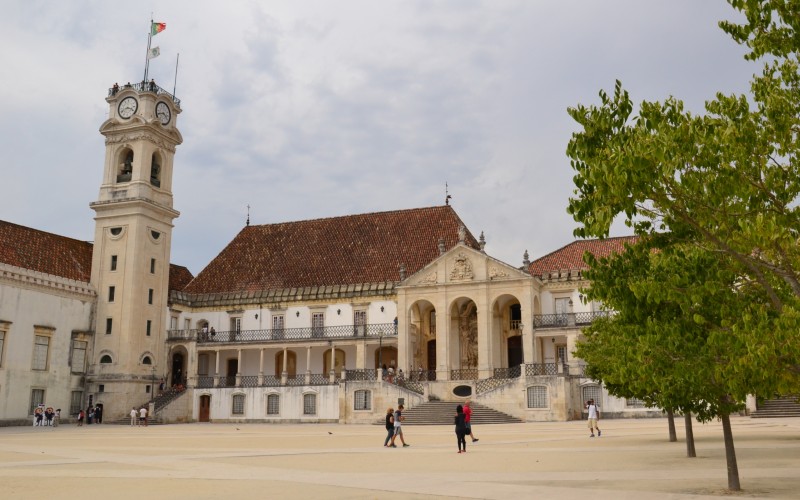
If there’s one sight you absolutely can’t miss during one day in Coimbra, it’s the University of Coimbra. Not only is it one of the oldest universities in Europe, it’s the beating heart of the city’s identity.
Founded in 1290 by King Dinis, the university didn’t settle down straight away. For decades it bounced between Lisbon and Coimbra at the whim of various monarchs, until King João III brought it back for good in 1537.
Today, the university has seven faculties—Arts, Law, Medicine, Science and Technology, Pharmacy, Economics, and Psychology and Educational Sciences—and together with surrounding historic streets, it’s part of the University of Coimbra – Alta and Sofia UNESCO World Heritage Site (inscribed in 2013).
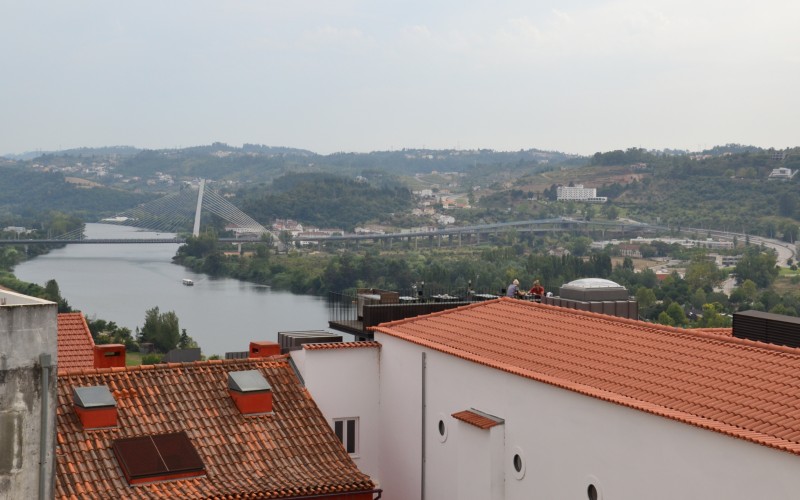
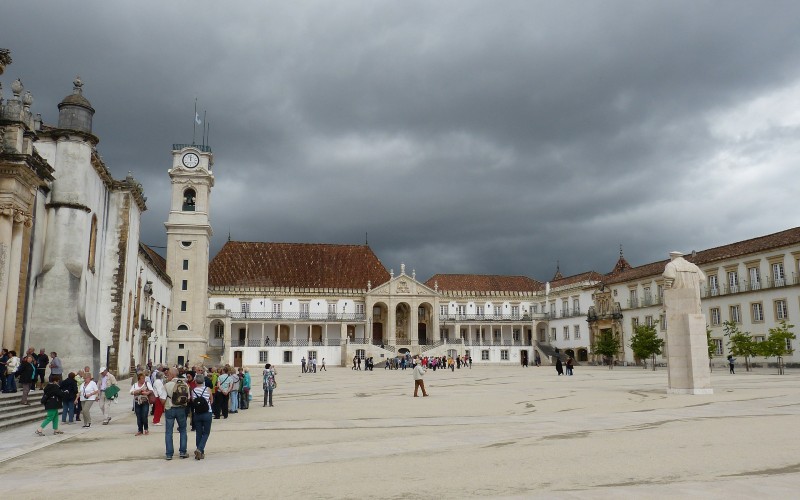
The centerpiece of the campus is the Pátio das Escolas, a grand courtyard framed by 16th–18th-century buildings. Step through the Porta Férrea (Iron Gate) and you’ll be greeted by sweeping views over the River Mondego, the imposing clock tower, and ornate façades that seem to glow in the Portuguese sunlight. The courtyard is free to wander, but to step inside the treasures of the university, you’ll need a ticket.
Step Inside the Biblioteca Joanina – Coimbra’s Baroque Library

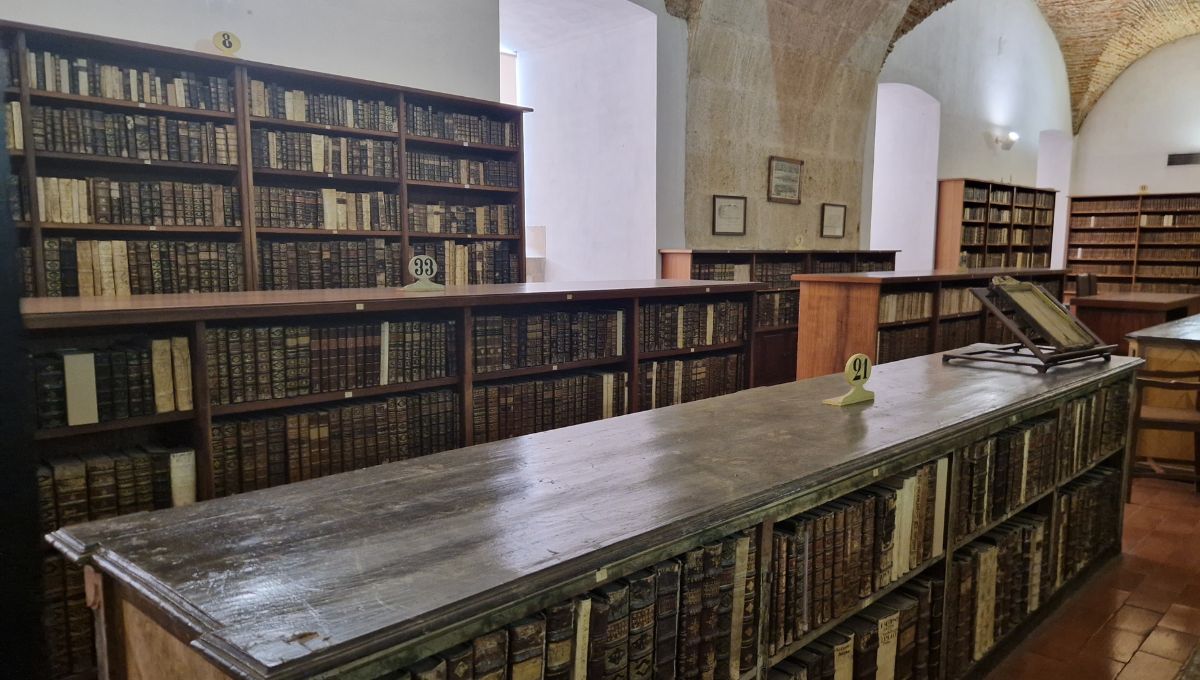
Even if you’re not a library person, Biblioteca Joanina will stop you in your tracks. Built between 1717 and 1728 during the reign of King João V, it’s often called one of the most beautiful libraries in the world—and it’s easy to see why.
This Baroque masterpiece is a three-room treasure chest, each hall lined floor to ceiling with gilded woodwork, intricate frescoes, and rich exotic hardwood shelves that cradle a collection of 40,000–60,000 volumes, many dating back to the 16th–18th centuries. Rare manuscripts, leather-bound tomes, and ancient maps are all part of the university’s priceless archive.
And then there’s the quirky bit: the resident colony of bats. At night, these tiny guardians swoop through the library to feast on insects, helping to protect the fragile paper from damage. The staff even cover the tables with leather cloths before closing each day—proof that in Coimbra, history is cared for in delightfully unexpected ways.
Photography inside is usually restricted to preserve the books, so part of the magic is that you’ll carry the images in your mind, not your camera roll.
Other Sights on a University of Coimbra Tour
While the Biblioteca Joanina often steals the spotlight, a full university ticket also unlocks other fascinating corners of this UNESCO-listed campus—and they’re well worth your time.
The Cabinet of Curiosities (Sala das Armas)
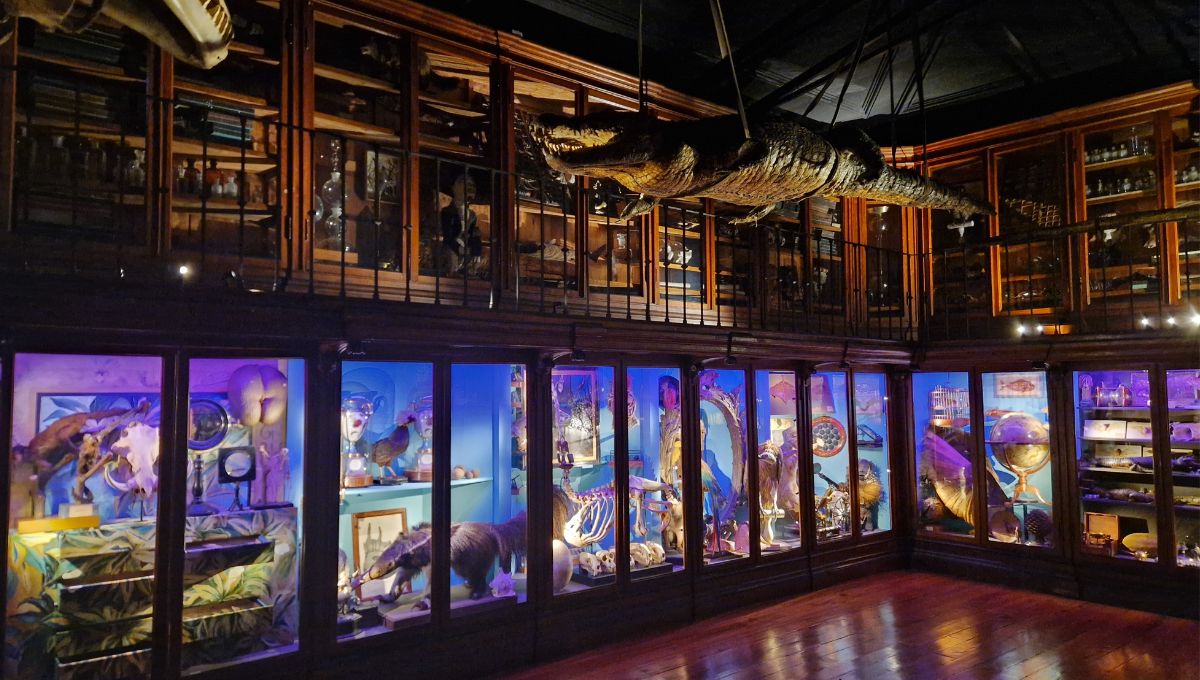
Tucked away in the Academic Museum, the Cabinet of Curiosities is like stepping into a 17th-century explorer’s attic. It kind of does exactly what it promises, it’s weird.
Here you’ll find a fascinating collection of scientific instruments, natural history specimens, archaeological finds, and ethnographic objects brought back from Portuguese expeditions. Think globes, astrolabes, shells, and artifacts from Africa, Asia, and South America—reminders of the university’s deep ties to Portugal’s Age of Discovery. It’s a treasure trove for anyone who loves history, science, or just a good dose of the unexpected like crocodiles hanging from celings!
The University Tower (Torre da Universidade)
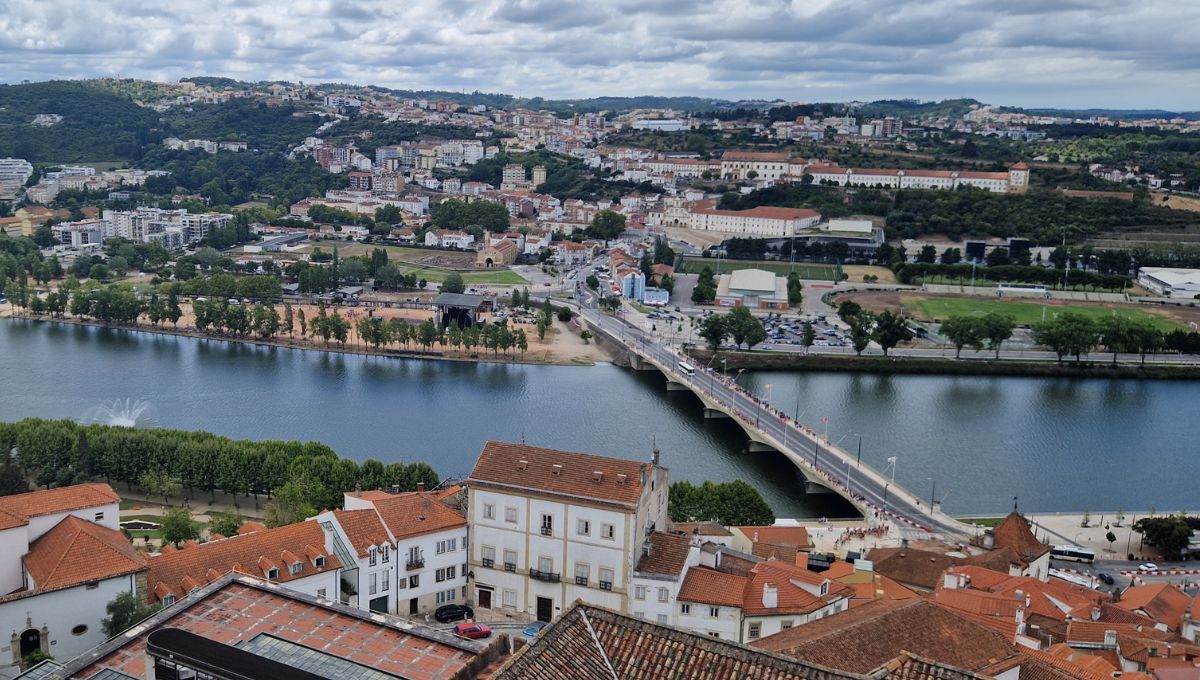
Dominating the skyline, the Clock Tower is both a Coimbra landmark and a piece of academic tradition. Built in the early 18th century and designed by Italian architect António Cannevari, it has kept time for the university’s students for over 300 years. Climbing the narrow staircase to the top is rewarded with panoramic views over the Mondego River, the terracotta rooftops of the old town, and the rolling hills beyond. On a clear day, you can see for miles—making it a perfect photo stop. Just be prepared: the stairs are steep, and space at the top is limited.
Tip: The tower is not included in the standard university ticket and requires a small additional fee. Entry is also timed for safety, so plan ahead if you want to make the climb.
There multiple building you can visit with your ticket:
- Baroque Library
- Royal Palace
- Saint Michael’s Chapel
- Chemistry Laboratory
- Cabinet of Curiosities
- Academic Museum
- Physics Cabinet
And there are two main ticket options that cover these:
- Full Access (€16.50): Includes entry to all major buildings, including the show-stopping Biblioteca Joanina.
- Without Biblioteca Joanina (€12.50): A budget-friendly option, but trust me—if you can, don’t skip the library.
Tickets are sold at the office just outside the Porta Férrea or online. I’d definitly recommend the online option to avoid disappointment.
For maximum experience, you could also consider booking a guided tour. This will ensure you’ll miss nothing amd can just enjoy the moment.
Coimbra University Visiting Hours
- Summer: 9:00am – 7:30pm
- Winter: 9:00am – 1:00pm & 2:00pm – 5:00pm
- Hours subject to change so check here: visit.uc.pt/en
Recommended Coimbra tours
Sé Nova – Coimbra’s New Cathedral

Sitting just steps from the university’s Pátio das Escolas, you’ll find the creatively named “New Cathedral.” Spoiler: it’s not all that new.
The Jesuits started building it in 1598 (back then as their college church), and it only became the cathedral in 1772 after the Jesuit Order was expelled from Portugal by the Marquis of Pombal. That’s when the bishop’s seat moved here from what’s now called the Old Cathedral (coming up next).
From the outside, it’s an imposing mix of Mannerist structure and later Baroque flourishes—solid, symmetrical lines dressed up with just enough artistic flair to make you linger for a moment.
Inside, you’ll find tall vaulted ceilings, carved wooden choir stalls, and a gilded altarpiece that catches the light beautifully… plus the standard hard wooden pews that make you grateful for short visits.
It’s a fine cathedral and worth popping your head into as you wander downhill from the university. Just don’t plan on spending your whole afternoon here—there’s still plenty more Coimbra to see.
Visiting details
- Admission: Free
- Hours: Monday to Saturday; 10 am – 6.30 pm, on Sunday 10 am-12.30 am.
Sé Velha – Coimbra’s Old Cathedral
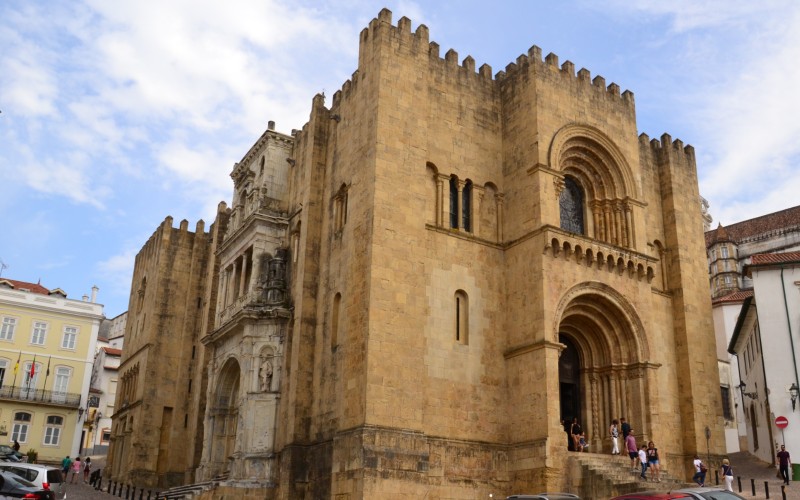
So, we’ve met the “New” Cathedral… now let’s talk about the old one—and when I say old, I mean really old.
Tucked into the steep, narrow streets of Coimbra’s historic center, the Sé Velha was built soon after 1139, when Afonso Henriques declared himself the first King of Portugal and made Coimbra the capital. It’s a survivor from the turbulent Reconquista era, and in fact, it’s the only Portuguese cathedral from that time still standing in its original form.
From the outside, you might mistake it for a fortress rather than a place of worship—thick Romanesque walls, crenellations, and only a handful of narrow windows. That defensive look wasn’t by accident; in the 12th century, church and fortress often had to be the same thing.
Step inside, and the atmosphere changes completely. The central nave is covered by heavy barrel vaulting, flanked by two side aisles and ending in three chapels. The stonework is simple but beautiful, and if you look closely, you’ll spot delicate carvings that soften the otherwise rugged feel.
It’s not the flashiest cathedral you’ll ever see, but it has a gravitas that comes with having watched nearly nine centuries of Coimbra’s history unfold right outside its doors.
Se Velha visiting hours
Monday – Friday: 10am – 5:30pm
Saturday: 10am – 6:30pm
Sunday: 11am – 5pm
More information: http://sevelha-coimbra.org/
Monastery of Santa Cruz – Royal Tombs & History
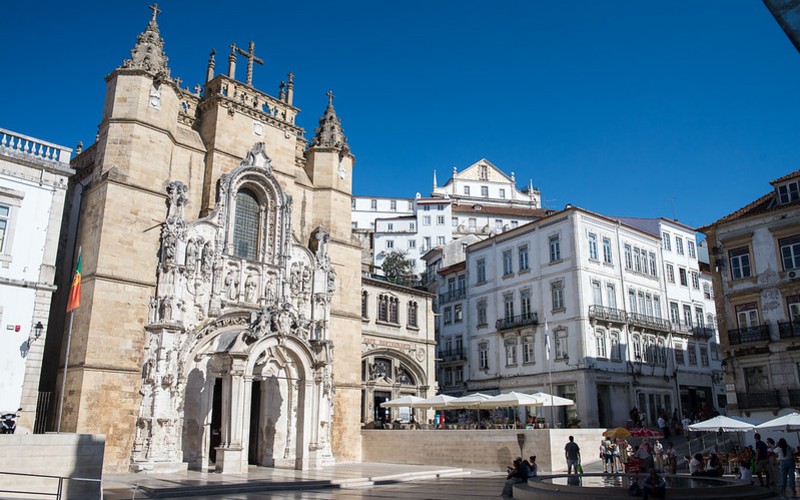
If you wander down into the lower part of Coimbra’s old town, you’ll eventually find yourself standing in front of the Monastery of Santa Cruz—a place that’s as important to Portugal’s history as it is beautiful to look at.
Founded in 1131, this was the spiritual and political heart of early Portugal, so much so that the country’s first two kings—Afonso Henriques and Sancho I—are buried here. Their tombs rest inside the church, making Santa Cruz a National Pantheon and a must-visit for anyone who loves a bit of royal history with their sightseeing.
The current façade is a 16th-century Manueline masterpiece, full of ornate carvings, twisted columns, and maritime motifs that were all the rage during Portugal’s Age of Discovery. Step inside, and you’ll find an interior that mixes Gothic structure with later Renaissance and Baroque touches—plus a stunning high altar that demands at least a few minutes of your time.
A fun historical side note: the monastery was once home to a young Fernando Martins de Bulhões, who later became known to the world as Saint Anthony of Padua. Before becoming the famous saint associated with lost things, he lived here as an Augustinian canon in the 1220s.
Whether you come for the architecture, the royal tombs, or just to soak in almost nine centuries of history, Santa Cruz delivers.
Ticket price
- Standard admission: €3
Hours
- Monday to Friday: 9am to 5pm
- Saturdays: 9am to 12:30pm and 2pm to 5pm
- Sundays: 4pm to 5:30 pm
- More information: https://www.grupogala.pt/anda-comigo-coimbra-mosteiro-de-san
Machado de Castro Museum – Roman History & City Views
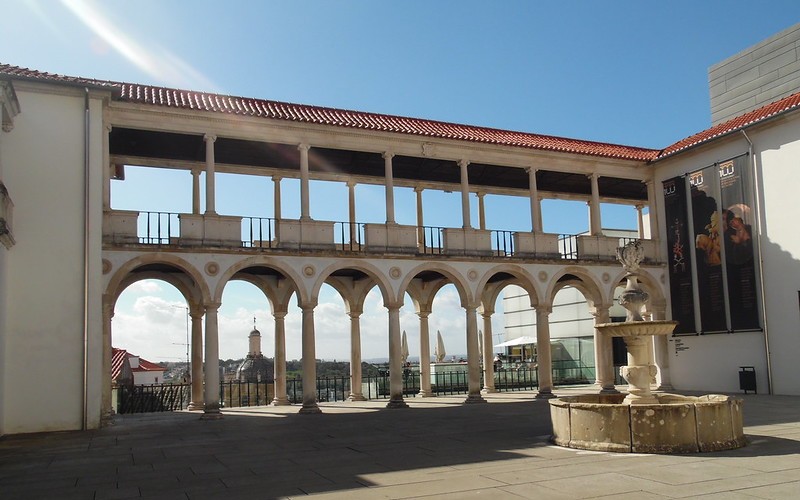
Perched just a short walk from the university, the Machado de Castro National Museum is a real treat for history lovers—and for anyone who enjoys a coffee with a view.
Named after the 18th-century Portuguese sculptor Joaquim Machado de Castro, the museum is built over the remains of Coimbra’s Roman forum, once the heart of the ancient city of Aeminium. One of its most unique features is the 1st-century Roman cryptoporticus—an underground network of arched galleries that once supported the forum above. Walking through it feels like stepping straight into the Roman past.
Above ground, the museum’s collection covers everything from medieval religious art to decorative objects that tell the story of Coimbra through the centuries. Expect to see:
- Roman archaeological finds
- Sculptures, including many by Machado de Castro himself
- Precious metals and religious artefacts from the 12th century onwards
- Jewellery, paintings, and Portuguese-crafted furniture
And while the galleries are fascinating, my personal highlight is the museum’s restaurant, Loggia. Set in a sunny courtyard, it serves up sweeping views over Coimbra and the River Mondego—a perfect spot to pause for a drink or lunch before diving back into your one day in Coimbra itinerary.
Museum ticket price
Adults: €6
Add-on visit to the crypt: €3
Over 65s save 50%
Children under 15 free
Museum hours
Summer: 10am – 6pm
Winter: 10am – 12:30pm & 2pm – 6pm
Closed all day on Mondays
More details: http://www.museumachadocastro.gov.pt/en-GB/default.aspx
Portugal dos Pequenitos (Little Portugal) – Coimbra’s Miniature Park
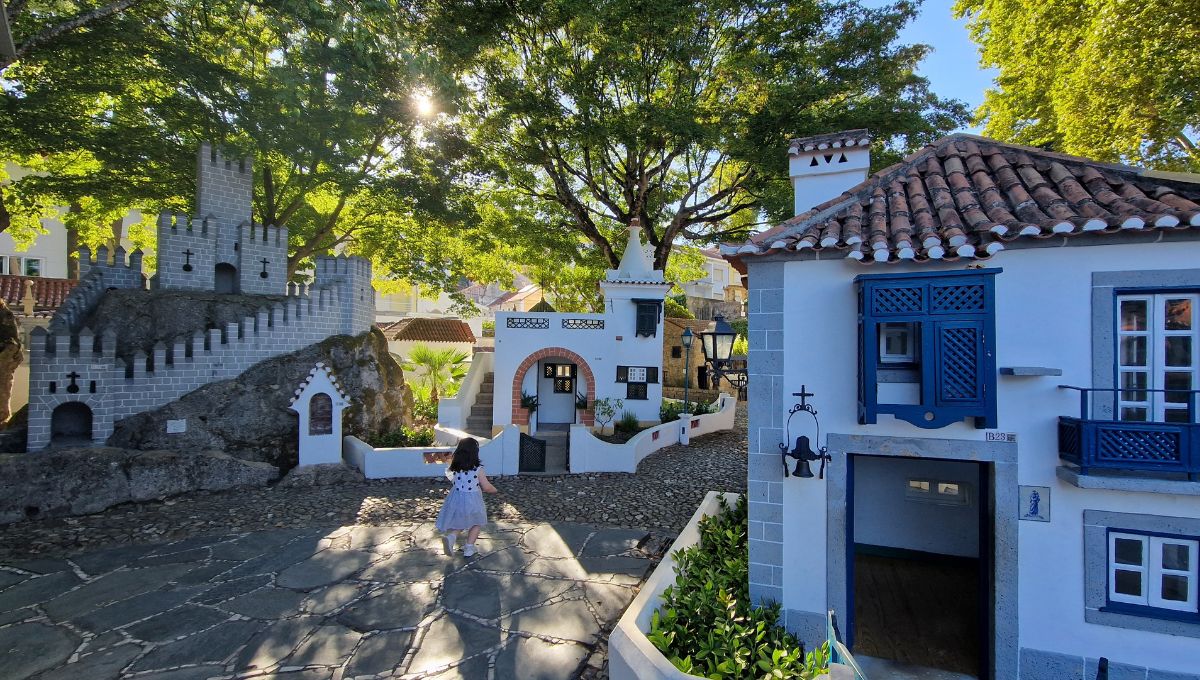
If you’re visiting Coimbra with kids, Portugal dos Pequenitos is a must. As the name suggests, it’s Portugal—but in miniature—and my kids absolutely loved it.
The experience begins in the museum area, where you’ll find displays of goods, artefacts, and crafts from across the former Portuguese Empire. Walking through, I was struck by just how far Portugal’s influence once stretched—Africa, Asia, South America, and beyond. The exhibits are housed in small buildings styled to match the regions they represent, and while there’s no single “showstopper” piece, I found the intricate wooden carvings from Africa especially beautiful.
Then comes the real magic for families: the miniature monuments. You’ll wander past pint-sized replicas of some of Portugal’s most iconic landmarks, including the Mosteiro dos Jerónimos and Torre de Belém in Lisbon, and the Convento de Cristo in Tomar. Seeing them all in one place is like taking a cross-country trip without ever leaving the park.
And then there’s my kids’ favourite part—the Portuguese houses. These scaled-down traditional homes from all over the country are just the right size for little legs to dart in and out of. Our two-year-old was in absolute heaven, dashing from one doorway to the next, peeking into windows, and playing endless games of “let’s pretend.”
Portugal dos Pequenitos might be more fun for families than solo travellers, but even as an adult, I enjoyed spotting miniature versions of landmarks I’d already visited—and discovering new ones I’d love to see in real life. Plus, it’s a lighthearted break in a city full of grand history and serious architecture.
Little Portugal prices
Adult: €8.95
Concessions (from 3 – 13 and over 65): €5.95
Under 2: Free
Opening times
Spring and Autumn: 10am – 7pm
Summer: 9am – 8pm
Winter: 10am – 5pm
For full opening times and special events, check their website: http://www.fbb.pt/pp/en/informations/schedules/
Quinta das Lágrimas & Views Across the Mondego River
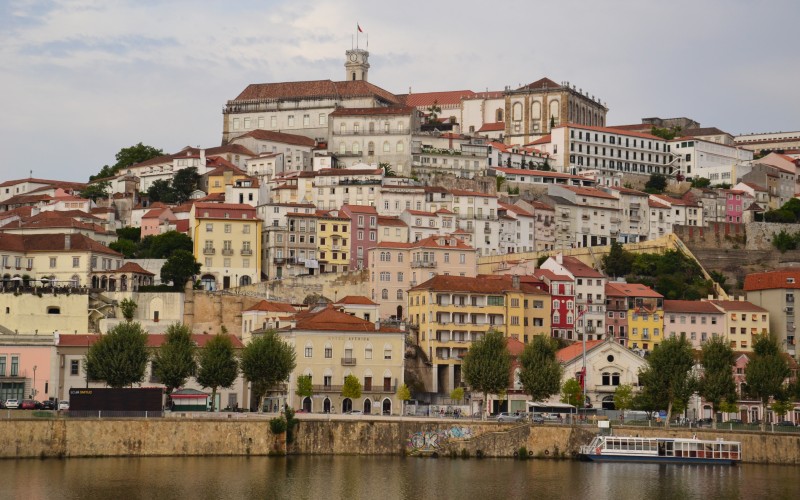
If you have a little extra time during your one day in Coimbra, I highly recommend a detour to Quinta das Lágrimas—part romantic garden, part tragic chapter of Portuguese history.
Getting there is part of the charm. From the bottom of the old town, cross the bridge over the Mondego River and take a moment to look back—Coimbra’s hillside skyline is at its most dramatic from here, with the university’s clock tower rising above layers of terracotta rooftops. On the far side, you’ll find a few cafés for a quick coffee before continuing on toward the gardens.
On the surface, Quinta das Lágrimas is a peaceful estate with manicured lawns, shady paths, and the kind of quiet that makes you want to linger. But its beauty hides a darker story—one of Portugal’s most famous legends.
Back in the 14th century, this was the meeting place of Prince Pedro and Inês de Castro, whose love affair scandalised the royal court. In 1355, on the orders of King Afonso IV, Inês was murdered in these gardens to end the relationship. According to legend, a spring here—the Fonte das Lágrimas (Fountain of Tears)—was stained forever with her blood and tears.
Walking through the grounds, it’s easy to imagine the secrecy of their romance and the heartbreak that followed. The estate still has an air of melancholy mixed with beauty, making it a very different experience from Coimbra’s bustling old town.
I visited without any particular expectations, but the combination of lush greenery and powerful storytelling made it one of the most memorable stops of my trip. Whether you come for the gardens, the history, or to trace the steps of a medieval love story, Quinta das Lágrimas is well worth crossing the river for.
One Day in Coimbra – Suggested Itinerary
We started our day at the very top of the hill—partly thanks to scoring that golden parking spot near the New Cathedral. It meant we could wander downhill at a leisurely pace, knowing the car was waiting for us when we were done. If you can do this, your legs will thank you later!
The Morning: Start at the top
University of Coimbra → New Cathedral → Biblioteca Joanina → Machado de Castro National Museum (coffee stop)
- Head straight to the University ticket office at the Porta Férrea to lock in your Biblioteca Joanina time slot—these go fast, and it’ll save you from climbing back up later.
- If you’ve got time before your library slot, hop across to the New Cathedral for a quick look (10–15 mins).
- Allow 2–3 hours for the university: library, courtyards, plus extras like the tower if you’re up for the climb.
- From there, it’s just a short stroll to the Machado de Castro National Museum. Even if you skip the galleries, grab a coffee or early lunch at the Loggia restaurant—the view over Coimbra is worth the stop. (Pro tip: it’s also a killer sunset spot if you happen to be nearby later.)
Side Note: I know this is the morning that we are talking about, but the restaurant is also one of the best places to enjoy a Coimbra sunset.
Midday – Exploring Coimbra’s Old Town
Sé Velha (Old Cathedral) → Porta de Barbacã → Lunch → Monastery of Santa Cruz
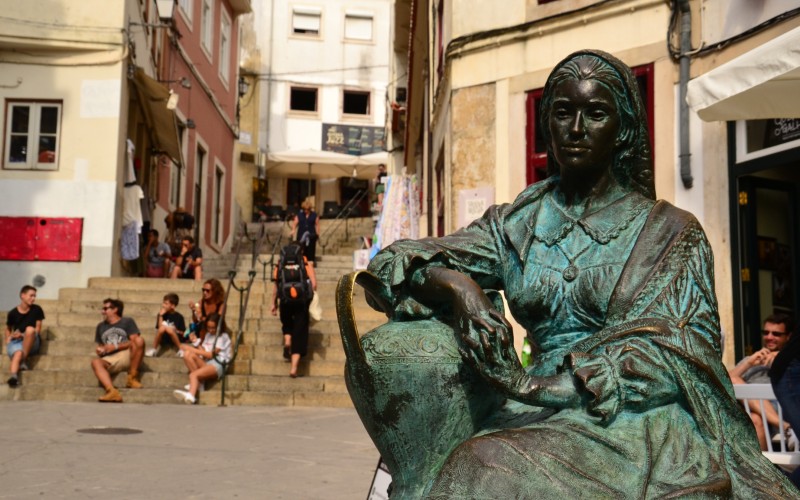
- From the museum, take the southwest route toward the Old Cathedral. You won’t need more than 20–30 minutes here unless you’re a Romanesque superfan.
- Continue downhill to the Porta de Barbacã—a photogenic little corner of Coimbra. It’s a good place to pause for a quick glass of Ginjinha before lunch.
- For food, we liked Fado Hilário for value and friendly service, but there are plenty of options nearby.
- After lunch, it’s a short walk to the Monastery of Santa Cruz. Give yourself 30–45 minutes to explore the Manueline façade, cloisters, and royal tombs.
Afternoon – Across the Mondego River
Portugal dos Pequenitos or Ponte Pedonal Pedro e Inês + Riverside Walk → Quinta das Lágrimas
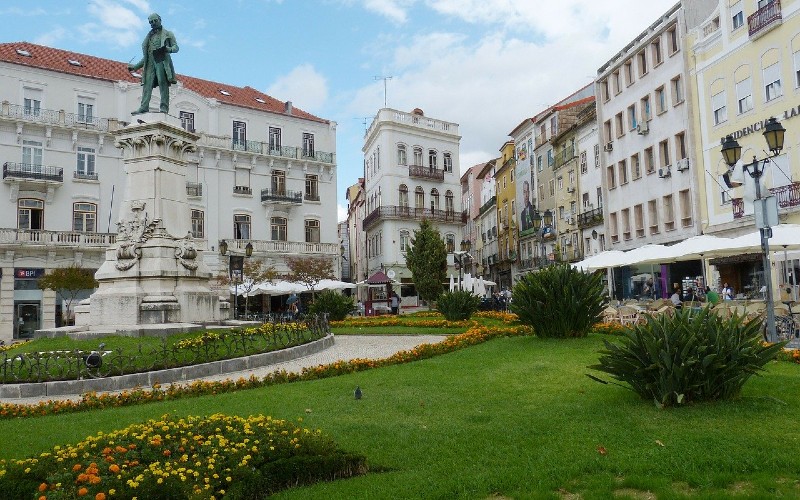
- Cross the Ponte de Santa Clara for the best view back toward the old town—especially in late afternoon light.
- If you’ve got kids, Portugal dos Pequenitos will easily keep them happy for 1–2 hours. Otherwise, take the Ponte Pedonal Pedro e Inês footbridge and follow the riverside paths before looping back toward the main bridge.
- If time allows, continue on to Quinta das Lágrimas for a peaceful garden walk and a dose of Portuguese legend. You’ll only need 45 minutes here, but it’s a lovely way to slow the pace before heading back.
Tip for the End of the Day: If your legs are protesting, grab a taxi or Uber back to the top instead of climbing—especially if your car’s parked up there. Coimbra’s hills are no joke after a full day on your feet.
Where is Coimbra? How to Get There from Lisbon & Porto
Coimbra is a centrally located Portuguese city, about 50 kilometres inland from the Atlantic coast. Once the medieval capital of Portugal, Coimbra sits roughly 120 km (75 miles) south of Porto and 200 km (125 miles) north of Lisbon, making it the perfect stop between the country’s two biggest cities during a Lisbon Porto roadtrip. This hilltop city’s strategic location has shaped its history for centuries.
How to get from Lisbon to Coimbra
Option 1: Day Tour to Coimbra
If you’re after a stress-free way to see Coimbra in one day, an organised day tour from Lisbon might be your best bet. You’ll get whisked straight to the city’s highlights (often with a few bonus stops thrown in—like the famous monastery at Batalha or the seaside cliffs of Nazaré) and a local guide to fill in the stories behind the sights.
Of course, tours do have a couple of downsides. They’re usually pricier than DIY travel, and you’ll trade a bit of freedom for the convenience—your schedule is set by the guide, not by your curiosity. But if you want to sit back, relax, and make sure you hit all the big hitters, a Lisbon to Coimbra day tour is a solid, no-stress option.
Option 2: Drive from Lisbon to Coimbra
We opted to drive for this trip, and honestly, it made life so much easier—especially with a toddler in tow. Two hours of open road from Lisbon, and we could roll straight into Coimbra and park right at the top of the hill, meaning we started sightseeing without the uphill slog.
If you do hire a car, one of the best parts of having your own wheels is the flexibility—why not make a side trip to the fishing village of Nazaré, the UNESCO-listed Monastery of Batalha, or the pilgrimage town of Fátima along the way?
A quick heads up: Portugal’s highways (the A1 is your main route north) have an extensive toll system, and some tolls are fully automated. It’s a good idea to ask your car hire company about setting up an electronic toll pass—this will save you a lot of hassle, and they’ll point you toward the nearest place to activate it.
For more information on the Portuguese toll network, check out this website.
Lisbon to Coimbra Bus
Taking the bus is a safe, affordable, and surprisingly comfortable way to travel in Portugal. If you’re looking for the best value, this might be your top pick for getting from Lisbon to Coimbra. Buses are run by Rede Expressos and depart frequently throughout the day from both the Sete Rios and Oriente stations in Lisbon. The journey takes about 2 hours and 30 minutes and usually costs around €15 each way.
Tip: It’s best to book your ticket in advance, either on the Rede Expressos website or directly at the station.
Lisbon to Coimbra Train
If you want to reach Coimbra a little faster, hop on the train. Trains between Lisbon and Coimbra are operated by Comboios de Portugal and can get you there in as little as 1.5 hours (up to 2 hours, depending on the service).
ares are typically around €20, though prices can vary with special deals or booking windows. Trains depart from both Santa Apolónia and Oriente stations in Lisbon and arrive at Coimbra-B station, with an easy local transfer to the city centre if needed.
You can check train times and prices on the Comboios de Portugal website.

Coimbra from Porto
Organised Tour
Just like from Lisbon, joining a guided day tour from Porto is the simplest way to pack the best of Coimbra into one day, with the bonus of local insights and zero navigation worries.
Drive from Porto to Coimbra
Porto is even closer to Coimbra—expect the drive to take around 1 hour and 15 minutes, making it an easy day trip. Follow the A1 motorway south, but keep in mind the Portuguese toll system (most car hire companies can set you up with an electronic toll device).
Looking to make the most of your road trip? Consider a detour to the charming city of Aveiro (“the Venice of Portugal,” famous for its colourful moliceiro boats) or the coastal village of Costa Nova, renowned for its iconic striped beach houses.
Porto to Coimbra Bus
Catching the bus from Porto to Coimbra is both easy and affordable. Buses depart from the Campo 24 de Agosto terminal in Porto, with the trip taking just under 90 minutes. Tickets typically cost around €12 one way, or €22 for a return journey, and there are over 15 direct departures a day—so you can pick a time that fits your plans.
Book online in advance via the Rede Expressos website to guarantee your seat.
Porto to Coimbra Train
If you’re after speed and comfort, the train is my top pick for getting between Porto and Coimbra. Direct trains leave from Porto’s Campanhã station and reach Coimbra in as little as 1 hour, with most journeys clocking in between 60 and 75 minutes. Fares range from around €18 for slower regional trains to €22 for the fastest Intercidades (Intercity) service.
A pro tip: Tickets go on sale 30 days before departure on the Comboios de Portugal website. Booking ahead or traveling off-peak can sometimes snag you a discount.
Arriving in Coimbra: Getting to the City Centre
If you’re traveling by bus, you’ll arrive at Coimbra’s main bus station, conveniently located by the river and near Estrada das Coselhas. From here, you’re just a short stroll or quick taxi ride away from the historic center.
Arriving by train? There are two stations to know: Coimbra-B (the main intercity stop, about 2.5 km north of the old town) and Coimbra-A (right in the heart of the city). Most long-distance trains from Porto or Lisbon stop at Coimbra-B.
You can catch a local shuttle train for the five-minute ride into Coimbra-A, or, if you want to save time (and some uphill walking), grab a taxi or Uber directly from Coimbra-B to the university area or the New Cathedral—perfect spots to start your one day in Coimbra adventure.
Parking in Coimbra
If you’re driving, my top tip is to aim for street parking near the New Cathedral. We lucked out with a spot here, and it was a game-changer—no hiking uphill before coffee. On Sundays it’s free, otherwise expect about €1/hour. On Sunday’s parking if free but the rest of the time you can expect to pay around €1 per hour if you are using street meters or an official car park in the city.
If you are prepared for a little walk, there is free parking on the far side of the river. The Parking Convent San Francisco is free and about a 10-minute walk to cross the bridge and get into the city. It is a great parking option if you wanted to visit the Little Portugal attraction.
Coimbra in One Day – FAQs for Travellers
Is Coimbra, Portugal worth visiting?
Absolutely. Coimbra was once the medieval capital of Portugal and played a key role in shaping the nation’s identity. Today, it’s one of the country’s most important cultural hubs, home to a UNESCO-listed university, centuries of architectural styles, and a riverside old town that looks like it belongs on a postcard. Whether you’re drawn by history, architecture, or just the charm of a hilltop city, Coimbra delivers.
What is Coimbra famous for?
Coimbra is best known for the University of Coimbra, one of the oldest in Europe, and its stunning Biblioteca Joanina. It’s also famous for its rich mix of architectural styles—from Romanesque cathedrals to Baroque libraries—and for being a centre of academic traditions, including the unique Fado de Coimbra music. The city’s history stretches back to Roman times, when it was known as Aeminium, and those ancient roots still peek through in places like the Machado de Castro National Museum’s Roman cryptoporticus.
How long do you need in Coimbra?
You can see the main highlights with one full day in Coimbra, especially if you follow a route that starts at the top of the hill and works your way down. But if you have time, staying one or two nights lets you slow down, explore more museums and historic sites, enjoy the riverside parks, and even take day trips to nearby attractions like Conímbriga (Roman ruins) or the coastal town of Figueira da Foz.
Can you do Coimbra as a day trip from Lisbon or Porto?
Yes. From Lisbon, the train takes around 1.5–2 hours each way; from Porto, it’s just over an hour. This makes Coimbra an easy day trip from either city—but if you have the flexibility, staying overnight means you can enjoy the city in the quieter evening hours after day-trippers have left.
What’s the best time of year to visit Coimbra?
Spring (April–June) and autumn (September–October) are ideal, with pleasant weather and fewer crowds. Summer can be hot, especially up on the hill, while winter is mild but often rainy—though you’ll have the streets (and the library) mostly to yourself.
Is Coimbra family-friendly?
Definitely. We visited with our toddler and had no problem navigating the main sights. Attractions like Portugal dos Pequenitos are designed for kids, and there are plenty of green spaces and riverside walks for little legs to stretch. Most top attractions are stroller-accessible, though be prepared for a few steep cobbled streets.
Final Thoughts – Is One Day in Coimbra Enough?

When I first rolled into Coimbra, I honestly didn’t know how it would stack up against Portugal’s big hitters like Lisbon and Porto. But by the end of the day, I’d walked through centuries of history, crossed the Mondego for that postcard view, and even watched my toddler disappear (and reappear) in miniature Portuguese houses.
One day in Coimbra is enough to see the highlights—especially if you follow a route that works with the city’s hill, not against it. But if you can stay overnight, do it. The quieter evenings here have a different magic once the day-trippers are gone.
Have you been to Coimbra? Or are you planning your first trip?
I’d love to hear your favourite spot or hidden find—drop it in the comments, and I might just add it to this guide.
“From decadent architecture” can you please explain what do you mean by this?
Sure, I like to think of it as an architectural style that is lavishly ornate, opulent, and rich in its design and detailing usually characterized by the use of high-quality materials and intricate patterns. I think this style of architecture exudes a sense of grandeur and elegance, with a keen attention to detail that may be seen in intricate carvings or stonework.